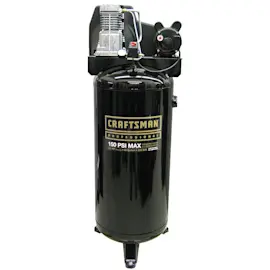
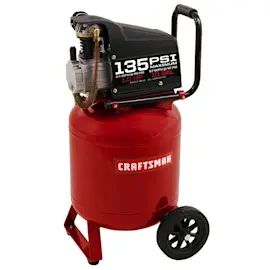
Owner’s manual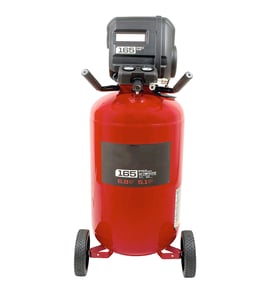

Is there a reset button on an air compressor?
Yes, many air compressors include motor overload protection, but on the Craftsman 919165611 the motor uses an automatic reset thermal overload protector. If it overheats, it shuts the motor off and then restarts automatically after the motor cools; there typically is not a manual reset button to press.
We recommend these quick checks before assuming a motor problem:
- Turn the tank On/Auto/Off switch to OFF, unplug the unit, and let the motor cool.
- Make sure tank pressure is below the pressure switch cut-in point; the motor will not start if tank pressure is still high.
- Avoid long or undersized extension cords; use a proper gauge cord and keep it as short as possible.
- Check for low voltage signs (motor slow to reach speed, lights dim, fuses blowing at startup).
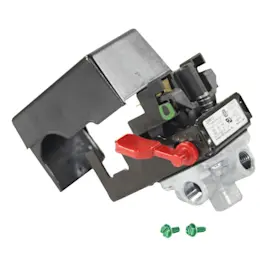
- Listen for constant hissing at the pressure switch area; the unloader may not be releasing head pressure.
- Inspect for air leaks at fittings and lines (soap solution test).
For control locations and operating details, use the 919165611 owner's manual.
Frequent thermal overload shutdowns mean the motor is working too hard or not getting clean power. Common causes include air leaks, a stuck check valve, restricted airflow, or a voltage drop.
| Symptom | Likely cause | What we do next |
|---|---|---|
| Motor hums, struggles, then stops | Low voltage or bad extension cord | Plug into a dedicated outlet; shorten cord |
| Stops when hot, restarts later | Normal thermal overload action | Improve ventilation; reduce run time |
| Won’t start with pressure in tank | Unloader not releasing head pressure | Switch OFF to bleed line; service pressure switch |
| Breaker trips at startup | Circuit overloaded or wrong fuse type | Use correct time-delay fuse; dedicated circuit |
The overload protector prevents motor damage. If we keep forcing restarts without fixing the underlying issue (leaks, voltage, unloader, check valve), the compressor can overwork and fail early.
Last updated: February 2026
Is a 150 PSI air compressor good for car tires?
Yes. A 150 PSI air compressor is more than enough for inflating car tires because most passenger tires are typically set around 32 to 36 PSI; the key is using a regulator and gauge so you do not exceed the tire’s rated pressure. For your Craftsman 919165611 air compressor, follow the safety and operating steps in the owner's manual.
A compressor’s maximum tank pressure (PSI) is not the same as the pressure you should put into a tire. You want controlled, accurate outlet pressure.
- Use a pressure regulator and pressure gauge to control outlet pressure (especially for lower-rated accessories).
- Inflate to the vehicle placard PSI (door jamb) or owner’s manual spec, not the compressor’s max PSI.
- Use a tire air chuck that locks on securely to the valve stem.
- Add air in short bursts and re-check with a tire gauge.
- Stop if the hose, chuck, or tire shows damage, bulging, or unusual noise.
The manual emphasizes preventing overpressure and using proper controls.
| Item | What to do | Why it matters |
|---|---|---|
| Regulator | Set outlet pressure below the tire’s target PSI | Prevents accidental overinflation |
| Gauge | Verify pressure as you inflate | Avoids relying on “feel” |
| Duty cycle | Limit run time to about 30 minutes per hour (50% duty cycle) | Reduces overheating and wear |
| Environment | Operate in a well-ventilated area, away from combustibles | Reduces fire and fume risk |
Tires and inflatables can burst if over-pressurized. A 150 PSI compressor gives you plenty of capacity; safe inflation comes from regulating the outlet pressure and following the tire manufacturer and vehicle specifications.
For more troubleshooting if the unit struggles to run or build pressure, see air compressor won't start and air compressor won't build tank pressure.
Last updated: February 2026
What is the average lifespan of an air compressor?
Most air compressors last 10 years with normal DIY or light shop use. For the Craftsman 919165611 air compressor, lifespan depends mainly on duty cycle and maintenance; running it within the manual’s guidance and keeping leaks and filters under control extends service life.
These are practical, real-world averages for common compressor designs:
| Compressor type | Typical lifespan | Notes |
|---|---|---|
| Small oil-free direct-drive (DIY) | 5 to 10 years | Shorter life if run hot or continuously |
| Belt-drive piston (home shop) | 10 to 15 years | Often rebuildable with proper upkeep |
| Rotary screw (commercial) | 15 to 20 years | Designed for long duty cycles |
Your manual calls out two big life-limiters: overworking the unit and air leaks.
- Keep operation to 50% duty cycle max (about 30 minutes of pumping per hour)
- Drain the tank regularly to reduce internal corrosion and water carryover
- Keep the air filter clean; a dirty filter reduces capacity and increases run time
- Fix even small leaks; minor leaks can make the compressor overwork and fail sooner
- Use a regulator when running tools rated below the compressor’s maximum PSI
For model-specific operating and maintenance intervals, follow the owner's manual.
Use this to decide whether you are extending life with maintenance or chasing a bigger problem:
- Worth maintaining/repairing: slow leaks at fittings, dirty air filter, worn regulator, pressure switch issues
- Often a bigger repair: won’t build tank pressure, runs constantly, trips overload, loud knocking from pump
- Stop and inspect immediately: safety valve popping repeatedly, severe vibration, burning smell
A good next step for common failures is our air compressor won't build tank pressure troubleshooting guide.
Air compressors usually “wear out” from heat, moisture, and run time. Staying under the recommended duty cycle and keeping the intake air clean reduces pump wear, lowers motor stress, and prevents premature breakdown.
Last updated: February 2026
What is the most common cause of air compressor failure?
The most common cause of air compressor failure on a Craftsman 919165611 is preventable overwork and neglected maintenance, which leads to overheating, air leaks, restricted airflow, and accelerated wear. Following the duty-cycle limit and routine checks in the owner's manual prevents most breakdowns.
- Overuse (duty cycle too high): running more than about 30 minutes per hour can overheat the motor and pump.
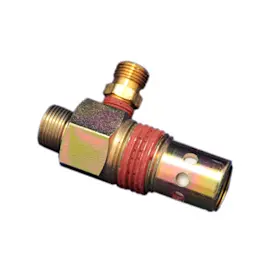
- Air leaks at fittings or the check valve: the compressor runs longer to keep up, which causes premature breakdown.
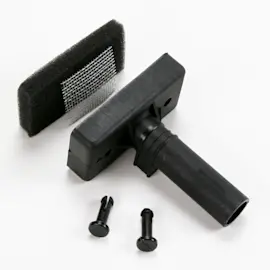
- Restricted air intake filter: reduced airflow makes the pump work harder and can reduce output.
- Poor electrical supply (low voltage): frequent thermal overload trips, slow start, dimming lights.
- Skipped routine maintenance: not draining the tank, not checking the safety valve, and not inspecting lines.
We recommend these habits to extend compressor life and reduce “won’t start” and “won’t build pressure” complaints:
- Keep operation within the 50% duty cycle (maximum pumping time is about 30 minutes per hour).
- Drain the tank regularly to reduce internal moisture and corrosion risk.
- Check for leaks using a soapy-water solution on fittings and connections.
- Clean or replace the air filter; never run the compressor with the filter removed.
- If the motor trips on overload often, let it cool fully and then check for voltage and airflow issues.
| Symptom | Most likely cause | Why it leads to failure |
|---|---|---|
| Runs constantly, won’t reach cut-out | Air leak, restricted intake, worn valves | Overheats and overworks the pump |
| Won’t restart with pressure in tank | Check valve or unloader issue | Hard starts strain the motor |
| Safety valve pops | Pressure switch problem | Overpressure risk and forced shutdown |
| Overload trips frequently | Overuse, low voltage, poor ventilation | Heat damage to motor components |
Most “failures” start as small issues (minor leaks, dirty filter, excessive run time). Those problems force longer run times, which increases heat and wear, and that is what turns a simple fix into a major repair.
Last updated: February 2026
What are the symptoms of a bad run capacitor on an air compressor motor?
On the Craftsman 919165611 air compressor, a bad run (or start/run) capacitor commonly shows up as a motor that hums but will not start, starts very slowly, or repeatedly trips the thermal overload. If the capacitor case is bulged, cracked, or leaking, replace it.
- Motor hums but the pump does not turn
- Motor starts only after a long delay, or struggles to reach full speed
- Breaker trips or fuses blow when the motor tries to start
- Lights dim and stay dim while the compressor is trying to run (low voltage symptoms can look similar)
- Motor shuts off and then restarts later after cooling (overload protector cycling)
- Capacitor shows visible damage (swollen top, cracks, oily residue)
Perform these checks first because several issues can mimic a bad capacitor.
- Unplug the compressor and bleed the tank completely before opening any covers
- If the tank is above cut-in pressure, the motor may not start until pressure drops (normal operation)
- Check for a stuck-open check valve or a pressure switch that is not unloading head pressure (hard-start condition)
- Avoid long or undersized extension cords; incorrect gauge/length can cause low voltage and hard starting
- Inspect wiring connections at the pressure switch and motor terminal area for looseness or heat damage
The owner's manual troubleshooting table lists “motor will not run” causes that include a possible defective motor or starting capacitor, along with other common causes such as a tripped overload protector, wrong extension cord gauge/length, a stuck-open check valve, and loose electrical connections.
| What you see | Most likely cause | What to do next |
|---|---|---|
| Hums, will not spin | Capacitor weak, check valve stuck, head pressure not unloaded | Check valve/unloader first; then test/replace capacitor |
| Trips breaker at start | Capacitor failing, low voltage, wiring issue | Verify power/cord; inspect wiring; test capacitor |
| Starts after cooling | Motor overload protector tripping | Check airflow, voltage, pump load; then capacitor |
A weak capacitor makes the motor draw higher current and struggle under load. That can overheat the motor, trip the overload protector, and accelerate wear on the pressure switch, check valve, and pump.
For step-by-step troubleshooting that matches these symptoms, use air compressor won't start.
Last updated: February 2026