Owner’s manual
 Error Codes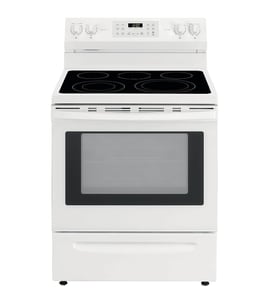



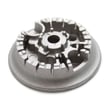
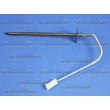
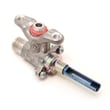
How to find KitchenAid range model number?
For your KitchenAid range, we recommend matching the model number from the appliance ID label to the exact format used on parts listings; for this page, that format is KDRS505XSS02. The quickest path is to locate the model and serial tag on the range frame, then copy it character-for-character.
On most KitchenAid freestanding ranges like KDRS505XSS02, the model and serial label is typically found in one of these spots:
- On the oven frame behind the storage drawer (pull the drawer out)
- Along the oven door frame (visible when you open the oven door)
- Behind the lower kick panel (if your model has one)
- On a side frame rail near the front of the cavity
If you want the exact label location and illustrations for your unit, use the KDRS505XSS02 owner’s manual.
Model numbers are sensitive to small differences. Use these checks before ordering parts:
- Copy every letter and number exactly (example: KDRS505XSS02)
- Keep the suffix (the last digits) because it identifies the production version
- Do not use the serial number in place of the model number
- Avoid guessing based on “looks like” or a similar KitchenAid range
| What you see | What it means | Use it for parts? |
|---|---|---|
| Model number (example: KDRS505XSS02) | Identifies the exact design | Yes |
| Serial number | Identifies your specific unit | No |
| “30 in dual-fuel range” | General product type | No |
KitchenAid ranges often have multiple versions that look identical but use different burner parts, wiring, or controls. Using the exact model number helps us show the correct diagrams and compatible parts the first time.
Last updated: February 2026
What does PF mean on KitchenAid?
On the KitchenAid KDRS505XSS02 range, PF means power failure. It shows up after the control detects an interruption in electrical power; clearing it is usually as simple as acknowledging the message and resetting the clock using the steps in the KDRS505XSS02 owner’s manual.
- Press Cancel/Off (or the key the display prompts) to clear the message.
- Reset the clock and re-enter any timed bake or delay start settings.
- If the oven was heating when power dropped, verify food safety and restart cooking.
- If PF returns repeatedly, check for a loose plug, tripped breaker, or a weak outlet connection.
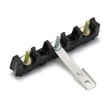
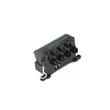
- If you recently moved the range, confirm the power cord connections are tight at the terminal block WPW10245259 (power must be off at the breaker before inspecting).
Power interruptions are the most common cause, but these checks help you rule out simple issues:
| Check | What you’re looking for | Why it helps |
|---|---|---|
| Circuit breaker | Breaker tripped or feels loose | Restores stable power to the range |
| Outlet and cord | Plug not fully seated, damaged cord | Prevents intermittent power loss |
| Terminal connections | Loose or overheated wiring at the range | Stops voltage drop that triggers PF |
| Home power quality | Lights flicker when appliances start | Points to a supply issue needing attention |
PF is not an oven temperature error; it is the control telling you it lost power long enough to interrupt operation. Clearing PF and restoring steady power prevents interrupted baking, inaccurate timers, and repeat shutdowns.
Last updated: February 2026
What is the life expectancy of a KitchenAid range?
Most KitchenAid ranges, including the KitchenAid KDRS505XSS02 30" dual-fuel freestanding range, typically last 13 to 15 years with normal home use and basic maintenance. Keeping burners clean, protecting the oven door seal, and fixing small issues early helps you reach the high end of that range.
A range’s life is mostly driven by heat exposure, cleaning habits, and how quickly worn parts are replaced.
- Heavy daily cooking can shorten lifespan.
- Frequent high-heat self-clean cycles can stress door latches, wiring, and electronics.
- Spills and boil-overs can clog burner ports and cause ignition problems.
- Power surges and loose connections can damage controls.
- Prompt replacement of wear items (racks, hinges, burner parts) prevents secondary damage.
- Clean burner heads and caps regularly; keep ports clear for an even flame.
- Wipe up acidic spills quickly to protect stainless and enamel.
- Avoid slamming the oven door; it wears hinges and can misalign the door.
- Check for loose power-cord connections if you ever smell hot plastic or see discoloration.
- Use the correct cookware size to reduce heat spillover onto the cooktop.
These repairs are common on dual-fuel ranges and help you decide whether to repair or replace.
| Symptom | Common cause | Typical fix direction |
|---|---|---|
| Oven temperature swings | Sensor drifting | Replace sensor, then verify calibration in the KDRS505XSS02 owner’s manual |
| Clicking or no spark at burners | Ignition module issue | Test/replace spark module |
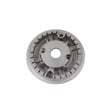
| Weak/uneven burner flame | Clogged or worn burner head | Clean or replace burner head |
| Door won’t stay shut or feels “loose” | Worn hinge | Replace hinge and re-seat door |
A 13 to 15 year life expectancy is realistic when the oven heats evenly and the gas burners light reliably. When ignition, temperature control, or door sealing problems start stacking up, performance drops and energy use can rise, so targeted repairs often pay off.
Last updated: February 2026