 Owner’s manual
 Error Codes




What brand of dryer has the least problems?
If you want the fewest problems overall, Speed Queen is the most consistently durable choice; for mainstream home dryers, Whirlpool, LG, and GE tend to be strong picks when you prioritize basic reliability, good parts support, and straightforward maintenance. For your GE GFD55ESPN0DG, following the care steps in the GFD55ESPN0DG owner's manual helps prevent many common “problem” symptoms.
We see the best long-term results when the dryer design is simple, the venting is correct, and routine maintenance is done.
- Speed Queen: commercial-style build, fewer “extras,” very durable
- Whirlpool (and Whirlpool-family brands): strong reliability and wide parts availability
- LG: good performance and generally low service rates, more electronics/features
- GE: solid reliability, especially when venting and lint control are kept up
- Maytag: often comparable to Whirlpool (same parent company), good repairability
Many “brand problems” are actually installation, airflow, or maintenance issues. GE’s own guidance for dryers like the GFD55ESPN0DG emphasizes lint filter cleaning and proper exhaust ducting.
- Clean the lint filter before each load
- Wash the lint screen if you get a waxy film from fabric softener sheets
- Keep the exhaust duct clean, unkinked, and unobstructed
- Make sure the outside damper opens easily
- Avoid chronic overloading (it increases dry time and wear)
| Priority | Best fit | Why |
|---|---|---|
| Maximum durability | Speed Queen | Simplest design, heavy-duty build |
| Easiest to repair | Whirlpool-family | Common parts, familiar design |
| Most features | LG | Advanced options, sensors, connectivity |
| Balanced choice | GE | Good reliability with proper venting and upkeep |
A dryer that “has problems” often starts with long dry times, overheating, or nuisance shutdowns. Those issues are frequently caused by restricted airflow or a dirty lint path, not a failed heater or control.
If you’re comparing reliability based on fault history, use the GE gfd model series error codes reference to understand what the dryer is actually reporting.
Last updated: January 2026
What is the life expectancy of a GE oven?
A GE oven’s typical life expectancy is 15 years with normal household use. This parts page is for the GE GFD55ESPN0DG dryer, so for your dryer’s care, troubleshooting, and specifications, use the GFD55ESPN0DG owner’s manual.
Most GE ovens (gas or electric) deliver about 15 years of service life when they are kept clean, vented properly (for ranges), and repaired promptly when small issues show up.
- Typical service life: 15 years
- Heavy daily use shortens life; light use extends it
- Self-cleaning cycles add high-heat stress to components
- Power quality (surges) affects electronic controls
- Door seal condition affects heat retention and run time
These are the most common “big ticket” failures that drive repair vs. replace decisions.
| Issue | What you may notice | Common repair area |
|---|---|---|
| Heating problem | Slow preheat, uneven baking | Bake/broil circuit, sensor |
| Temperature control problem | Overcooks or undercooks | Temperature sensor, control |
| Door sealing problem | Heat loss, longer cook times | Door gasket, hinges |
| Repeated faults | Error codes, shutdowns | Control board, wiring |
Dryers typically last 13 years. The fastest way to narrow down a dryer problem is to check airflow, lint buildup, and any displayed error codes.
- Clean the lint screen every load; replace if damaged (see dryer lint screen WE16X32537)
- Confirm strong airflow at the exterior vent hood
- If the dryer runs but will not heat, inspect the heater and thermostats
- If the dryer will not start, check the door switch and user interface
For code definitions and diagnostic direction, use GE gfd model series error codes.
Knowing the typical service life helps you decide when a repair is cost-effective and when it makes more sense to plan for replacement, especially for control and heating system failures.
Last updated: January 2026
What is the most common problem with a GE dryer?
The most common GE dryer problems are long dry times (usually from restricted venting or a clogged lint screen), no heat (often a power supply, thermostat, or heater issue), and the drum not turning (belt or idler problem). For GE model GFD55ESPN0DG, start with airflow and basic checks in the GFD55ESPN0DG owner’s manual.
- Clothes take too long to dry: inspect and clean the exhaust ducting; a partially clogged exhaust can lengthen drying time.
- Dryer doesn’t heat: check the home’s breakers or fuses (many electric dryers need two); the drum can tumble even if only one side of the power is out.
- Lint on clothes: clean the lint screen before each load; don’t overload.
- Shaking or noise: some noise is normal, but leveling legs and an uneven floor can make it worse.
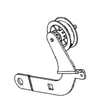
- Drum not turning or squealing: a worn idler can cause belt issues; consider the dryer idler assembly WE03X30657 if symptoms match.
- Clean the lint screen and confirm it is installed (never run the dryer without the filter in place).
- Inspect the vent path from dryer to outside; remove kinks, lint buildup, and confirm the outside damper opens freely.
- If there’s no heat, reset both breakers (or replace both fuses) and retry a heated cycle.
- If drying is inconsistent, sort loads by fabric weight; heavy items hold more moisture and take longer.
- If the dryer is noisy, verify it sits level and stable.
| Symptom | Most likely cause | First action |
|---|---|---|
| Long dry times | Obstructed ducting, poor airflow | Clean and verify venting |
| Tumbles but no heat | One breaker tripped, thermostat/heater issue | Check both breakers/fuses |
| Lint on clothes | Lint screen full, overloading | Clean screen, reduce load |
| Squeal, drum not turning | Belt/idler wear | Inspect belt path and idler |
Airflow problems do more than slow drying; they can also contribute to overheating and repeated thermostat or heater failures. Keeping the lint screen and exhaust duct clean is the most effective prevention step for GE dryers.
- Use GE gfd model series error codes if your display shows an error and the dryer will not run normally.
Last updated: January 2026





