Error Codes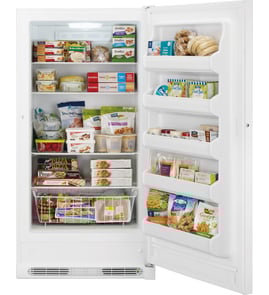



What is the average lifespan of an upright freezer?
Most upright freezers, including the GE FP17DXARWH, typically last 10 to 15 years with normal household use. Good airflow, clean condenser areas, and a solid door seal help the compressor run less and extend overall life.
- Room temperature and ventilation: Hot garages and tight enclosures shorten compressor life.
- Door seal condition: A leaking gasket forces longer run times and heavier frost.
- Defrost and drain health: Clogged drains can lead to ice buildup and poor cooling.
- Electrical reliability: Loose outlets or damaged cords can cause intermittent power issues.
- Cleaning and loading habits: Overpacking blocks airflow; dust buildup raises operating temps.
- Vacuum dust from the condenser area and surrounding vents.
- Confirm the freezer is level; adjust feet if it rocks (a stable cabinet helps the door seal).
- Check the door closes firmly and does not pop open.
- Keep interior air vents clear of boxes and bags.
- If you see water or ice near the bottom, inspect the drain path and hose routing.
| Symptom | Often fixable? | What to check first |
|---|---|---|
| Runs constantly, warm temps | Sometimes | Door seal, airflow, condenser cleaning |
| Clicking, won’t start | Sometimes | Outlet power, cord condition, start components |
| Water pooling or ice slab | Often | Drain path, drain hose WR17X5367 |
| Door won’t align or sags | Often | Hinge wear, cabinet level |
A freezer that is running longer than normal uses more electricity and can struggle to hold safe food temperatures. Simple upkeep and replacing small wear items early can help your GE upright freezer reach the full 10 to 15 year lifespan.
Last updated: January 2026
Is it worth fixing an upright freezer?
Yes, it’s usually worth fixing a GE upright freezer like model FP17DXARWH when the cabinet is in good shape and the problem is a serviceable part (power, door closing, or drainage). If the sealed system is failing or repairs approach half the cost of replacement, replacement is the better value.
- Age: Under 10 years old typically favors repair; over 10 years old depends on condition and repair type.
- Problem type: Electrical, door/hinge, or drain issues are often practical repairs.
- Food loss risk: If it can’t hold safe temps, prioritize a fast fix.
- Parts availability: If common parts are in stock, repair is faster and more predictable.
- Energy use: Very old units can cost more to run; compare operating cost vs repair.
These are examples of repairs that are often straightforward and cost-effective when the freezer otherwise cools normally:
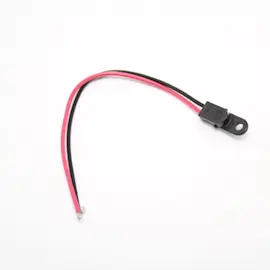
- Power issues such as a damaged cord: power cord WR23X10300
- Door alignment or sagging that causes warm air leaks: hinge WR2X9139
- Drainage problems during defrost (water pooling or leaking): drain hose WR17X5367
If you see these symptoms, the repair is often more complex and expensive:
- Freezer runs constantly but won’t reach temperature
- Loud compressor clicking or repeated start attempts
- Heavy frost returns quickly after a full defrost
- Hot exterior walls combined with poor cooling
| Situation | Typical recommendation | Why |
|---|---|---|
| Minor part failure (cord, hinge, switch) | Repair | Lower cost, quick turnaround |
| Repeated cooling failures | Replace | Reliability and food safety risk |
| Sealed system issue (compressor, refrigerant) | Replace | High labor cost, specialized service |
A freezer that seals well and cools properly can often be kept in service with targeted part replacement. Fixing a door seal or hinge can also reduce frost buildup and help the unit maintain stable temperatures.
Last updated: January 2026
What are the disadvantages of an upright freezer?
An upright freezer like the GE FP17DXARWH is convenient to organize, but the main disadvantages are higher energy use than most chest freezers, less usable space for bulky items, and more risk of temperature rise during power outages because cold air spills out when the door opens.
- Less room for bulky items: Tall shelves and door bins can limit wide, awkward items (large turkeys, big roasts, pizza boxes).
- More frost risk (on manual-defrost models): Uprights are more prone to frost buildup, which can reduce airflow and storage space.
- Higher operating cost: Many uprights use more electricity than comparable chest freezers.
- Faster warm-up during outages: Opening a front door lets cold air fall out more quickly than a top-opening chest.
- More parts to maintain: Door gaskets, hinges, switches, and interior panels can wear over time.
| Feature | Upright freezer | Chest freezer |
|---|---|---|
| Organization | Easier (shelves, bins) | Harder (stacking) |
| Bulky storage | Often limited | Usually better |
| Energy use | Often higher | Often lower |
| Power outage performance | Warms faster | Holds temp longer |
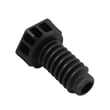
- Make sure the cabinet is level; a tilted cabinet can affect door sealing (see freezer leveling leg WR2X9485).
- Inspect the door seal for gaps, tears, or hardened sections.
- Keep vents and shelves clear so air can circulate.
- Avoid overloading the door with heavy items that can stress alignment.
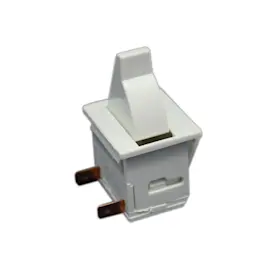
- If the interior light stays on with the door closed, cooling efficiency drops (see light switch WR23X37285).
These disadvantages affect real-world costs and food safety: energy use impacts your bill, frost and airflow affect temperature stability, and door sealing affects how hard the compressor has to work.
Last updated: January 2026