Owner’s manual
 Error Codes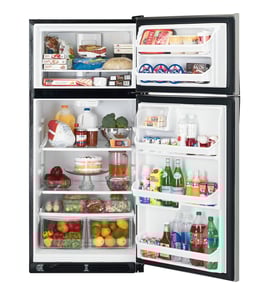





What are the disadvantages of a top mount fridge?
A top-mount (top-freezer) refrigerator like the GE GIE18GSHBRSS is usually affordable and reliable, but the main disadvantages are convenience and features: you bend more to reach fresh food, storage is often less flexible, and premium options like exterior dispensers are less common.
- More bending for daily use: the refrigerator section is below the freezer, so fresh-food items sit lower.
- Less “eye-level” organization: fewer built-in dividers and specialty zones compared with many bottom-freezer designs.
- Fewer high-end features: exterior water and ice dispensers are less common on top-mount models.
- Freezer access can be awkward: bulky frozen items can be harder to stack and see.
- Temperature swings from frequent door openings: opening the freezer door can affect airflow and temps in a shared-cooling design.
We recommend these practical adjustments for a top-mount refrigerator:
- Keep everyday items on the upper fresh-food shelves to reduce bending.
- Use clear bins to group snacks, deli items, and breakfast foods.
- Avoid blocking air vents with tall packages.
- Set temperatures correctly and give the unit time to stabilize after changes.
- Re-seat shelves and drawers so they sit fully on supports and slide correctly (see the shelf and drawer sections in the owner's manual).
| Feature | Top-mount (top-freezer) | Bottom-freezer |
|---|---|---|
| Fresh-food access | Lower, more bending | Higher, easier access |
| Typical feature set | Basic to mid-range | Often mid-range to premium |
| Organization | Simpler shelving | Often more flexible |
| Cost to buy/repair | Often lower | Often higher |
Most households open the fresh-food door far more than the freezer. If you want the easiest daily access and the most built-in organization, a bottom-freezer style usually wins. If you want straightforward cooling and simpler layout, a top-mount can be a great fit.
Last updated: February 2026
Is GE GIE18GSHBRSS considered high end?
The GE GIE18GSHBRSS is a standard GE top-mount (top-freezer) refrigerator, not a “high-end” line. In most GE lineups, true premium positioning is tied to higher-tier series and feature sets; this model is typically chosen for practical capacity and straightforward controls.
High-end refrigerators usually stand out in at least a few of these areas:
- Premium materials and fit and finish (handles, bins, shelving, door alignment)
- Advanced features (dual evaporators, precise humidity systems, smart connectivity)
- Quieter operation and tighter temperature control
- Higher-end interior lighting and storage flexibility
- Built-in or counter-depth designs and upgraded aesthetics
For your GIE18GSHBRSS, the best way to confirm which features your exact configuration includes is to match the feature list to the GIE18GSHBRSS owner’s manual.
A top-mount refrigerator like the GIE18GSHBRSS is generally designed for dependable everyday use. It typically prioritizes:
- Simple temperature controls
- Easy service access for common repairs
- Lower ownership cost compared to premium configurations
- Standard replacement parts availability
If you are refreshing the refrigerator or fixing a minor issue, these are common examples from the parts list for this model:
| What you’re fixing | Common symptom | Example part for this model |
|---|---|---|
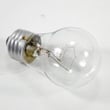
| Interior light | No light when door opens | GE appliance light bulb, 40-watt 40A15 |
| Door sealing | Warm spots, moisture, frost | Refrigerator door gasket WR14X27235 |
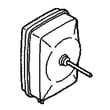
| Cooling airflow | Warm fridge, noisy fan | Refrigerator evaporator fan WR60X31522 |
If you are comparing “high end” vs “standard,” it affects what you should expect for noise level, temperature stability, and feature set. It also helps you decide whether to invest in repairs (like a fan motor or gasket) versus upgrading to a premium series.
Last updated: February 2026
What is the most common problem with a GE refrigerator?
The most common problem we see with a GE refrigerator like model GIE18GSHBRSS is inadequate cooling (fresh food section too warm, freezer not holding temperature, or both). In many cases, the root cause is restricted airflow, dirty condenser coils, or a failing fan motor; the owner's manual troubleshooting tips help narrow it down.
Start with the items that most often create warm temperatures and long run times:
- Air vents blocked by food packages; the manual specifically calls out keeping vents clear for proper circulation.
- Condenser coils clogged with dust (common in homes with pets); this reduces heat removal.
- Evaporator fan not running (you may hear no fan noise, or notice weak airflow); consider the refrigerator evaporator fan WR60X31522 if the fan is confirmed bad.
- Frost buildup on the evaporator from a defrost system issue; this chokes airflow.
- Door not sealing (warm air leaks in); a torn or warped gasket is a frequent culprit.
These checks solve a large share of “not cold enough” complaints without replacing major components:
- Confirm settings: set the refrigerator to a mid-range setting and allow 24 hours to stabilize.
- Check airflow: make sure vents in the freezer and fresh food sections are not covered.
- Listen for fans: evaporator fan (inside) and condenser fan (near compressor) should run during cooling.
- Inspect the door seal: look for gaps, rips, or areas that do not contact the cabinet.
- Clean the condenser area: unplug the refrigerator first, then remove dust from coils and the fan area.
| Symptom | Most likely cause | What to check first |
|---|---|---|
| Freezer cold, fridge warm | Airflow problem or evaporator fan issue | Vents blocked, fan running, frost buildup |
| Both sections warm | Dirty condenser coils, condenser fan issue, sealed system/compressor issue | Coils, fan operation, run time |
| Frost/ice on back freezer wall | Defrost system problem | Defrost heater and frost pattern |
Cooling problems make the compressor run longer, can lead to food spoilage, and often get worse if airflow restrictions or dust buildup are left in place.
Last updated: February 2026