 Owner’s manual
 Error Codes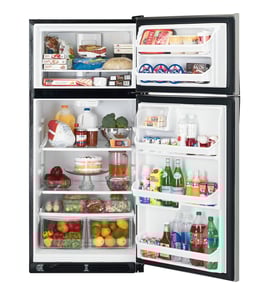



How to tell cubic feet of Kenmore refrigerator by model number?
For Kenmore model 11161219610, the capacity is 14.2 cubic feet. You can confirm this on the model’s rating/specification information in the owner's manual, which lists the unit’s capacity along with key specs like dimensions and refrigerant type.
What the model number tells you (and what it does not)
Kenmore model numbers can hint at a product family, but they do not reliably encode the exact cubic-foot capacity across all series. For 11161219610, the most accurate way to identify capacity is to use the documented specs.
- Model numbers are best for matching the correct parts and documentation.
- Capacity is typically listed in the specs section, not embedded in the model number.
- Similar-looking model numbers can still have different capacities.
Where to find capacity in the documentation
In the specs section for 11161219610, we list the capacity directly.
| Spec item | Value (11161219610) |
|---|---|
| Total capacity | 14.2 cu ft |
| Approx. width | 28.8 in |
| Approx. depth | 29.9 in |
| Approx. height | 66.3 in |
If you need a quick estimate (measurement method)
If you are comparing refrigerators and want a rough estimate from interior space, you can calculate it from interior measurements.
- Measure interior width, height, and depth (in inches).
- Multiply:
width x height x depthto get cubic inches. - Divide by 1728 to convert cubic inches to cubic feet.
- Subtract space taken by shelves, bins, and the freezer compartment for a more realistic “usable” estimate.
Why it matters
Cubic feet helps you compare storage space and also impacts expectations for cooling recovery, food load, and organization. For parts and repairs, though, the model number (11161219610) is what ensures you get the right components and instructions.
Last updated: February 2026
What is the top part of a refrigerator called?
On the Kenmore 11161219610 top-mount refrigerator, the top compartment is the freezer compartment. It is designed to keep food frozen, and on many top-mount models it can also support an optional ice maker when equipped.
What the freezer compartment does
The freezer is the coldest section of the refrigerator; it is built to maintain freezing temperatures for long-term storage.
Common freezer functions include:
- Freezing and storing meats, vegetables, and prepared foods
- Keeping ice cream and frozen desserts solid
- Supporting ice production (ice trays or an optional ice maker)
- Helping overall cooling by circulating cold air to the fresh food section
Related terms you may see in parts diagrams or the manual
Refrigerator documentation often uses a few different names for the “top part.” These usually refer to the same area or its components.
| Term | What it usually means | Where it is |
|---|---|---|
| Freezer compartment | The full top frozen-food section | Top of the cabinet |
| Freezer door | The door that seals the freezer | Upper door |
| Evaporator (freezer) | Cooling coil that creates cold air | Behind the rear freezer panel |
| Evaporator fan | Fan that moves cold air | Freezer area |
For the exact component names used for your model, check the owner's manual.
Why it matters
Using the right term helps you troubleshoot faster and order the correct replacement parts. For example, “freezer not cold” points you toward airflow, frost buildup, or evaporator fan issues, while “refrigerator section warm” can point to a damper or circulation problem.
Quick safety note for servicing
This model uses flammable refrigerant (R600a). When inspecting or defrosting, avoid puncturing any tubing and do not use mechanical devices to speed up defrosting; follow the safety guidance in the owner's manual.
Last updated: February 2026
Can I buy extra fridge shelves?
Yes. For Kenmore refrigerator model 11161219610, you can buy extra shelves or replace a damaged shelf as long as the replacement matches the original shelf style and mounting points for your cabinet. Use the parts diagram and shelf callouts in the owner's manual to identify the correct shelf configuration.
How to make sure you get the right shelf
Before ordering, we recommend checking these details on your current shelf and inside the refrigerator:
- Shelf location: fresh food section vs. freezer section
- Shelf type: full-width, half shelf, or slide-out (if equipped)
- Mounting style: hooks, rails, or molded supports in the liner
- Shelf features: spill-proof lip, trim, or integrated crisper cover
- Measurements: width and depth of the glass or wire shelf (measure the usable surface)
Quick fit check (what to compare)
Use this checklist to avoid a shelf that will not seat correctly:
- Compare the front edge shape (straight vs. curved)
- Confirm the rear support points line up with the liner slots
- Match any side trim or frame style (glass-in-frame vs. bare glass)
- Verify clearance for drawers so the shelf does not block crispers
Typical shelf options you may see for this style of refrigerator
Exact shelf styles vary by configuration, but most top-mount refrigerators use a mix like this:
| Shelf type | Common use | What to verify |
|---|---|---|
| Full-width refrigerator shelf | Main storage level | Width, depth, rear tabs/supports |
| Refrigerator shelf above crispers | Supports drawers and bins | Frame shape and crisper clearance |
| Freezer wire shelf (if equipped) | Frozen food organization | Hook style and sidewall slots |
Why it matters
A shelf that is even slightly different in tab location or frame shape can sit crooked, rattle, or crack the liner supports. Matching the original design helps the shelf carry weight safely and keeps drawers and doors closing properly.
Last updated: February 2026
What water filter fits my Kenmore fridge?
For Kenmore refrigerator model 11161219610, the correct water filter depends on whether your unit is equipped with the optional ice maker and water supply hookup. We use your model’s parts information in the 11161219610 owner's manual to identify the exact filter style and replacement interval.
How to identify the right filter on model 11161219610
Check these common “match points” before ordering:
- Look for a filter housing inside the fresh food compartment (ceiling, upper right corner, or back wall)
- Check the grille or base area for a twist-in or push-in filter location (some designs place it low)
- Confirm you actually have a water line connected (many top-mount models run with an ice maker as an option)
- Read the label on the current filter (it often lists a part number or cartridge code)
- Match the connection type: twist-lock, quarter-turn, or push-button release
If your refrigerator has no filter housing and no inline filter on the supply line, it typically uses no internal cartridge filter; filtration would be handled by an external inline filter if you choose to add one.
Quick decision guide
| What you see on your refrigerator | What it usually means | What to do next |
|---|---|---|
| A cartridge installed in a built-in housing | Uses an internal water filter | Match the cartridge label to the replacement listed in the manual |
| Ice maker present but no cartridge housing | May use an external inline filter (optional) | Check your water line setup and choose an inline filter if desired |
| No ice maker and no water line | No filter needed | Skip the filter and focus on air flow and temperature settings |
Why it matters
Using the correct filter helps protect the ice maker fill valve and keeps water flow strong. The manual also lists the minimum and maximum inlet water pressure needed for proper ice maker operation, which is just as important as the filter choice.
For step-by-step filter basics and fit tips across Kenmore designs, use how to replace the water filter in a Kenmore refrigerator.
Last updated: February 2026
What is the average life expectancy of a Kenmore refrigerator?
Most Kenmore refrigerators last 12 years on average, and a typical real-world range is 10 to 15 years with normal use and basic upkeep. For your Kenmore 11161219610 top-mount refrigerator, consistent cleaning, good airflow, and quick fixes to cooling or sealing issues are what most often extend service life.
Typical lifespan and what affects it
A refrigerator’s lifespan is driven more by operating conditions than by the name on the badge.
- Condenser coil cleanliness (dust buildup makes the compressor work harder)
- Door gasket seal quality (air leaks cause longer run times and frost)
- Airflow inside the cabinet (overpacking blocks vents and warms sections)
- Room temperature and ventilation (tight enclosures trap heat)
- Defrost and fan performance (poor airflow leads to warm fridge, icy freezer)
Maintenance that adds years (simple, high impact)
Use these as a practical schedule for a Kenmore top-mount unit:
| Task | How often | Why it matters |
|---|---|---|
| Clean condenser area | Every 6 to 12 months | Reduces compressor strain and heat buildup |
| Check door seal and alignment | Every 3 to 6 months | Prevents warm air leaks and frost |
| Keep vents clear inside | Ongoing | Maintains even temperatures |
| Set correct temps | Ongoing | Avoids overwork and food spoilage |
For model-specific safety and care guidance, follow the 11161219610 owner's manual.
Signs your refrigerator is nearing end of life
These symptoms usually mean the sealed system or cooling system is working too hard:
- Compressor runs almost constantly with warm temperatures
- Heavy frost or recurring ice buildup that returns quickly after defrosting
- Water puddles or repeated drain clogs
- Door won’t seal even after cleaning and leveling
- Unusual clicking, buzzing, or grinding that persists
Why it matters
A refrigerator that is struggling to cool typically uses more energy and puts extra wear on the compressor and fans. Catching airflow problems, gasket leaks, and defrost issues early is the most reliable way to reach the 10 to 15 year range.
If you’re troubleshooting display codes or cooling faults on this model family, use our Kenmore 111 model top freezer refrigerator error codes guide.
Last updated: February 2026





