Owner’s manual
 View engine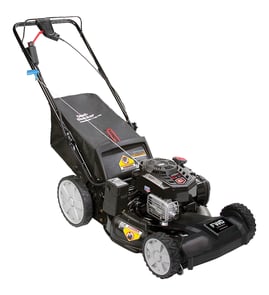




How to find Craftsman model number?
For a Craftsman walk-behind mower like model 917378840, the model number is typically printed on a decal or tag on the mower deck (often near the rear wheel area) or on the rear housing. Use that exact number to match the correct parts list and diagrams in the 917378840 owner's manual.
Check these common locations with the mower on a flat surface and the engine off:
- Top of the mower deck near the rear discharge area
- Rear of the deck near the height adjuster hardware
- Side of the deck near a rear wheel
- Handle support bracket area (near where the handle bolts to the deck)
- Grass bag frame area (if equipped)
On this Craftsman mower, the manual identifies the model as 917.378840 (you may see it with or without the dot). When searching parts, enter it as 917378840.
| You see on the tag/manual | Use for parts lookup |
|---|---|
| 917.378840 | 917378840 |
Model tags can be dirty or faded, so a quick cleanup helps.
- Wipe the tag with a damp rag; avoid harsh solvents that can remove printing
- Take a clear photo and zoom in to read small characters
- Write down the full model number before ordering parts
- Match the model number to the exploded-view diagrams in the manual
Craftsman walk-behind mowers often share similar frames and engines, but parts like the engine zone control cable, drive components, and wheel hardware can vary by model. Using the exact model number helps you get the correct fit the first time.
Last updated: February 2026
Should I use 87 or 89 gas for lawn mower?
For the Craftsman 917378840 gas walk-behind lawn mower, we recommend using 87-octane unleaded regular gasoline. Using 89-octane will not improve performance in normal mowing, and the key is using clean, fresh fuel and the correct oil type listed in the owner's manual.
The product specifications for this mower call for unleaded regular gasoline (capacity: 1.6 quarts). That aligns with using 87 octane at the pump for typical small-engine operation.
Higher octane is mainly about preventing knock in engines designed for it. Most walk-behind mower engines are designed to run correctly on regular fuel.
Use this quick guide:
- Use 87 octane for everyday mowing and storage cycles
- Use fresh fuel (old gas is a common no-start cause)
- Avoid mixing oil into the gas (this is a 4-cycle mower; oil goes in the crankcase)
- Keep fuel off tires and painted surfaces to prevent damage
- Store fuel properly and consider stabilizer for longer storage
| Item | What to use | Notes |
|---|---|---|
| Gasoline | Unleaded regular (typically 87 octane) | Capacity: 1.6 quarts |
| Engine oil (above 32°F) | SAE 30 | Use the correct fill amount |
| Engine oil (below 32°F) | SAE 5W-30 | Helps cold-weather starting |
Using the correct fuel helps prevent hard starting, rough running, and carburetor varnish. In small engines, fuel freshness and clean storage matter more than stepping up from 87 to 89 octane.
Last updated: February 2026
What are the common problems with Craftsman lawn mowers?
Common problems on the Craftsman 917378840 gas walk-behind lawn mower are no-start conditions (stale fuel, dirty air filter, spark plug or wire issues, control bar released), loss of power from heavy grass or deck buildup, and poor or uneven cutting from blade or wheel-height issues.
- Won’t start: stale fuel, dirty air filter, water in fuel, spark plug issue, control bar not held to the handle
- Loss of power: heavy grass drag, cutting too much at once, dirty air filter, grass buildup under the deck
- Poor or uneven cut: worn or loose blade, uneven wheel heights, debris packed under the mower housing
- Hard to pull starter rope: blade obstruction or a blade adapter problem
- Drain and refill with fresh gasoline if fuel is old
- Clean or replace the air filter
- Push the spark plug wire on firmly; replace the plug if fouled
- Hold the control bar against the handle while starting
- Disconnect the spark plug wire, then clean packed grass from under the deck
| Symptom | Most likely causes | What to do next |
|---|---|---|
| Won’t start | Fuel, air filter, spark plug or wire, control bar released | Refresh fuel, service filter, check plug and wire, hold control bar |
| Loss of power | Heavy grass, deck buildup, dirty filter | Raise cut height, slow down, clean deck, service filter |
| Poor cut | Blade condition, wheel heights, deck buildup | Level wheels, clean deck, service blade and hardware |
- Self-propel slips or won’t drive: check the lawn mower ground drive belt, 3/8 x 32-1/2-in 532175436
- Poor cut after blade service: inspect the lawn mower blade adapter 581547901
Most mower problems come from basic maintenance (fuel, airflow, deck cleaning) and a few wear items (belts, blade adapter). Fixing these early improves starting, power, and cut quality.
For the model-specific troubleshooting chart and maintenance schedule, use the owner's manual.
Last updated: February 2026
What is the best self-propelled mower for the money?
For the best value, we recommend choosing a self-propelled mower that matches your yard size, terrain, and maintenance comfort level; if you already own the Craftsman 917378840, keeping it running well is often the best “for the money” option because routine tune-ups and a fresh drive belt restore performance for far less than replacing the mower. See the owner's manual for operating and maintenance guidance.
Focus on the features that change real-world performance and ownership cost:
- Drive system: front-wheel drive for flatter yards, rear-wheel drive for hills and uneven terrain
- Deck size: most walk-behind mowers are 21 inches; wider decks reduce passes but add weight
- Cut options: bagging, side discharge, and mulching (mulching reduces bagging time)
- Speed control: single-speed is simpler; variable speed is more comfortable for mixed terrain
- Maintenance needs: gas mowers need seasonal fuel and tune-up attention; battery mowers reduce engine maintenance
This model is a 6.5 HP, 21-inch, power-propelled rotary mower. When it “won’t move” or self-propel feels weak, the most common value fix is restoring the drive system.
Common repair wins:
- Replace a worn or stretched ground drive belt
- Inspect the drive control lever and cable adjustment
- Check wheels for binding and debris buildup
- Confirm the operator presence control bar and drive control engage correctly
| Symptom | Likely area | Example part on this model page |
|---|---|---|
| Mower won’t self-propel | Belt slipping/worn | Lawn mower ground drive belt, 3/8 x 32-1/2-in 532175436 |
| Drive engagement feels inconsistent | Control linkage/cable | Control 532184588 |
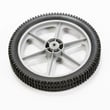
| Poor traction or wobble | Wheel wear/damage | Lawn mower wheel 532180552 |
“Best for the money” is usually the mower that delivers the cut quality you need with the lowest total cost over time. For many owners, a solid Craftsman gas walk-behind mower plus basic maintenance (clean deck, sharp blade, fresh fuel, and a healthy drive system) beats the cost of replacing the entire machine.
Last updated: February 2026