Owner’s manual
 Error Codes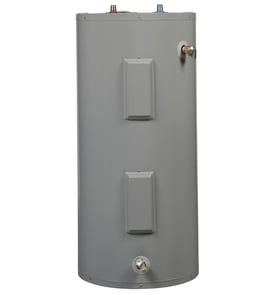


How to tell how old a ES2H50RD045V water heater is?
You can tell the age of your Us Craftmaster ES2H50RD045V water heater by reading the serial number on the data plate. On most Us Craftmaster units, the first two digits of the serial number indicate the year it was manufactured (for example, “13” means 2013). For data plate location and identification details, use the ES2H50RD045V owner's manual.
Where to find the serial number
Look for the rating/data plate on the outside of the tank (commonly on the side of the water heater). It typically includes the model number, serial number, voltage, and wattage information.
- Check the tank’s side panel for a printed label
- Look near the upper access cover area on electric models
- Copy the serial number exactly as shown (letters and numbers)
- Record the model number (ES2H50RD045V) to match parts correctly
- Take a clear photo before the label fades further
How to decode the serial number (typical format)
For Us Craftmaster water heaters, a common serial format uses the first two digits as the year.
| Serial number starts with | Manufacturing year | What that means |
|---|---|---|
| 13 | 2013 | Built in 2013 |
| 19 | 2019 | Built in 2019 |
| 05 | 2005 | Built in 2005 |
Why the manufacturing year matters
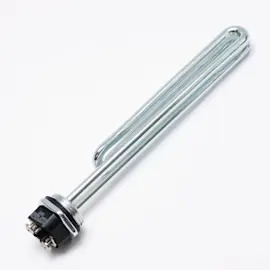
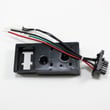
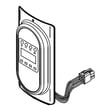
Knowing the build year helps Us match the correct electrical and tank components for your ES2H50RD045V, especially when you are troubleshooting heating issues or ordering parts like an element 100108290 or water heater electronic thermostat 100309396. It also helps you plan maintenance such as periodic tank flushing and anode rod inspection.
Quick safety reminder before any inspection
If you remove access covers to read labels or inspect wiring, shut off power at the breaker first. The manual also warns that applying power before the tank is completely full can destroy the heating elements.
Last updated: February 2026
How much would it cost to replace a 50 gal electric water heater?
Replacing a 50-gallon electric water heater typically costs about $800 to $2,500 installed (unit plus labor). For a straightforward swap of a similar 50-gallon electric tank, most homeowners land around $1,000 to $2,300, depending on local labor rates and whether any plumbing or electrical updates are needed.
What drives the price up or down
- Type and efficiency of the new heater (standard electric tank vs. higher-efficiency options)
- Labor and permit requirements in your area
- Electrical work (breaker, wiring, disconnect, bonding, or code updates)
- Plumbing changes (shutoff valves, piping rework, expansion tank, pan, drain line)
- Access and location (tight closet, attic, crawlspace, stairs)
- Disposal/haul-away of the old tank
Typical cost breakdown (installed)
| Cost item | Typical range | Notes |
|---|---|---|
| 50-gal electric water heater | $450 to $1,200 | Price varies by brand, warranty length, efficiency |
| Labor | $350 to $1,200 | Higher when access is difficult or modifications are needed |
| Permits/materials/incidentals | $0 to $400 | Valves, fittings, pan, connectors, etc. |
| Total installed | $800 to $2,500 | Most common real-world range |
When repair makes sense instead of full replacement
If your Us Craftmaster ES2H50RD045V is otherwise in good shape, some “no hot water” or “not enough hot water” complaints are often solved by replacing service parts rather than the whole tank.
Common repair parts for this model include:
- Water heater electronic thermostat 100309396 (temperature control issues)
- Element 100108290 (slow recovery or no heat)
- Water heater high-temperature sensor 100263932 (overheat sensing and control feedback)
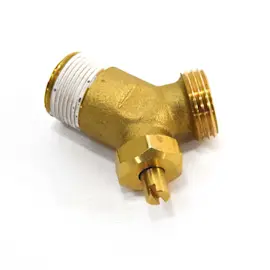
- Drain valve 100109106 (leaking or hard-to-operate drain)
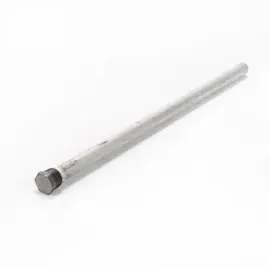
- Water heater anode rod 100109594 (tank protection and odor/corrosion prevention)
Why it matters
A replacement quote can jump quickly when code upgrades or access issues are involved. Comparing replacement cost to targeted repairs (thermostat, heating element, sensor, anode rod) helps you decide whether to restore performance now or invest in a new tank.
For model-specific maintenance and service steps (including safe draining/flushing and heating element replacement precautions), follow the owner's manual.
Last updated: February 2026
How long should a 50 gallon electric water heater last?
A 50-gallon electric water heater typically lasts 10 to 15 years. For your Us Craftmaster ES2H50RD045V, regular maintenance (especially flushing sediment and inspecting the anode rod) helps you reach the upper end of that range; neglected tanks often fail sooner.
Typical lifespan and what affects it
Most 50-gallon electric tanks land in this range because the tank lining, anode rod, and internal sediment buildup determine how fast corrosion and overheating damage occur.
Key factors that shorten or extend life:
- Water quality (hard water increases sediment)
- Water softener use (softened water can be more corrosive to the tank)
- Maintenance frequency (flushing and anode inspections)
- Temperature setting (higher temps increase stress and scale)
- Usage patterns (heavy daily demand cycles the elements more)
Maintenance schedule we recommend for ES2H50RD045V
Your owner's manual calls out two big life-extenders: flushing sediment and checking the anode rod.
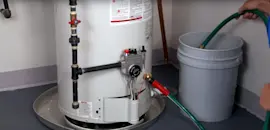
- Flush the tank every 6 months to reduce sediment that can cause noise and premature tank failure
- Inspect the anode rod every 3 years; replace it when it is more than 50% depleted
- If you notice odor or discoloration, an anode change can help; use the correct replacement for this model
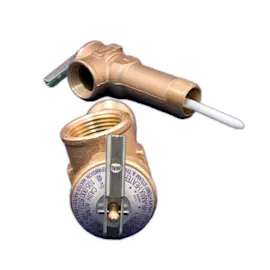
- If the temperature and pressure relief valve drips or leaks, have it repaired promptly (do not cap or plug it)
Quick schedule table
| Task | How often | Why it matters |
|---|---|---|
| Drain and flush tank | Every 6 months | Reduces sediment, noise, and overheating risk |
| Inspect anode rod | Every 3 years | Slows tank corrosion |
| Replace anode rod | When >50% depleted | Protects the tank lining |
| Check for leaks/drips | Monthly | Catches failures before water damage |
Signs it is nearing end of life
These symptoms usually mean the tank is corroding or sediment is damaging components:
- Water around the base or recurring leaks
- Rust-colored water from hot taps
- Popping/rumbling sounds (sediment on the tank bottom)
- Not enough hot water even after recovery time
- Relief valve dripping frequently during normal operation
Parts that commonly get replaced first
If performance drops but the tank is not leaking, these parts are common fixes:
- Element 100108290 (heating problems, slow recovery)
- Water heater electronic thermostat 100309396 (temperature control issues)
- Water heater anode rod 100109594 (corrosion protection)
Why it matters
Once a tank starts leaking, replacement is the practical path. Staying on the flush and anode schedule helps you avoid sudden failure and keeps heating elements and controls from working harder than they should.
Last updated: February 2026
What are common problems with ES2H50RD045V water heaters?
Common problems on the Us Craftmaster ES2H50RD045V electric water heater include no hot water, insufficient hot water, slow recovery, high operating costs, relief valve dripping, and water odor. These issues most often trace to power supply problems, thermostat or heating element failures, or sediment and anode-rod conditions (all covered in the owner's manual).
Most common symptoms and likely causes
- No hot water: no power to the heater, high-temperature limit switch open, defective upper thermostat
- Insufficient hot water: defective lower element, thermostat set too low, sediment or lime in the tank, leaking hot-water faucets
- Slow hot water recovery: failed upper or lower heating element, heavy sediment buildup
- High operating costs: thermostats set too high, wasted hot water, long runs of exposed hot-water piping
- Relief valve dripping: often tied to overheating, high pressure, or thermal expansion conditions
- Water odor (rotten egg smell): anode rod reaction with certain water conditions
Parts that commonly fix these problems
If troubleshooting points to a failed control or heating component, these model-matched parts are common replacements:
| Symptom | Common part to check/replace | What it does |
|---|---|---|
| No hot water or temperature swings | Water heater electronic thermostat 100309396 | Controls element operation and temperature regulation |
| Slow recovery or lukewarm water | Element 100108290 | Heats the water in the tank |
| Overheat protection trips or erratic temps | Water heater high-temperature sensor 100263932 | Helps monitor temperature for safe operation |
| Odor or premature tank corrosion risk | Water heater anode rod 100109594 | Sacrificial rod that protects the tank lining |
Quick checks we recommend first (electric models)
- Verify the circuit breaker is on and the heater has power.
- Confirm the tank is completely full of water before restoring power after any draining or service.
- Check for loose or burned wiring at the element and thermostat connections.
- Look for signs of sediment (popping or rumbling sounds during heat-up).
- Review thermostat setting and adjustment steps in the manual.
Why it matters
Catching thermostat, element, sediment, and anode-rod issues early helps restore hot water faster, reduces energy use, and prevents repeat failures (for example, energizing an element that is not submerged can destroy it).
Last updated: February 2026