Installation guide
 Owner’s manual
 Error Codes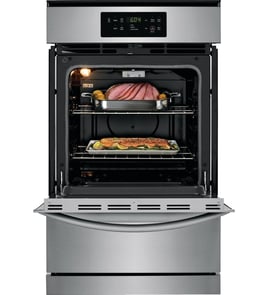



Where is the model number on a Magic Chef gas stove?
On the Magic Chef 9112WUT gas wall oven, the model number is on the rating plate located under the broiler oven bottom. You access it by removing the broiler bottom as shown in the owner's manual.
Where to look on this Magic Chef model
For model 9112WUT, use these location checks in order:
- Open the oven door and locate the broiler area
- Remove the broiler oven bottom (the rating plate is underneath)
- Record both the model and serial numbers from the rating plate
- Reinstall the broiler bottom securely before using the oven
Why the model number location matters
We use the model number to match the correct wall oven parts and diagrams for your exact configuration (gas valve, igniter style, clock/timer, trim). It also helps avoid ordering a similar-looking part that will not fit.
Quick comparison: wall oven vs. freestanding range labels
| Appliance type | Most common model tag locations | What to check first |
|---|---|---|
| Gas wall oven (like 9112WUT) | Under broiler bottom; sometimes on an oven frame/rating plate | Broiler bottom area |
| Freestanding gas range/stove | Under cooktop; inside storage drawer; on back panel | Drawer or under cooktop |
Tips for writing the number down correctly
- Copy the model number exactly (letters and numbers)
- Take a clear photo of the rating plate for reference
- Keep the information with your installation paperwork and service notes
Last updated: February 2026
How to tell if a wall oven is gas or electric?
Your Magic Chef 9112WUT is a gas wall oven. A gas wall oven connects to a gas supply line and uses an igniter to light the bake burner; you will see a burner flame after a short delay when you turn the thermostat on (typical ignition delay is about 30 to 45 seconds). See the installation guide for the gas connection and ignition details.
Quick ways to identify gas vs. electric
Use these checks on any wall oven:
- Gas supply present: A gas oven has a gas shutoff valve and a gas line (often 1/2-inch NPT at the regulator connection).
- Ignition style: Many modern gas ovens use a glow-bar igniter that heats up, then the gas valve opens and the burner lights.
- Flame: Gas ovens produce a visible flame at the bake burner when heating.
- Electrical needs still exist: Gas ovens still plug into a grounded outlet to power controls and the igniter.
- No large electric bake element: Electric ovens typically have a visible electric bake element (or a hidden element under the oven floor) and no gas line.
What you should see on the 9112WUT during normal bake
On this model, the bake burner uses electric ignition with a glow bar:
- Turn the thermostat to a temperature.
- The igniter begins to glow.
- After the igniter is hot enough, the oven gas valve opens.
- The burner lights and you see flame.
Normal timing (typical)
| Step | What happens | Typical time |
|---|---|---|
| Igniter energizes | Igniter glows | Immediately after turning on |
| Burner lights | Flame appears | 30 to 45 seconds |
| Cycling | Igniter and flame cycle to hold temp | Ongoing |
Why it matters
Gas vs. electric determines the right troubleshooting path and parts. For example, a gas oven that will not heat often points to the igniter or gas valve circuit, while an electric oven that will not heat often points to a bake element or relay.
Last updated: February 2026
Can you have a gas wall oven?
Yes. The Magic Chef 9112WUT is a gas wall oven designed to be installed in a cabinet cutout and connected to a household gas supply plus a grounded 120-volt outlet. Use the installation guide to confirm cutout dimensions, gas connection location, and electrical requirements for your kitchen.
What makes it a “gas wall oven”
A gas wall oven is built into cabinetry (not a freestanding range) and uses gas for baking and broiling while still needing electricity for controls and ignition.
Key characteristics you will see on gas wall ovens like the 9112WUT:
- Gas supply connection to the oven’s regulator (the guide shows a 1/2-inch NPT female inlet on the regulator)
- A grounded 120-volt electrical outlet location specified in the cabinet area
- Cabinet cutout dimensions and minimum installation clearances
- Fastening the oven to the cabinet through trim holes using the screws shipped with the unit
Installation basics to plan for
We recommend planning these items before the oven is set into the cabinet:
- Cabinet cutout: verify width, height, and depth from the installation drawings
- Solid, level base: the recess should have a solid floor and be level to prevent performance issues
- Draft control: the enclosure should be sealed to prevent drafts that can affect burner and baking performance
- Utilities: route gas and electric service to the recommended areas shown in the drawings
- Secure mounting: fasten the oven with the four screws through the trim holes after leveling
Quick checklist
| What you need | Why it matters | Where to confirm |
|---|---|---|
| Gas supply line and shutoff | Safe, reliable fuel supply | Installation guide |
| 120V grounded outlet | Powers ignition and controls | Installation guide |
| Correct cutout size | Proper fit and ventilation | Installation guide |
| Level installation | Even baking and stable burner operation | Installation guide |
Why it matters
Gas wall ovens combine gas heat with electrical components. If the cabinet cutout, sealing, or utility locations are off, you can get inconsistent burner flames, uneven baking, or installation fit problems.
Last updated: February 2026
What are the parts of a gas oven?
A gas wall oven like the Magic Chef 9112WUT is built around a gas supply system, an ignition system, burner and airflow components, and electrical controls. Common serviceable parts include the igniter, gas valve/regulator, thermostat or control, door hardware, and the oven light; see the installation guide for connection and safety details.
Main systems and common parts
- Gas supply and regulation: house shut-off valve, appliance pressure regulator, manifold piping
- Ignition and burner: hot surface igniter, oven burner, air shutter/orifice (for flame adjustment)
- Controls and safety: thermostat/control, wiring, grounding plug, internal manual shut-off (service valve)
- Oven cavity and door: racks, door hinges, door seal, glass/trim pieces
- Lighting and accessories: oven bulb, broiler pan
Parts you can replace on this 9112WUT model
These are examples of parts listed for this model that commonly relate to heating, lighting, and usability:
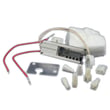
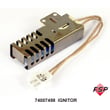
- Igniter 74007498 (burner ignition)
- Wall oven gas valve assembly WP74005550 (gas flow control)
- Oven bulb 8009 (oven light)
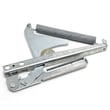
- Wall oven door hinge 74004059 (door alignment and closing)
- Broiler pan (for broiling and catching drips)
Quick “what does it do?” table
| Part or system | What it does | Common symptom when it fails |
|---|---|---|
| Igniter | Heats up to light the burner | No heat, delayed ignition, weak flame |
| Gas valve/regulator | Controls and stabilizes gas flow | No heat, inconsistent heating |
| Air shutter/orifice | Sets air-to-gas mix | Yellow flames, soot, lifting flame |
| Door hinge/seal | Keeps door aligned and heat in | Heat loss, uneven baking, door won’t close |
| Oven light | Illuminates cavity | Light out, flickering |
Why it matters
Knowing which system a part belongs to helps you troubleshoot faster. For example, a “no bake” complaint often points to the ignition and gas flow path (igniter, valve, regulator), while heat escaping or uneven baking often points to door hardware (hinges, seal).
Last updated: February 2026