Owner’s manual
 Error Codes



How many cubic feet is my Kenmore refrigerator by model number?
Your Kenmore refrigerator model 79551029010 is a 795.5102* series side-by-side, but the exact cubic-foot capacity is best confirmed from the model and serial label inside the fresh food section or from the specifications listed in the 79551029010 owner's manual. That method ties the capacity to your exact unit configuration.
Use these checks in order; the first one is the most reliable.
- Check the rating plate inside the refrigerator compartment (usually on a side wall near the crisper area); it lists the model/serial and often the capacity.
- Look in the specifications section of the 79551029010 owner's manual.
- Search by the full model number (79551029010) when ordering parts; model families can share similar features but differ in capacity.
- Do not estimate by exterior size; cabinet dimensions and insulation thickness vary and can mislead.
Cubic feet is the total usable storage volume of the refrigerator and freezer sections combined. It is not the same as shelf count, door bin size, or how much ice the icemaker makes.
| Measurement | What it tells you | Best use |
|---|---|---|
| Cubic feet (cu. ft.) | Total storage volume | Comparing refrigerator sizes |
| Shelf and bin layout | How space is organized | Deciding if your food fits well |
| Exterior dimensions | Fit in your kitchen opening | Installation planning |
Knowing the correct cubic-foot capacity helps us match the right Kenmore refrigerator parts and accessories (like water system and dispenser components) to your exact model, and it helps you compare side-by-side refrigerators accurately.
If you are also tracking down water filter or dispenser issues while checking specs, our DIY guide on how to replace the water filter in a Kenmore refrigerator is a good companion to the manual.
Last updated: February 2026
Where is the model number on a Kenmore side by side refrigerator?
On Kenmore side-by-side refrigerator model 79551029010, the model and serial number are printed on an identification label inside the fresh food (refrigerator) compartment, on the right-hand side. Use that label whenever you order parts or look up service information in the 79551029010 owner's manual.
- Open the refrigerator (fresh food) door, not the freezer door.
- Look along the right interior wall of the refrigerator compartment.
- Check near the front edge of the liner where labels are easiest to read.
- Use a flashlight if the label is in shadow.
- Write down both the model number and serial number exactly as shown.
Most Kenmore refrigerator ID labels include both identifiers. Here is what to record:
| Item | What it’s used for | Tip |
|---|---|---|
| Model number | Matching parts and diagrams to your exact refrigerator | Copy it character-for-character (example: 79551029010) |
| Serial number | Identifying the production unit for service history | Keep it with your purchase date |
The model number is how we match your refrigerator to the correct parts list and diagrams. Even small model variations can use different door hardware, water system parts, or dispenser components.
If you are ordering parts for common issues (like dispenser or water flow problems), having the model number ready helps you choose the right items, such as the refrigerator water inlet valve 5221JA2006D or refrigerator water tubing 5210JA2006B.
Last updated: February 2026
How to clean the coils on a Kenmore side by side refrigerator?
To clean the condenser coils on your Kenmore 79551029010 side-by-side refrigerator, unplug the refrigerator, remove the lower rear access cover (if equipped), then vacuum and brush dust off the coils and nearby fan area. Dirty coils make the compressor work harder and can reduce cooling.
- Unplug the refrigerator (or switch off power at the breaker).
- Pull the refrigerator straight out so you can access the back safely.
- Remove the lower rear access panel or back cover if your model has one.
- Use a coil brush and a vacuum with a crevice tool to remove dust and pet hair.
- Vacuum the floor under the unit and the area around the condenser fan.
- Reinstall the cover, push the refrigerator back carefully, then restore power.
The care and cleaning guidance for this model focuses on safe, non-damaging cleaners and powering the unit off before cleaning.
| Task | Recommended | Avoid |
|---|---|---|
| Dust removal | Vacuum, soft coil brush | Water spray, pressure air that blows dust into components |
| Wiping nearby surfaces | Mild detergent in warm water | Abrasive cleaners, harsh chemicals |
| Safety | Unplug first | Cleaning while energized |
Most side-by-side refrigerators run best when coils are cleaned every 6 months. If you have pets or a dusty laundry room or kitchen, clean them every 3 months.
When coils are clogged, heat cannot release efficiently. That can lead to longer run times, warmer refrigerator temperatures, and symptoms that look like a cooling problem. The troubleshooting guidance for this model specifically calls out dirty condenser coils as a cause of poor cooling.
For model-specific panel locations and care notes, use the 79551029010 owner's manual.
Last updated: February 2026
What are the most common problems with Kenmore refrigerators?
The most common problems we see on Kenmore refrigerators like model 79551029010 are cooling issues, water leaks, ice maker or dispenser trouble, and unusual noises. Many of these come down to airflow problems (dirty coils, fan issues), doors not sealing, or water supply and valve problems; the 79551029010 owner's manual troubleshooting section helps you narrow it down fast.
- Not cooling or warm temperatures: dirty condenser coils, blocked vents, evaporator fan problems, or defrost-related ice buildup.
- Compressor runs a lot: frequent door openings, warm room temperature, dirty condenser coils, or doors not fully closing.
- Water leaking or puddles: clogged defrost drain, loose water line connections, cracked tubing, or a seeping inlet valve.
- Ice maker not making ice (or slow ice): freezer not cold enough, door left open, water supply off, or restricted water flow.
- Small ice cubes: restricted water supply or a partially blocked shutoff valve.
- Doors hard to open or not closing: sticky/dirty gaskets, refrigerator not level, bins or food packages out of position.
- Confirm doors close fully and nothing is holding them open.
- Clean the door gaskets and the surfaces they touch; a thin coat of paraffin wax can reduce sticking.
- Clean condenser coils (dirty coils make the compressor work harder).
- Give the ice maker 24 hours after hookup to begin normal ice production.
- Verify the water supply is on and the line is not kinked.
If your symptoms point to a failed component, these are common fixes for this model:
| Symptom | Common part to check | Example part for 79551029010 |
|---|---|---|
| No water/slow water at dispenser, ice maker issues | Water inlet valve | Refrigerator water inlet valve 5221JA2006D |
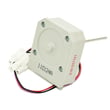
| Warm temps, poor airflow, noise from freezer area | Evaporator fan motor | Refrigerator evaporator fan motor 4681JB1029A |
| Water taste/odor complaints or low flow after long use | Water filter system maintenance | Refrigerator water tank MJM61904702 |
Cooling, ice, and leak complaints often share the same root causes: restricted airflow, doors not sealing, or water flow restrictions. Fixing the basic cause first prevents repeat failures and helps protect the control board and compressor from overwork.
Last updated: February 2026
How to tell if a Kenmore refrigerator compressor is bad?
If your Kenmore 79551029010 side-by-side refrigerator has power but both sections stay warm, and you hear repeated clicking or the unit runs constantly with no temperature improvement, the compressor system may be failing. Use the owner's manual to rule out normal sounds and basic airflow issues first.
Look for a pattern, not a single symptom:
- Refrigerator and freezer both warm after 24 hours of running
- Repeated click every few minutes from the compressor area (start attempt then shutoff)
- Compressor runs a lot but temperatures do not improve
- Compressor is silent while interior lights work (fans may or may not run)
- Compressor shell is very hot to the touch after repeated start attempts
The manual notes that high-efficiency compressors can run longer and may sound pulsating or high-pitched during normal operation.
- Confirm the unit was not just plugged in; allow up to 24 hours for full cooling
- Make sure doors close completely; air leaks drive long run times
- Clean condenser coils; dirty coils make the compressor work harder
- Listen for normal airflow from the evaporator fan and condenser fan
- Verify the cord is firmly plugged into a working outlet
| Check | What you notice | What it usually means |
|---|---|---|
| Clicking every few minutes | Starts then stops | Overload trip, start device issue, or compressor problem |
| Runs constantly, still warm | No cooling gain | Sealed system or compressor efficiency issue |
| Fans run, no cooling | Air moving but not cold | Refrigerant flow or compressor issue |
A bad sensor, fan, or control can cause poor cooling and long run times:
- Refrigerator thermistor 6500JB2002T
- Refrigerator condenser fan 4681JB1029B
- Refrigerator electronic control board EBR64585301
A true compressor failure is different from “runs a lot.” Ruling out door sealing, dirty coils, and fan airflow prevents unnecessary sealed-system work.
Last updated: February 2026