Owner’s manual
 Error Codes


How to reset an ice maker on a GE side by side?
To reset the ice maker on your GE PZS23KSEBFSS side-by-side refrigerator, turn the ice maker off, clear any stuck cubes, then turn it back on. The ice maker will restart once the freezer is at 15°F (-9°C) or colder; a full bin typically takes 2 to 3 days.
Quick reset steps (works for most GE side-by-side units)
- Set the ice maker power switch to 0 (off).
- Remove the ice bin and clear any jammed or piled-up cubes.
- Confirm the feeler arm (if your model uses one) moves freely and is not blocked.
- Reinstall the bin and set the power switch to I (on).
- Wait for the freezer to reach 15°F (-9°C) or below; the ice maker starts automatically.
For model-specific control locations and illustrations, use the PZS23KSEBFSS owner's manual.
If the green light is blinking
A blinking green power light usually points to cubes stuck in the ice maker. Use this sequence:
- Turn the ice maker off.
- Remove the stuck cubes from the mold area.
- Turn the ice maker back on.
What to check if it still will not make ice
| What to check | What “good” looks like | What to do if it is not |
|---|---|---|
| Freezer temperature | 0°F to 5°F is typical; must be 15°F or colder to run | Adjust controls; allow 24 hours to stabilize |
| Water supply | Supply valve on; line connected | Turn on supply; correct kinks |
| Ice bin/feeler arm | Bin seated; arm not blocked | Reseat bin; clear obstructions |
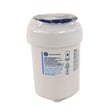
| Water filter | Strong flow at dispenser | Replace the GE refrigerator water filter MWFP if flow is weak |
Why it matters
A proper reset clears mechanical jams and restores normal cycling. If the freezer is too warm or water flow is restricted (often by a clogged filter), the ice maker can run poorly, make small cubes, or stop altogether.
Last updated: February 2026
What is the most common problem with a GE refrigerator?
The most common GE refrigerator problem is not cooling properly (fresh food warm, freezer warming, or temperatures swinging). On GE model PZS23KSEBFSS, start with temperature settings, door sealing, and airflow; then check for frost buildup and ice maker water supply basics using the PZS23KSEBFSS owner's manual.
Most common issues and first checks
- Not cooling or weak cooling: vents blocked by food, condenser area dirty, or frost restricting airflow.
- Ice maker not making ice: freezer too warm, ice maker switch off, or water supply off.
- Slow water flow or hollow ice: clogged water filter.
- Frequent buzzing: ice maker on while water supply is not connected (can damage the inlet valve).
- Water leaks/puddles: commonly a defrost drain issue or a water line/valve problem.
Quick troubleshooting (10 minutes)
- Confirm doors close fully; remove packages that hold doors open.
- Set controls to normal targets; allow 24 hours to stabilize after changes.
- Listen for the evaporator fan; weak airflow often points to a fan or frost issue.
- If ice maker is involved, verify the ice maker is on and the water supply is on.
- Replace the filter if flow is slow or cubes are hollow; then dispense water to purge air.
Symptom-to-cause guide
| Symptom | Likely cause | What we recommend |
|---|---|---|
| Fresh food warm, freezer OK | Airflow restriction or evaporator frost | Clear vents; check for frost; consider refrigerator evaporator fan motor WR60X10307 |
| No ice | Freezer too warm or ice maker off | Wait 24 hours; confirm ice maker on |
| Hollow cubes, slow dispenser | Clogged filter | Replace refrigerator water filter MWFP |
| Buzzing | Water valve energizing with no water | Turn ice maker off until water is connected |
Why it matters
Cooling, ice maker, and dispenser complaints often share the same root causes: temperature, airflow, and water supply. Fixing the basics first prevents repeat problems and protects components like the water valve.
To order model-matched parts from the parts list or search by model number, use Sears PartsDirect.
Last updated: February 2026
Where is the defrost drain on a GE side by side refrigerator?
On the GE PZS23KSEBFSS side-by-side refrigerator, the defrost drain is in the freezer compartment on the interior back wall, typically centered just above where the freezer floor slopes up into the rear wall. Clearing that drain keeps defrost water from backing up and leaking.
How to find it quickly
- Remove the lower freezer basket and any items on the freezer floor.
- Look at the back wall near the bottom, right above the floor-to-wall “ramp.”
- Find a small drain opening (often under or behind a thin layer of frost/ice).
- If you see a sheet of ice on the freezer floor, the drain is usually underneath that ice.
- Use the PZS23KSEBFSS owner's manual to confirm panel removal steps for your exact configuration.
How to clear a clogged defrost drain (safe DIY steps)
- Unplug the refrigerator to avoid shock.
- Melt visible ice around the drain with warm water (a turkey baster works well).
- Flush the drain with several rounds of warm water until it flows freely.
- If water backs up, gently feed a flexible plastic tube or zip tie into the hole to break up sludge.
- Reassemble, restore power, then monitor for 24 hours.
Quick do and don’t list
- Do use warm (not boiling) water to avoid cracking plastic.
- Do protect the freezer floor with towels.
- Do keep the AirTunnel louvers clear for proper airflow.
- Don’t chip ice with sharp tools; it can puncture the drain trough.
- Don’t force rigid wire deep into the drain; it can damage the tube.
Symptoms and what they usually mean
| Symptom | Most common cause | What to check next |
|---|---|---|
| Water pooling on freezer floor | Drain hole iced over | Clear ice and flush drain |
| Water under crisper drawers | Drain tube partially blocked | Flush until steady flow |
| Musty odor | Standing water in drain pan/tube | Clean and flush drain |
Why it matters
A clear defrost drain lets meltwater reach the drain pan instead of refreezing in the freezer or leaking into the fresh food section. That prevents ice buildup, odors, and recurring puddles.
If you also have puddles after clearing the drain, we recommend reviewing how to get rid of refrigerator puddles for additional checks.
Last updated: February 2026
Why is my GE side by side refrigerator not making ice?
If our GE PZS23KSEBFSS side-by-side refrigerator is not making ice, the most common causes are the ice maker being switched OFF, the freezer not cold enough, or a water supply problem (shutoff valve off, kinked line, or a clogged filter). Use the owner's manual steps to confirm the ice maker switch position and cooling requirements.
Quick checks that fix most “no ice” problems
- Confirm the ice maker power switch is set to ON.
- Make sure the household water shutoff valve is fully open.
- Check the water supply line behind the refrigerator for kinks or pinches.
- Verify the freezer is cold; the ice maker typically starts filling once the freezer reaches about 15°F.
- If the refrigerator was just installed or recently reconnected to water, allow 12 to 24 hours to begin making ice.
- Discard the first few batches after a new hookup to clear the water line.
Water filter and water flow issues
A restricted water supply can stop ice production or cause small or hollow cubes. If water flow at the dispenser is slow, replace the filter first.
Common filter-related symptoms
- Small or hollow ice cubes
- Slow ice production
- Weak water dispenser flow
Helpful parts for this model:
When the ice maker is ON but still not filling
If the ice maker is on and the freezer is cold, focus on the fill system. A failed inlet valve can prevent water from entering the ice maker.
| What you notice | Likely area to check | What we do next |
|---|---|---|
| No water to ice maker, dispenser also weak | Water supply or filter | Replace filter, confirm shutoff valve open |
| Dispenser works, ice maker never fills | Inlet valve or ice maker fill circuit | Test/replace the inlet valve |
| Buzzing sound with no water connected | Ice maker left ON without water | Turn ice maker OFF until water is connected |
Model-matched part to consider:
Why it matters
Running the ice maker with poor water flow can lead to slow production, hollow cubes, and extra wear on the inlet valve. Getting the freezer temperature and water supply right restores normal cycling and protects key components.
For additional troubleshooting steps and symptom-based guidance, use our common refrigerator ice maker problems and solutions article. If you need to order parts beyond the items listed here, search by model number on Sears PartsDirect.
Last updated: February 2026