Owner’s manual
 View engine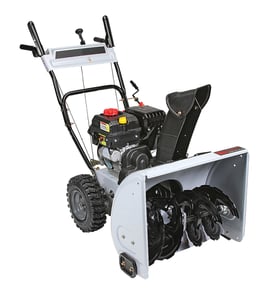



How do I tell what year my snowblower is?
For your Craftsman gas snow blower model 247888741, the most reliable way to determine the year is to use the serial number and engine identification code on the machine, then match that information to the date format shown in the 247888741 owner's manual.
Check these common locations for the information you need:
- Model and serial number label on the frame (often near the rear of the unit or under/near the handle area)
- Engine identification label on the engine shroud, valve cover area, or recoil starter housing
- Purchase date if you recorded it in your paperwork (the manual includes a place to write it down)
- Proof of sale if you still have it (useful for warranty timing)
Many small-engine date codes use a pattern where the first two digits indicate the year. For example, a code starting with 99 typically points to 1999 as the manufacture year of the engine.
| Example engine code start | What it typically indicates | What it tells you |
|---|---|---|
| 99xxxxxx | 1999 | Engine manufacture year |
| 15xxxxxx | 2015 | Engine manufacture year |
We recommend using both identifiers because the engine manufacture date and the snowblower assembly date can be different.
- Use the engine code to estimate the engine’s build year
- Use the snowblower serial number to narrow down the unit’s production run
- If you need parts, always match by model number 247888741 first
Knowing the year helps you choose the right replacement parts (shear pins, cables, friction wheel components) and follow the correct maintenance specs and procedures for your exact production version.
Last updated: January 2026
Is sae 30 the same as 5W30 for snowblower?
No. For Craftsman gas snow blower model 247888741, SAE 30 and 5W-30 are different oils; your operator’s manual specifies 5W-30 engine oil for normal use because it flows better during cold starts while still protecting the engine when warm. See the 247888741 operator’s manual.
The manual lists Engine Oil: 5W-30 and also shows a temperature chart where 5W-30 covers typical winter operating ranges.
- Use 5W-30 for most snowblower conditions.
- Consider 0W-30 or synthetic only when operating in very cold temperatures (per the manual’s oil chart).
- Avoid SAE 30 for snowblower winter use because it is thicker at cold start.
- Never use 2-stroke oil or non-detergent oil.
- Check oil level on a level surface before each use.
| Oil type | Cold-start flow | Winter suitability | What it means for you |
|---|---|---|---|
| SAE 30 | Thicker | Poor in cold | Harder starting, slower lubrication at startup |
| 5W-30 | Better flow | Good | Easier starting and faster oil circulation |
Snowblowers start and run in cold weather. Using the recommended viscosity helps the engine lubricate quickly at startup, reduces wear, and supports reliable starting and smooth operation.
- Add oil slowly and do not overfill (overfilling can cause smoking or hard starting).
- Reinstall and tighten the dipstick/cap securely before starting.
- Dispose of used oil properly.
Last updated: January 2026
What is the most common problem with snow blowers?
The most common problem we see with snow blowers is a clogged discharge chute or auger area that stops snow from throwing properly. On the Craftsman 247888741 gas snow blower, the manual also emphasizes that clearing clogs safely (engine off, wait for the impeller to stop, use a clean-out tool) is critical.
- Chute clogged: snow backs up, weak discharge, or no discharge
- Foreign object in auger: grinding noise, auger stops suddenly
- Shear pin(s) broken: engine runs but auger does not turn under load
- Auger cable out of adjustment: auger engages inconsistently
- Auger belt loose or damaged: auger slips, slows, or stops
Always follow the safety steps in the 247888741 owner's manual before you touch the chute, auger, or belts.
- Shut the engine off
- Wait about 10 seconds for the impeller to stop
- Disconnect the spark plug wire before inspecting the auger housing
- Use a clean-out tool (never your hands) to clear packed snow
| Symptom | Most likely cause | Typical fix |
|---|---|---|
| Runs but won’t throw snow | Chute clogged | Clear chute with clean-out tool |
| Throws briefly then stops | Wet snow packing | Clear chute, run at full throttle |
| Auger won’t turn | Shear pin(s) sheared | Replace shear pin(s) |
| Auger turns weakly | Belt loose/worn | Inspect and replace belt if needed |
If the auger stops turning after hitting ice, a shear pin is designed to fail first to protect the gearbox.
A clog or a sheared pin can look like a major failure, but it is often a fast fix. Clearing the chute the right way also prevents serious injury and helps protect the auger gearbox, belts, and cables from overload.
Last updated: January 2026
How many years should a snowblower last?
Most gas snowblowers like the Craftsman 247888741 deliver about 7 years of average useful life (or roughly 60 hours of operation) before they need closer annual inspection for wear and safety. With consistent maintenance and timely part replacement, many owners get 10 to 20 years of service.
The 7-year (60-hour) figure is a practical benchmark for when wear becomes more likely on key systems like the auger/impeller drive, friction wheel, belts, and controls. After that point, we recommend an annual check of mechanical and safety systems.
| Snowblower type | Typical lifespan | What usually limits life |
|---|---|---|
| Gas, well maintained | 10 to 20 years | Wear in drive/auger system, corrosion, fuel system issues |
| Gas, minimal maintenance | 5 to 10 years | Fuel varnish, belt/cable wear, rust |
| Electric (corded/battery) | 5 to 10 years | Motor/electronics, battery aging |
Use these practices to keep your Craftsman gas snow blower running longer:
- Change engine oil on schedule and use the correct oil type for winter temperatures.
- Drain fuel for storage by running the engine until it stops (helps prevent carburetor gumming).
- Clear packed snow after use to reduce freeze-up and corrosion.
- Inspect cables and controls so the auger and drive fully engage and fully disengage.
- Check the friction wheel for cracking or heavy wear; replace when slipping starts.
- Replace shear pins promptly after jams to protect the auger gearbox.
If performance drops, these are common wear items to check first:
- Craftsman 247888741 owner’s manual: Use it for the storage procedure, inspection points, and maintenance intervals.
- Craftsman snowblower shear pin 738-04124A: A sacrificial pin designed to break during an auger jam to protect more expensive components.
- Snowblower friction wheel assembly 935-04054: A worn friction wheel often causes slipping, weak drive, or inconsistent ground speed.
A snowblower can “still run” but become unsafe or unreliable as wear builds up. Following off-season storage steps and replacing wear parts early helps prevent hard starting, poor throwing performance, and drive problems during the first big storm.
Last updated: January 2026