Installation guide
 Owner’s manual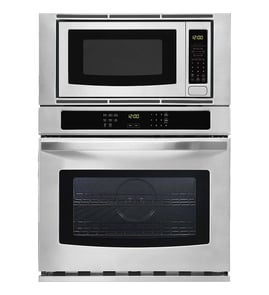



What is the disadvantage of a wall oven?
A wall oven like the Whirlpool RMC275PVS00 typically costs more to buy and install than a freestanding range, and repairs can be more involved because the unit is built into cabinetry. You also need a separate cooktop, which can increase total kitchen cost and planning.
Common disadvantages to plan for
- Higher total cost (appliance plus electrical and cabinet work)
- Installation is more complex; a grounded electrical supply and correct junction box placement matter
- Service access can be harder because the oven is enclosed in a cabinet cutout
- You may need to bend or reach depending on the installed height
- You must purchase and place a separate cooktop
Installation and space considerations (what we see most often)
The RMC275PVS00 is designed to fit specific cabinet opening dimensions and requires a fully enclosed recessed installation area. The installation guide also calls out junction box placement (typically within about 3 inches below the support surface) so the oven will fit correctly.
| Factor | Wall oven/microwave combo | Freestanding range |
|---|---|---|
| Upfront cost | Higher (unit plus install) | Often lower |
| Installation | Cabinet cutout, junction box, conduit | Usually simpler hookup |
| Repairs | More labor to access | Easier access |
| Layout flexibility | Flexible cooktop placement | Cooktop and oven together |
Why it matters
Most “disadvantages” come down to planning: if the cabinet opening, support surface, and electrical connection are not set up correctly, installation can take longer and future service can be more difficult. Using the correct cutout and electrical requirements up front prevents fit issues and cabinet damage.
When a wall oven is still the better choice
- You want the oven at a comfortable height
- You prefer a separate cooktop for layout or style
- You bake often and want a dedicated oven location
For model-specific installation requirements and clearances, use the RMC275PVS00 installation guide.
Last updated: January 2026
How long do Whirlpool wall ovens last?
Most Whirlpool wall ovens, including the Whirlpool RMC275PVS00 wall oven/microwave combo, typically last 13 to 15 years with normal household use and basic maintenance (keeping vents clear, avoiding slams, and fixing small issues early).
Typical lifespan and what affects it
A wall oven’s life is mostly driven by heat stress on electrical parts and how often it runs at high temperatures.
- Average electric wall oven lifespan: 13 to 15 years
- Heavier use (daily high-heat cooking): tends to shorten lifespan
- Good airflow and clean cooling paths: helps electronics last longer
- Prompt repairs: prevents secondary damage (for example, overheating)
Parts that commonly limit lifespan
These components often determine whether an older combo oven is worth repairing.
- Oven temperature sensing and control (for example, a failed sensor can cause overheating)
- Door hardware and sealing surfaces (hinges, bumpers, glass alignment)
- Cooling and ventilation components
- Microwave door safety interlocks and related switches
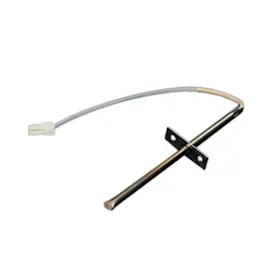
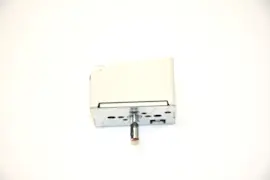
If your oven temperature is erratic, a common repair is replacing the sensor such as the wall oven temperature sensor WPW10131825.
Quick “repair or replace” guide
| What you’re seeing | Common cause | Typical next step |
|---|---|---|
| Oven won’t hold temp | Sensor or control issue | Test sensor, inspect wiring, replace as needed |
| Door won’t close evenly | Hinge wear or misalignment | Inspect hinges and mounting points |
| Unit shuts down when hot | Overheating or airflow issue | Check cooling fan and vents |
| Microwave won’t run with door closed | Door interlock problem | Inspect interlock switches and latch alignment |
Why it matters
Knowing the typical 13 to 15 year lifespan helps you decide whether to invest in a repair (especially for control, cooling, or door-related issues) or plan for replacement if multiple major components are failing.
For model-specific operating and care guidance, follow the RMC275PVS00 owner’s manual.
Last updated: January 2026
Is it worth fixing a wall oven?
Fixing a Whirlpool RMC275PVS00 wall oven/microwave combo is usually worth it when the cabinet cutout fits well and the repair is limited to a common service part (sensor, fan, door hardware, fuse). If the unit has repeated control or wiring failures, replacement typically makes more sense.
Quick way to decide (repair vs. replace)
- Repair when the problem is isolated (one symptom, one failed part) and the oven heats normally after the fix.
- Replace when multiple systems are failing (heating, controls, door, and electrical) or repairs are stacking up.
- Repair when you want to avoid cabinet modifications; built-in units often require matching cutout dimensions.
- Replace when you need newer features or better efficiency and you plan to stay in the home for years.
Common “worth fixing” repairs on this model
These are typical, straightforward fixes that often restore normal operation:
- Temperature problems or error symptoms tied to the sensor: wall oven temperature sensor WPW10131825
- Cooling issues or loud fan noise: wall oven cooling fan WPW10016550
- Microwave will not run because the door safety circuit is not closing: microwave door interlock switch W10211972
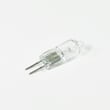
- Oven light not working (and the lens is intact): oven baseless lamp WPW10440740
Cost and complexity comparison
| Repair type | Typical effort | Typical outcome |
|---|---|---|
| Sensor, lamp, door switch | Low to medium | Restores heating, lighting, or microwave operation |
| Fan, door hinge, thermostat | Medium | Improves cooling, door closing, and safety operation |
| Control panel, wiring, repeated electrical issues | Medium to high | Can be expensive; replacement often becomes the better value |
Why it matters
Wall oven/microwave combos are built into cabinetry; the installation guide calls out specific cabinet opening requirements and electrical connection details. Keeping the existing unit can avoid reworking the cabinet cutout and junction box location. Use the RMC275PVS00 installation guide to understand what is involved if you choose replacement.
Last updated: January 2026
How to reset a whirlpool wall oven?
To reset your Whirlpool RMC275PVS00 wall oven/microwave combo, restore power after a full power-down; when power returns, the display typically lights briefly and may show “PF,” which indicates a power interruption reset. If the oven still will not run, focus on power supply checks and basic control cancel steps in the RMC275PVS00 owner's manual.
Reset steps (safe, no tools)
- Press OFF/CANCEL to clear an active cycle or error display.
- Turn the oven OFF at the household breaker (or unplug if accessible).
- Leave power off for 1 to 5 minutes to fully reset the control.
- Restore power; look for “PF” on the display (common after power is restored).
- Set the clock and try a simple function like BROIL and START.
If it still will not reset or heat
If the display stays blank, the oven will not start, or an “F” plus a number appears after you restore power, these checks narrow it down quickly:
- Confirm the circuit breaker is fully reset (toggle OFF then ON).
- Check the household fuse (if your home uses fuses) for a blown fuse.
- Verify the oven has a solid electrical supply at the junction box.
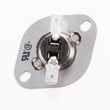
- If the oven overheats or shuts down, a safety device like the range high-limit thermostat WP9759243 can be involved.
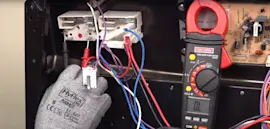
- If the oven temperature is inaccurate or triggers faults during cooking, the wall oven temperature sensor WPW10131825 is a common diagnostic target.
What “PF” and “F codes” usually mean
| Display message | What it indicates | What to do next |
|---|---|---|
| PF | Power failure or power interruption | Reset clock, test a basic bake/broil cycle |
| F + number | A detected fault condition | Cancel, power reset, then troubleshoot the specific circuit |
Why it matters
A proper reset clears a stuck control state after a power interruption and helps you confirm whether the issue is a one-time glitch or an ongoing problem with power, wiring, or a component such as a thermostat or temperature sensor.
Last updated: January 2026