
What is the life expectancy of a range hood?
A typical range hood lasts about 10 years with normal use and basic maintenance. For your GE JV334 range hood, keeping airflow clear and the grease filter clean is the biggest factor in reaching (or beating) that lifespan.
What affects how long a range hood lasts
- Grease filter maintenance: clogged filters make the fan work harder and run hotter
- Cooking style: frequent frying and high-heat cooking load the hood faster
- Vent path condition: restricted ducting reduces airflow and strains the motor
- Fan noise and vibration: ongoing vibration can loosen mounts and wear the blade
- Cleaning habits: grease buildup on the blower wheel and housing shortens component life
Maintenance schedule that helps you hit the 10-year mark
| Task | How often | What to do |
|---|---|---|
| Clean or replace grease filter | Every 1 to 3 months | Wash if reusable; replace if damaged or won’t come clean |
| Wipe hood underside and fan area | Monthly | Degrease surfaces to prevent buildup |
| Check venting (if ducted) | Every 6 to 12 months | Confirm damper opens, duct is not crushed, airflow feels strong |
| Listen for changes | Ongoing | New rattling, scraping, or humming usually signals a worn fan or loose hardware |
Parts that commonly extend service life
If performance drops or noise increases, replacing worn parts often restores normal operation without replacing the whole hood.
Why it matters
A range hood that is pulling less air or running noisier usually is not “just old”; it is often restricted by grease buildup or a failing airflow component. Fixing airflow early helps protect the fan motor and keeps smoke and odors moving out of the kitchen.
Last updated: February 2026
Can range hoods be repaired?
Yes. Most range hoods, including the GE JV334 range hood, can be repaired by cleaning, tightening, or replacing common wear parts such as the grease filter, fan blade, or wiring. Repairs are usually straightforward when the symptom is isolated to airflow, noise, or a non-working fan.
What we repair most often on a range hood
These are the most common, practical fixes that restore performance:
- Clean or replace a clogged grease filter (reduced airflow, more noise)
- Remove debris and clean the blower area (rattling, vibration)
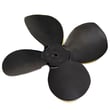
- Replace a bent or damaged fan blade (thumping, wobble)
- Inspect and repair loose or damaged wiring connections (intermittent fan)
- Tighten mounting screws and brackets (buzzing or vibration)
If your hood is not moving air well, start with the filter; the range hood grease filter WB2X2052 is a common replacement part for this model.
Quick symptom-to-fix guide
| Symptom | Most likely cause | Typical repair |
|---|---|---|
| Fan runs but weak suction | Grease filter clogged, duct restriction | Clean/replace filter; check duct flap/venting |
| Loud rattling or vibration | Debris, loose fasteners, fan imbalance | Clean blower area; tighten screws |
| Thumping or wobble | Fan blade damaged | Replace fan blade |
| Fan does not run | Switch, wiring, motor issue | Check power and connections; test components |
For step-by-step troubleshooting, use our DIY guide: range hood fan doesn't work.
Why it matters
A working range hood protects cabinets and walls from grease buildup and helps control smoke and odors. Keeping airflow strong also reduces strain on the fan motor and can prevent repeat failures.
Last updated: February 2026
How to find GE range hood model number?
On a GE range hood like model JV334, the model number label is usually on the top of the hood, on the underside near the front edge, or behind the grease filter. Once you find it, write down the full model and serial number exactly as shown.
Where to look on the hood
Check these common label locations (in this order):
- Behind the grease filter: remove the filter and look on the inner frame or side wall
- Underside of the hood: along the front lip or near the light housing
- Top of the hood: often visible from inside the cabinet above the hood
- Inside the wiring or blower area: sometimes on a side panel (power off first)
If your hood has a removable bottom panel, the label is often on the metal surface just above it.
Quick steps to find it safely
- Turn the hood off, then switch off the breaker to avoid accidental fan or light operation
- Let bulbs cool before reaching near the light area
- Remove the grease filter and inspect the metal surfaces around the opening
- Use a flashlight and take a photo so you can zoom in on small print
- Record the full model number and serial number; both help match parts correctly
What the label typically looks like
| Item on label | Why it matters |
|---|---|
| Model number | Matches the correct parts list for your hood |
| Serial number | Helps confirm production version when parts changed |
| Electrical rating | Useful when diagnosing fan or light issues |
Why it matters
Using the exact model number prevents ordering the wrong parts, especially for common replacements like a grease filter or fan blade. For example, if your filter is damaged or won’t seat correctly, matching by model helps you choose the correct range hood grease filter WB2X2052.
Last updated: February 2026
What are the parts of a range hood called?
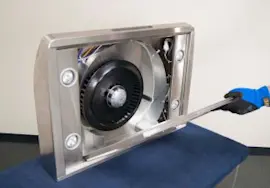
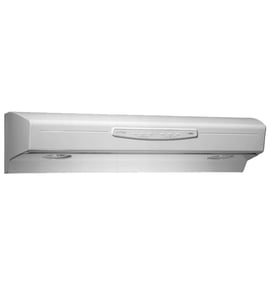
Most GE range hoods (including model JV334) are made up of the hood body (canopy), a blower and fan blade, controls, lighting, and one or more filters and venting pieces. These parts work together to capture grease and move cooking odors out of the kitchen.
Common range hood parts and what they do
- Hood canopy (hood body): The metal shell that mounts under the cabinet and captures rising smoke and grease.
- Grease filter: Traps grease before it reaches the blower and ductwork (a common replacement item like the range hood grease filter WB2X2052).
- Blower and fan blade: Pulls air through the filter and pushes it through the vent path (a common replacement item like the range hood fan blade WB2X2128).
- Fan guard (wire guard): Helps protect the fan area and can reduce the chance of debris contacting the blade (example: gurd wire WB2X7372).
- Controls (switches or electronic control): Turns the fan and lights on and off and may control fan speed.
- Lighting (lamp and socket): Illuminates the cooktop area.
- Vent/duct parts: Direct air outside (ducted) or back into the kitchen (recirculating, typically through additional filtering).
Quick “name to function” cheat sheet
| Part name (common term) | What it affects | Typical symptom when it fails |
|---|---|---|
| Grease filter | Airflow and grease capture | Greasy buildup, reduced airflow, odors linger |
| Fan blade | Air movement | Weak suction, vibration, rattling |
| Fan guard | Safety and airflow path | Rattling noise, blade contact risk |
| Controls | Fan and light operation | Fan or lights will not turn on |
| Venting/duct pieces | Where air goes | Poor ventilation, backdrafting, excess moisture |
Why the names matter when ordering parts
Using the correct part name helps match the right diagram and replacement part for your GE JV334. For example, “grease filter” and “fan blade” are separate items with different fit and function, and ordering the wrong one can leave you with poor ventilation or extra noise.
Helpful next step for troubleshooting
If you are trying to identify a part because the hood is not venting well or the fan is acting up, use our symptom guide: range hood fan not pulling much air.
Last updated: February 2026