Owner’s manual
 Error Codes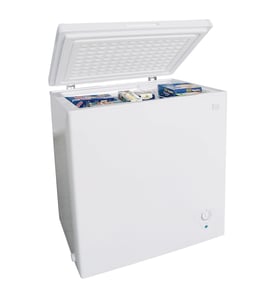



How big is a Kenmore chest freezer model 25519702010?
The exact exterior dimensions for Kenmore chest freezer model 25519702010 are provided in the Specifications section of the 25519702010 owner's manual. Use those measurements (width, height, depth) to confirm fit in your space and to plan lid-opening and ventilation clearance.
Where to find the exact dimensions
In the manual, the dimensions are typically listed under Specifications or Installation/Location requirements.
- Open the 25519702010 owner's manual
- Find Specifications (or Product dimensions)
- Record W x H x D exactly as shown
- Check for any listed clearance requirements around the cabinet
- Confirm whether the manual lists dimensions with or without packaging
How to measure your space so the freezer fits
Even with the correct W x H x D, real-world fit depends on lid swing and airflow.
| What to check | How to measure | Why it matters |
|---|---|---|
| Width | Wall-to-wall at the tightest point | Prevents scraping during placement |
| Depth | Back wall to front obstruction | Avoids blocking walkways/doors |
| Height | Floor to lowest shelf/cabinet above | Ensures the lid area is usable |
| Lid clearance | Space above and behind the hinge side | Lets the lid open fully |
Why it matters
Using the model-specific dimensions from the manual prevents delivery surprises and helps avoid poor cooling performance caused by tight clearances that restrict ventilation.
Last updated: February 2026
How long does a Kenmore upright freezer last?
A Kenmore freezer typically lasts 10 to 15 years with normal home use. For your Kenmore model 25519702010, consistent temperatures, clean airflow around the cabinet, and good lid-seal condition are the biggest factors that keep the compressor running efficiently and extend service life.
Typical lifespan and what changes it
- 10 to 15 years is the normal expected range for most freezers.
- Frequent lid openings and warm garages increase run time and wear.
- Heavy frost buildup forces longer run cycles and can shorten life.
- Poor ventilation around the cabinet raises compressor temperature.
- A weak lid seal lets humid air in, causing frost and temperature swings.
Quick care checklist (best ROI)
- Keep the freezer at 0°F (or the recommended setting in the 25519702010 owner’s manual).
- Leave a few inches of clearance around the cabinet for airflow.
- Defrost when frost reaches about 1/4 inch thick.
- Keep the interior reasonably full (use bins or jugs of water if needed).
- Clean spills promptly to prevent odors and gasket sticking.
What “end of life” usually looks like
| Symptom | What it often means | What we check first |
|---|---|---|
| Runs constantly | Warm location, poor airflow, frost, seal leak | Clearance, frost level, lid seal |
| Not cold enough | Control issue, airflow restriction, sealed-system problem | Settings, frost, condenser area |
| Clicking/humming then stops | Start device or compressor trouble | Start relay and wiring |
Why it matters
A freezer that is running hotter or longer than normal uses more electricity and struggles to hold safe food temperatures. Basic maintenance reduces frost, stabilizes temperature, and lowers compressor stress, which is the main driver of long-term reliability.
Last updated: February 2026
What can cause a chest freezer to stop working?
A Kenmore chest freezer model 25519702010 can stop working because power is interrupted, airflow is blocked, controls are set incorrectly, or a cooling-system component (like the start relay, thermostat, or compressor circuit) fails. Use the troubleshooting steps in the 25519702010 owner's manual to narrow it down safely.
Quick checks first (most common)
- Confirm the outlet has power; reset the breaker or GFCI if tripped.
- Make sure the temperature control is not set to OFF or too warm.
- Verify the lid closes fully; a poor seal can cause warm temps and heavy frost.
- Avoid overpacking; leave space for air circulation around food.
- Check for heavy frost buildup; excessive frost can reduce cooling.
Likely causes and what you’ll notice
| What’s wrong | Common symptom | What to do next |
|---|---|---|
| No power to freezer | No lights, no sound | Test outlet, cord, breaker/GFCI |
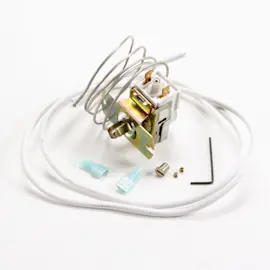
| Control/thermostat issue | Runs too warm or won’t cycle | Inspect control knob and wiring; consider control replacement |
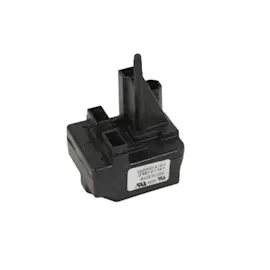
| Start relay or compressor start issue | Clicking, hum then stops | Follow how to replace a freezer compressor start relay |
| Sealed system restriction (filter dryer) | Runs but won’t get cold | Service typically requires a technician; check for oil residue and poor cooling |
| Frost/airflow problem | Frost blanket, slow cooling | Defrost and reorganize load |
Model-related parts that can be involved
These parts are on the 25519702010 parts list and may be relevant depending on symptoms:
- Midea refrigerator temperature control knob 12131000003600 (if the knob is cracked, loose, or won’t turn properly)
- Midea thermostat cover 12132000000087 (if the cover is damaged and the control area is exposed)
- Midea refrigerator filter dryer 501602000034 (sealed-system component; replacement is not a typical DIY repair)
Why it matters
A freezer that “stops working” can be a simple power or setting issue, but repeated clicking, constant running with poor cooling, or heavy frost points to a component or airflow problem. Catching the cause early helps prevent food loss and compressor damage.
Last updated: February 2026
Where is the model number on a Kenmore chest freezer?
On a Kenmore chest freezer like model 25519702010, the model number is printed on a rating label that’s usually inside the cabinet near the top rim, on an interior side wall, or on the exterior back of the freezer. Use the label exactly as printed when ordering parts.
Most common places to check
Look for a paper or foil sticker that includes Model and often Serial.
- Inside the freezer on a side wall (often near the upper edge)
- Inside the freezer near the lid opening or top rim
- On the exterior back panel
- On an exterior side panel near the rear
- Near the compressor area label (rear lower section)
What the label looks like (quick guide)
| What you’ll see | Why it matters |
|---|---|
| Model number (example: 25519702010) | Ensures the correct parts list and diagrams |
| Serial number | Helps match production version when parts changed |
| Electrical ratings (V/Hz/A) | Useful for diagnosing power and start issues |
Tips to find it fast and read it correctly
- Unplug the freezer before reaching behind it.
- Use a flashlight and take a photo; zoom in to read small print.
- Write the model number exactly, including all digits.
- If the label is worn, check both inside and the back panel for a duplicate.
Why it matters
Kenmore chest freezers can look similar across multiple model series, but parts like the temperature control knob, hinge covers, and sealed system components can vary by model. The model number is the fastest way to match the right diagrams and replacement parts.
For model-specific label location notes and identification details, check the 25519702010 owner's manual.
Last updated: February 2026
Why is my chest freezer leaking water from the bottom?
Water under your Kenmore chest freezer model 25519702010 almost always comes from moisture that has nowhere to go: warm, humid air gets inside, then condenses and melts, or defrost meltwater backs up and spills out near the base. Use the steps below to pinpoint the source and stop the leak.
Quick checks that fix most leaks
- Unplug the freezer before inspecting or melting ice.
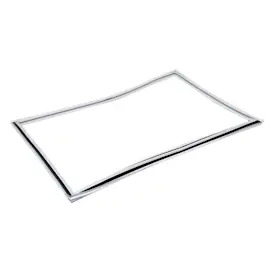
- Check the lid gasket for gaps, tears, or areas that are flattened.
- Look for ice buildup along the inner walls or near the drain area (if equipped).
- Verify the freezer is level (slightly higher in the back is fine); a forward tilt can encourage water to run out.
- Confirm the lid is closing fully (baskets, packages, or the hinge area can prevent a tight seal).
Most common causes and what to do
| What you see | Likely cause | What we recommend |
|---|---|---|
| Puddle after humid days or frequent openings | Condensation from warm air leaks | Clean gasket, warm it with a hair dryer to reshape, and reduce lid-open time |
| Water appears after a manual defrost | Meltwater not captured or drain area iced/blocked | Defrost fully, clear ice, and keep towels/pan ready during defrost |
| Water seems to track from the hinge side | Lid not sealing evenly or hinge area interference | Inspect hinge covers and lid alignment |
| Persistent moisture plus heavy frost | Air leak at gasket or lid not closing | Replace/adjust sealing surfaces and confirm closure |
Parts that can contribute (when fit or sealing is the issue)
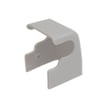
If the lid area is not closing cleanly, inspect the hinge trim pieces for damage or misalignment:
Why it matters
Water leaks are usually a symptom of air infiltration. That same warm air causes frost buildup, longer run times, and temperature swings that can lead to freezer burn and poor food storage.
Model-specific guidance
For your Kenmore 25519702010, use the defrosting, cleaning, and leveling instructions in the 25519702010 owner's manual. Those steps match the safest way to remove ice and manage meltwater without damaging the liner.
Last updated: February 2026