Installation guide
 Owner’s manual
 Error Codes


What is the most common problem with Whirlpool washers?
The most common Whirlpool washer problems are draining/spinning issues, not filling, and excessive vibration from an unbalanced load or leveling problems. On the Whirlpool WTW4850BW1, many “won’t fill” and “won’t drain/spin” complaints trace back to water supply, drain hose setup, or too much detergent. See the WTW4850BW1 owner's manual for model-specific troubleshooting steps.
- Washer won’t fill or stops filling: confirm both hot and cold faucets are fully open; check inlet hose kinks and clogged inlet screens.
- Washer won’t drain or spin (loads still wet): check the drain hose for clogs, and make sure the hose is not pushed too far into the standpipe.
- Washer shakes, bangs, or walks: level the washer so all feet are firmly on the floor; reduce load size and redistribute items.
- Poor cleaning or leftover suds: measure detergent carefully; too much detergent can create suds that interfere with normal operation.
- Tangling or uneven results: load dry items in loose heaps around the basket wall; avoid tightly packing.
| Symptom | Most likely cause | Best first step |
|---|---|---|
| Won’t fill / wash light on | Water supply restricted | Check faucets, hose kinks, inlet screens |
| Won’t drain / spin light on | Drain restriction or suds | Clear drain path; run Rinse & Spin with no detergent |
| Loud thumping in spin | Unbalanced load | Re-load evenly; wash smaller loads |
| Poor cleaning | Overloading or too much detergent | Reduce load size; measure detergent |
These issues are common because they are often caused by setup and usage factors (leveling, loading, detergent amount, hose routing). Fixing those first prevents unnecessary part replacement and helps the WTW4850BW1 run smoothly.
If the basics check out and the problem repeats, these model-matched parts are common next steps:
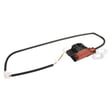
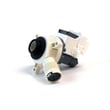
- Washer water inlet valve assembly WPW10683603 for persistent no-fill or slow-fill symptoms
- Washer drain hose W11244231 if the hose is damaged, kinked, or repeatedly clogging
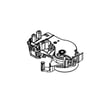
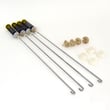
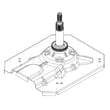
- Damper assembly W10780045 if the washer is level but still has excessive vibration
Last updated: January 2026
What's the average lifespan of a Whirlpool washing machine?
Most Whirlpool washing machines, including the Whirlpool WTW4850BW1 top-load washer, last about 10 to 14 years with normal household use and routine care. Consistent maintenance, correct loading, and using the right amount of detergent are the biggest factors that keep the drive system, suspension, and controls running longer (see the WTW4850BW1 owner's manual).
A washer’s “average lifespan” assumes regular weekly use and no chronic overloads.
- Usage level: Large families and daily loads shorten lifespan.
- Overloading: Stresses the gear case, drive belt, and suspension.
- Too much detergent: Causes excess suds that can interfere with draining and spinning.
- Installation issues: Poor leveling increases vibration and wear.
- Water quality: Hard water can increase residue and odor problems.
These habits help a top-load Whirlpool washer reach the high end of the lifespan range:
- Use HE detergent and measure carefully (avoid oversudsing).
- Keep loads balanced; mix items and avoid washing single heavy pieces alone.
- Level the washer and re-check if it starts shaking.
- Run periodic cleaning cycles and wipe the lid and tub ring area.
- Address early symptoms (noise, burning smell, slow drain) before they become major failures.
| What you notice | Common cause | Typical fix type |
|---|---|---|
| Won’t spin or weak agitation | Worn belt or drive components | Part replacement |
| Loud grinding or oil leak | Gear case wear | Major repair |
| Excessive shaking/banging | Suspension wear | Part replacement |
| Lid won’t lock/unlock | Lid lock failure | Part replacement |
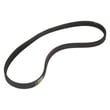
If you’re seeing spin or agitation issues, checking the washer drive belt WPW10006384 and the damper assembly W10780045 is a practical starting point for the WTW4850BW1.
Knowing the typical 10 to 14 year lifespan helps you decide whether to repair or replace. If your WTW4850BW1 is near the end of that range and needs a high-cost repair (like a gear case), comparing repair cost to replacement value usually saves time and frustration.
Last updated: January 2026
Is 4.8 cubic feet a large capacity washer?
Yes. A 4.8 cu. ft. washer is considered large capacity because large-capacity washers typically start around 4.5 cu. ft. and up. With a Whirlpool WTW4850BW1 top-load washer, that size is designed to handle bulkier loads while still using low-water, HE-detergent wash action (see the WTW4850BW1 owner's manual).
Most shoppers use these capacity ranges:
| Washer capacity | Common label | Best for |
|---|---|---|
| 3.3 to 4.4 cu. ft. | Standard | Everyday mixed loads |
| 4.5 to 5.2 cu. ft. | Large | Comforters, towels, family loads |
| 5.3 cu. ft. and up | Extra large | Very large households, oversized items |
Because this Whirlpool washer uses lower water levels and adjusts water to the load, loading and detergent choice matter.
- Use only HE detergent; non-HE can cause oversudsing and longer cycles.
- Load items evenly around the basket wall; avoid packing clothes down.
- Wash bulky items (blankets, comforters) one at a time when possible.
- If loads come out wet, redistribute the load and rerun a spin/drain.
- Keep the lid closed during operation; the washer pauses at times by design.
A large-capacity tub helps you wash more per load, but performance depends on proper loading and HE detergent. In low-water systems, tightly packed loads can reduce cleaning and contribute to out-of-balance spinning.
Correct installation supports better spinning and less vibration. We recommend confirming floor, spacing, and drain standpipe requirements in the WTW4850BW1 installation guide.
Last updated: January 2026