Owner’s manual
 View engine



How do I tell what year my snowblower is?
For a Craftsman snow thrower model 247881700, the most reliable way to estimate the year is to use the engine identification code (often called a date code) stamped on the engine; that code typically includes the manufacture year and sometimes the exact build date.
We recommend checking these common locations first:
- Engine shroud or blower housing near the recoil starter
- Valve cover area or near the spark plug
- Muffler side of the engine on a stamped metal tag
- Under the fuel tank area (use a flashlight)
- Frame tag or decal on the snowblower housing (may show a serial number)
For diagrams and component locations on this model, use the 247881700 owner's manual.
Many small-engine date codes start with the 2-digit year, followed by month and day.
Example interpretation (common style):
| Example code | What it means | Result |
|---|---|---|
| 99011556 | First 2 digits are the year | Year = 1999 |
If your code begins with 05, that typically indicates 2005; if it begins with 18, that typically indicates 2018.
Use these practical alternatives to narrow it down:
- Check the snowblower serial number tag and compare it to the identification section in the 247881700 owner's manual
- Look up the engine model and type numbers (not just the snowblower model number)
- If the engine has been replaced, the engine date will reflect the replacement engine, not the snowblower’s original build
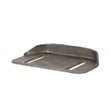
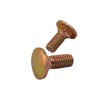
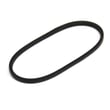
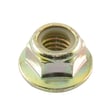
Knowing the year helps us match the correct Craftsman parts and hardware for your 247881700, especially wear items like shear pins, skid shoes, belts, and chute components.
Last updated: January 2026
What is the most common problem with snow blowers?
The most common problem we see with snow blowers like the Craftsman 247881700 is a no-start or hard-start condition, usually caused by old fuel, a dirty carburetor, or a spark/ignition issue. The next most common issues are chute clogs and an auger that will not turn because a shear pin has broken.
- Won’t start / runs poorly: drain old fuel, refill with fresh fuel, check spark plug condition, and verify the throttle is set correctly.
- Auger won’t turn: inspect for a jam and check for broken shear pins.
- Chute clogs or throws poorly: clear packed snow and confirm the chute is adjusted and tightened.
- Drive problems (won’t move or slips): inspect drive control adjustment and friction/drive components.
- Rust and sticking controls after storage: clean and lubricate moving points before the season.
| Symptom | Most likely cause | First action |
|---|---|---|
| Engine won’t start | Stale fuel, spark plug issue | Replace fuel, check spark plug |
| Starts then dies | Carburetor varnish, fuel flow issue | Clean fuel system, inspect fuel line |
| Auger won’t spin | Shear pin(s) sheared | Replace shear pins |
| Snow discharge weak | Chute clog, chute angle | Clear chute, adjust chute |
Your 247881700 auger is protected by shear pins that are meant to shear if the auger hits ice or a foreign object. If the auger will not turn, we check shear pins first and replace only the correct OEM-style part. Use Craftsman snowblower shear pin 738-04124A and follow the replacement steps and safety notes in the 247881700 owner's manual.
Most “common” snowblower failures are preventable maintenance items. Fresh fuel, correct control adjustments, and replacing a broken shear pin quickly helps protect expensive components like the gearbox, auger, and engine.
Last updated: January 2026
What is the typical lifespan of a gas snowblower?
For the Craftsman snow thrower model 247881700, the typical lifespan is about 7 years or 60 hours of operation under normal use and proper maintenance. With consistent upkeep (oil changes, lubrication, and correct storage), many gas snowblowers deliver reliable service beyond that baseline.
The operator guidance for this snowblower defines an average useful life as a time and usage threshold. After you reach it, we recommend having the machine inspected annually so key mechanical and safety systems stay in safe working condition.
| Measure | Typical value for this model | What to do when you reach it |
|---|---|---|
| Years | 7 years | Schedule an annual inspection and replace worn parts as needed |
| Operating time | 60 hours | Pay closer attention to wear items and controls |
For maintenance intervals and storage steps that help extend service life, follow the 247881700 owner's manual.
We see the longest-lasting Craftsman gas snowblowers get routine maintenance and off-season storage done right.
- Check engine oil before each use
- Change engine oil after the first 5 hours, then every 50 hours
- Clean and gap the spark plug to 0.030 in. at least once a season; replace about every 200 hours
- Lubricate pivot points and idler bracket once a season with light engine oil
- Clear snow from the machine before storage to prevent auger and impeller freeze-up
- Store with the fuel system protected (run the engine until it stops for long storage, then change oil)
A helpful seasonal routine is outlined in how to make your snowblower last longer.
Knowing the expected service life helps you plan preventive maintenance and parts replacement (skid shoes, shave plate hardware, shear pins) before a breakdown stops you mid-storm.
Last updated: January 2026
Is it worth fixing a snowblower?
Yes, it’s usually worth fixing a Craftsman snow thrower like model 247881700 when the problem is a normal wear item (shear pins, belts, skid shoes) and the machine is otherwise in good shape. For major failures (engine, transmission, gearbox), replacement often makes more sense.
- If it’s a no-start or rough-run issue, start with fuel, spark plug, and basic maintenance steps in the 247881700 operator’s manual.
- If the auger stopped after hitting ice or a foreign object, check for broken shear pins first.
- If the drive system slips or won’t move, a belt or idler issue is a common, fixable repair.
- If the machine has chronic hard-starting, heavy smoke, or low power, the engine may be nearing end-of-life.
- If the unit is near the typical useful-life window, weigh repair cost more carefully.
| Repair type | Typical effort | Typical parts cost | Usually worth it? |
|---|---|---|---|
| Shear pins, skid shoe adjustments | Low | Low | Yes |
| Belt replacement, lubrication, tune-up | Medium | Low to medium | Yes |
| Gearbox, transmission, engine replacement | High | High | Often no |
- The operator’s manual notes an average useful life of 7 years or 60 hours of operation (whichever comes first) and recommends annual inspection after that point.
- The manual also warns to use OEM-spec parts for safe performance.
- Auger won’t turn: replace the correct shear pins; use Craftsman snowblower shear pin 738-04124A (the manual calls out OEM Part No. 738-04124).
- Poor throwing or scraping issues: inspect skid shoes and shave plate wear; adjust skid shoes (manual suggests about 1/4 inch below the shave plate for normal use).
- Drive problems: inspect belts and idler pulley condition; belt replacement is a common repair.
A small repair can restore safe, reliable snow clearing for a fraction of replacement cost, but major drivetrain or engine work can exceed the value of an older snowblower.
Last updated: January 2026