Installation guide
 Owner’s manual
 Error Codes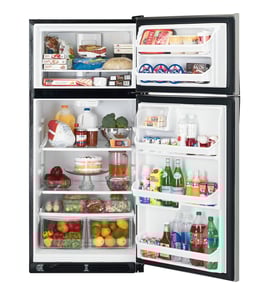


What is a top mount refrigerator?
A top-mount refrigerator is a classic refrigerator layout where the freezer compartment is on top and the fresh food (refrigerator) compartment is below. Your Kenmore 25368232800 uses this configuration, which is designed for straightforward access to everyday refrigerated items.
How a top-mount layout works
In a top-mount refrigerator, cold air is produced in the freezer area and circulated to the fresh food section through internal air passages and controls.
Common characteristics include:
- Freezer on top, refrigerator section below
- Separate temperature controls for fresh food and freezer (varies by model)
- Door gaskets on both doors to keep cold air in
- Leveling features (front rollers or leveling screws on many models) to help doors seal properly
Why the layout matters for everyday use
Top-mount designs typically make the fresh food section easy to organize at eye and waist level, while keeping frozen foods higher up. Proper leveling and good door sealing are especially important because warm air leaks can cause temperature swings and frost.
Quick comparison: top-mount vs. bottom-freezer
| Feature | Top-mount refrigerator | Bottom-freezer refrigerator |
|---|---|---|
| Freezer position | Top | Bottom |
| Fresh food access | Lower section | Upper section |
| Typical benefit | Simple, familiar layout | Fresh food at eye level |
Setup tips that help performance
We recommend following the clearances and leveling guidance during installation so the doors close and seal correctly.
Key setup checks:
- Confirm the doors seal completely to the cabinet on all sides
- Level the refrigerator side-to-side and tilt it slightly back (many models use about 1/4 inch)
- Allow airflow clearances around the cabinet (often about 3/8 inch at sides and top, and 1 inch at the back)
- Recheck for water leaks after connecting a water supply (if equipped with an ice maker)
For the model-specific installation checklist and clearances, use the 25368232800 installation guide.
Why it matters
A top-mount refrigerator cools best when airflow is unobstructed and the doors seal tightly; correct clearances and leveling help prevent warm-air leaks, frost buildup, and uneven temperatures.
Last updated: January 2026
What are the common problems with Kenmore Elite refrigerators?
Common issues we see on Kenmore refrigerators like model 25368232800 include poor cooling from restricted airflow or dirty condenser areas, frost buildup from defrost or door-seal problems, and unusual noises from fans or the compressor area. Start with the checks in the 25368232800 owner's manual.
Most common symptoms and what usually causes them
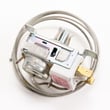
- Not cooling or weak cooling: blocked air vents, dirty condenser area, failing evaporator fan, or a sealed-system issue
- Excessive frost/ice: defrost system trouble (heater/thermostat/timer or control), door left ajar, or a leaking gasket
- Water puddles: defrost drain restriction or water pan issues
- No ice or slow ice (if equipped): air in new plumbing, water supply valve closed, or ice maker turned off
- Lights out: burned-out bulb or a door switch issue
Quick checks we recommend first (safe, no tools)
- Confirm power and controls: make sure the unit is plugged in and temperature controls are not set to OFF.
- Give temperatures time: after changes, allow about 24 hours for temperatures to stabilize.
- Check airflow: do not overcrowd shelves; keep vents clear so cold air can circulate.
- Clean for efficiency: periodic condenser cleaning improves efficiency in dusty or greasy homes.
- Inspect door sealing: look for gaps, tears, or areas where the gasket is not contacting the cabinet.
Parts that commonly relate to these problems
If troubleshooting points to a specific failure, these are common repair areas for this style of refrigerator:
| Symptom | Common part area | Example part for this model |
|---|---|---|
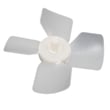
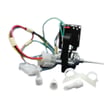
| Warm fridge/freezer, noise, poor airflow | Evaporator fan area | Refrigerator evaporator fan blade 5308000010 |
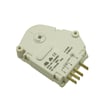
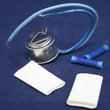
| Frost buildup, warm temps after icing | Defrost system | Refrigerator defrost bi-metal thermostat 5303918202 |
| Door not sealing, moisture/frost | Door gasket | Universal/multiflex frigidaire refrigerator door gasket (white) 242193213 |
Why it matters
Poor cooling and frost problems usually get worse over time: the refrigerator runs longer, food temperatures become unsafe, and energy use increases. Addressing airflow, cleaning, and door sealing early prevents repeat icing and temperature swings.
Last updated: January 2026
How to tell cubic feet of Kenmore refrigerator by model number?
For Kenmore model 25368232800, the most reliable way to get cubic feet is to look up the capacity in the 25368232800 owner's manual. If you do not have the capacity listed, you can still estimate it by measuring the usable interior space and converting cubic inches to cubic feet.
Best ways to find capacity for model 25368232800
- Check the specifications section in the 25368232800 owner's manual (often listed as “capacity” or “total capacity”).
- Look for a rating label inside the fresh food compartment (commonly on a side wall or near the crisper area); some labels list capacity.
- If you are comparing models, use the full model number (25368232800) when searching specs; small digit changes can mean different sizes.
- If you only need a close estimate, measure the interior and calculate cubic feet.
How to estimate cubic feet (quick calculation)
- Empty enough space to measure the usable interior (ignore door bins if you want a conservative estimate).
- Measure width x depth x height in inches for:
- Fresh food compartment
- Freezer compartment
- Add the two volumes together.
- Convert to cubic feet.
Conversion table
| What you have | What to do | Result |
|---|---|---|
| Cubic inches | Divide by 1,728 | Cubic feet |
| Inches (W x D x H) | Multiply to get cubic inches | Compartment volume |
Why model numbers are not a dependable “capacity code”
Kenmore model numbers (including the 253 prefix) identify the product line and configuration, but they do not consistently encode exact cubic feet. Capacity can also vary by insulation thickness, liner design, and shelf system even within similar-looking top-mount refrigerators.
Last updated: January 2026