 Installation guide
 Owner’s manual



What is the average lifespan of a Frigidaire dishwasher?
A Frigidaire dishwasher typically lasts 9 years on average. With normal household use and basic care, your Frigidaire FDB1100RHB2 often lands in the 7 to 10 year range before major repairs (like a pump or control issue) become more common.
What affects lifespan the most
- How often you run it (daily use wears pumps, seals, and racks faster)
- Water quality (hard water speeds up scale buildup and heating stress)
- Loading habits (overloading blocks spray and strains the wash system)
- Heat and drying performance (a weak heater can leave moisture that leads to odor and residue)
- Leaks and seepage (small leaks shorten the life of motors, wiring, and flooring)
Maintenance that extends life
Use these habits to keep the wash system and seals working longer:
- Clean the interior and spray areas regularly; follow the care steps in the FDB1100RHB2 owner’s manual
- Run hot water at the sink before starting a cycle to improve filling and wash temperature
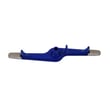
- Keep the door sealing surfaces clean; replace a worn dishwasher door seal 809006501 if you see drips at the bottom edge
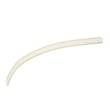
- If the unit is not draining well, check for kinks and routing issues; a damaged drain hose 807117001 can cause slow drains and standing water
- Use the right detergent amount for your water hardness to reduce film and buildup
Common “end-of-life” symptoms and likely parts
| Symptom | What it often points to | Example model part |
|---|---|---|
| Won’t drain or drains slowly | Drain path restriction, hose issue, pump wear | Drain hose, pump |
| Not drying well | Heating circuit or airflow issues | Dishwasher heating element |
| Leaks at the door | Worn seal or alignment issues | Dishwasher door seal |
| Poor cleaning | Spray obstruction, circulation problems | Pump, wash system |
Why it matters
Knowing the typical lifespan helps you decide whether to repair or replace. If your FDB1100RHB2 is already near the 7 to 10 year mark and you are seeing repeated draining, leaking, or heating problems, replacing key wear parts early can prevent bigger failures.
Last updated: February 2026
What are the commonly replaced parts in a dishwasher?
On the Frigidaire FDB1100RHB2 dishwasher, the most commonly replaced parts are the water-moving and sealing components (pump, drain hose, inlet valve, door seals) plus wear items like rack rollers and heating parts. These typically fail from leaks, clogs, heat stress, or normal wear.
Commonly replaced parts (and what they do)
- Circulation/drain system: moves wash water through spray arms and pumps dirty water out
- Fill system: lets fresh water into the tub at the start of a cycle
- Seals and gaskets: keep water inside the tub and away from the door and console
- Heating and drying parts: help water heat and improve drying
- Racks and rollers: wear from heavy loads, rust, and repeated sliding
Model-relevant examples for FDB1100RHB2
These are frequent replacements we see for this model family:
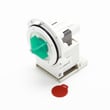
- Pump A00126401
- Drain hose 807117001
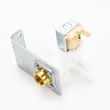
- Dishwasher water inlet valve 154637401
- Dishwasher door seal 809006501
- Dishwasher heating element 154665201
- Dishwasher dishrack roller, lower 5304532229
Quick symptom-to-part guide
| Symptom | Most likely part area | Example part for FDB1100RHB2 |
|---|---|---|
| Won’t drain, standing water | Drain path, pump, hose | Drain hose, pump |
| Won’t fill or fills slowly | Water inlet valve, supply | Water inlet valve |
| Leaks at the door | Door seal, splash sealing | Door seal |
| Poor drying | Heating circuit | Heating element |
| Rack won’t roll smoothly | Rack rollers | Lower dishrack roller |
Why it matters
Dishwashers clean by spraying hot water and detergent through spray arms, then pumping water through a filter area and out the drain. When a pump, valve, hose, or gasket starts failing, you usually see immediate performance issues like poor cleaning, no-drain, or leaks. For part locations and safe access steps, use the FDB1100RHB2 owner’s manual.
Last updated: February 2026
What is the most common problem with a Frigidaire dishwasher?
The most common Frigidaire dishwasher problem is poor wash performance that traces back to water flow issues: the unit is not filling with hot water fast enough, spray action is weak, or draining is restricted. On the FDB1100RHB2, start with the basic water, detergent, and drain checks in the FDB1100RHB2 owner’s manual.
Most common symptoms and what they usually mean
- Dishes still dirty or gritty: weak spray, low fill, or detergent not dissolving.
- Cloudy film or spots: detergent amount does not match water hardness.
- Water left in the tub: drain path restriction or a kinked drain hose.
- Not drying well: heated dry option off, no rinse aid, or water not hot enough.
- Leaks at the door: worn door seal or door not closing squarely.
Quick checks we recommend first (fast, no parts)
- Run hot water at the sink before starting a cycle so the dishwasher fills with hotter water.
- Confirm hot water is at least 120°F (49°C) for best cleaning and drying.
- Use fresh automatic dishwasher detergent; add it right before starting.
- Adjust detergent for your water hardness (too little cleans poorly, too much can leave film).
- Check for kinked water or drain hoses; kinks commonly cause fill or drain problems.
Parts that commonly fix the underlying cause
If the quick checks do not help, these model-matched parts are frequent solutions:
| Problem area | What fails | Model-matched part to consider |
|---|---|---|
| Not filling or fills slowly | Inlet valve screen clogged or valve failing | Dishwasher water inlet valve 154637401 |
| Not draining well | Hose restricted, kinked, or deteriorated | Drain hose 807117001 |
| Leaking at the door | Seal worn, torn, or compressed | Dishwasher door seal 809006501 |
Why it matters
Dishwashers clean by combining correct water temperature, proper fill level, and strong circulation. When any one of those is off, you can see “dirty dishes,” “won’t dry,” or “won’t drain” even though the dishwasher still runs.
For installation-related causes (utility routing, leveling, anchoring, and hose routing), follow the FDB1100RHB2 installation guide.
Last updated: February 2026
Can I replace dishwasher parts myself?
Yes, for the Frigidaire FDB1100RHB2 dishwasher, we can replace many common parts ourselves if we shut off power and water first and follow the steps in the FDB1100RHB2 owner's manual and FDB1100RHB2 installation guide. Simple mechanical parts are usually DIY-friendly; wiring and leak-related repairs take more care.
What’s typically DIY vs. better left to a pro
Many repairs are straightforward, but anything involving wiring connections, water supply, or door balance needs extra attention.
- Good DIY candidates: door seals, racks/rollers, some hoses, basic cleaning and maintenance
- More advanced DIY: replacing a water inlet valve, pump, float switch, heating element (requires careful reassembly and leak checks)
- Consider a technician: repeated leaks, burning smell, tripping breaker, or uncertainty about wiring and grounding
Safety steps we follow before any repair
These steps prevent shocks, flooding, and installation problems.
- Turn off the dishwasher’s electrical power at the breaker
- Shut off the water supply valve
- Protect hands from sharp metal edges (especially around panels)
- Keep wiring routed correctly (not behind the motor area)
- After reassembly, run a fill and pump-out and check all joints for leaks
Parts on this model that customers commonly replace
If your symptom points to one of these, replacing the part is often a practical DIY fix.
| Symptom | Common part to check | Example model part page |
|---|---|---|
| Water not filling | Water inlet valve | Dishwasher water inlet valve 154637401 |
| Not draining | Drain hose, pump | Drain hose 807117001 |
| Leaking at the door | Door seal | Dishwasher door seal 809006501 |
| Poor drying | Heating element | Dishwasher heating element 154665201 |
Why it matters
DIY replacement can restore cleaning, draining, and drying performance while preventing secondary damage. For example, a misrouted wire or a loose connection in the junction box can create intermittent operation, and a small leak can quickly damage flooring.
Last updated: February 2026





