Owner’s manual
 Error Codes



How do I remove the base grille on my Whirlpool refrigerator?
To remove the base grille on your Whirlpool GB9SHDXPS02 bottom-mount refrigerator, grasp the grille firmly at the bottom front of the cabinet and pull it straight toward you. Once you are finished cleaning or adjusting the rollers, push the grille back into place.
- Unplug the refrigerator if you will be cleaning near wiring or moving the unit.
- Stand in front of the refrigerator and locate the base grille at the very bottom.
- Grasp the grille firmly with both hands.
- Pull the grille straight toward you to release it.
- After service, align the grille and press it back on until it snaps into place.
Removing the base grille is commonly needed for routine maintenance and door-closing adjustments.
| Task | Why you remove the grille | What you do next |
|---|---|---|
| Clean condenser area | Helps cooling efficiency | Vacuum dust from grille and condenser area |
| Level the refrigerator | Helps doors close more easily | Turn roller adjustment screws, then set brake foot |
| Inspect for debris | Prevents airflow restriction | Clear lint, pet hair, and dust buildup |
- Pull evenly from both sides so the grille does not twist.
- If it feels stuck, re-grip closer to the ends and pull straight out (do not pry hard with a tool).
- Keep the grille openings clear after reinstalling so airflow to the condenser is not blocked.
The base grille protects the condenser area while still allowing airflow. Keeping that area clean and accessible helps your GB9SHDXPS02 maintain stable temperatures and run efficiently.
For diagrams and model-specific leveling details, use the GB9SHDXPS02 owner's manual.
Last updated: January 2026
Do you remove cardboard from the bottom of a Whirlpool refrigerator?
On the Whirlpool GB9SHDXPS02 bottom-mount refrigerator, we leave the cardboard-like bottom cover in place. That panel is designed to protect and help direct airflow around key components (like the condenser area), and removing it can lead to overheating or poor cooling.
On many Whirlpool bottom-mount refrigerators, the bottom rear cover is a fiberboard-style access panel. It is part of the refrigerator’s designed airflow path.
- Protects wiring and components near the compressor and condenser area
- Helps channel air across the condenser coil for proper heat removal
- Reduces dust and debris getting into the machine compartment
- Helps limit noise and vibration from the lower compartment
You typically only remove the panel for service access, then reinstall it.
| Situation | Remove the panel? | What to do next |
|---|---|---|
| Cleaning under/behind the refrigerator | Usually no | Vacuum around vents and the floor area without removing the cover |
| Diagnosing a cooling problem | Sometimes | Remove for inspection, then reinstall after checks |
| Replacing a component in the machine compartment | Yes | Reinstall the cover to restore airflow |
| Refrigerator running hot or not cooling well | Not permanently | Check condenser airflow and reinstall the cover after service |
If the refrigerator seems warm, runs constantly, or the freezer is not holding temperature, these steps help before replacing parts:
- Make sure the refrigerator has clearance behind and below for airflow
- Vacuum dust from accessible condenser areas and the floor under the unit
- Confirm doors seal and close fully (warm air leaks can mimic airflow problems)
- Listen for the evaporator fan running; a failed fan can cause poor cooling
- If you are troubleshooting electrical or control issues, follow the safety steps in the GB9SHDXPS02 owner's manual
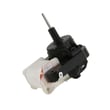
If you determine the evaporator fan is not running, the evaporator motor WPW10128551 is a common repair part for airflow and cooling problems in this model.
That bottom cover is not just packaging. It is part of the refrigerator’s cooling system design; leaving it off can reduce condenser cooling, raise compressor temperatures, and shorten component life.
Last updated: January 2026
What is the most common problem with a Whirlpool refrigerator?
The most common Whirlpool refrigerator problem is poor cooling, which customers notice as warm fresh-food temps, soft ice, or thawing in the freezer. On Whirlpool model GB9SHDXPS02, this is often tied to airflow issues (blocked vents or a stuck damper), a failing evaporator fan, or control and sensor problems; use the GB9SHDXPS02 owner's manual troubleshooting section to narrow it down.
- Confirm the controls are turned on and set correctly (fresh food around 37°F, freezer around 0°F).
- Make sure the unit is plugged into a grounded 3-prong outlet and the breaker is not tripped.
- Check for blocked air vents (packages pushed against vents can stop airflow).
- Listen for the evaporator fan running when the doors are closed (a quiet freezer can mean a fan issue).
- Look for heavy frost on the freezer back panel (often points to a defrost problem).
- Clean dust from the condenser area (restricted heat release can reduce cooling).
| Symptom | Likely cause | Example part for GB9SHDXPS02 |
|---|---|---|
| Freezer cold but fridge warm | Damper stuck closed or airflow blocked | Refrigerator damper control WPW10196393 |
| Both sections warm, fan noise missing | Evaporator fan not running | Evaporator motor WPW10128551 |
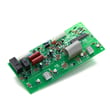
| Temps swing, intermittent cooling | Sensor or control issue | Refrigerator temperature sensor 12002355 or refrigerator electronic control board WPW10503278 |
| Frost buildup, poor airflow over time | Defrost system problem | Refrigerator defrost heater WP67002135 |
Cooling problems usually get worse, not better. Catching an airflow restriction, failing fan motor, or defrost issue early helps protect food, reduces compressor run time, and can prevent ice buildup that blocks circulation.
If you see an error code or suspect an electronic issue, use Whirlpool refrigerator error codes to match the code to likely causes before replacing parts.
Last updated: January 2026
Why is ice forming in the bottom of my freezer Whirlpool?
Ice forming on the bottom of the freezer in your Whirlpool GB9SHDXPS02 is almost always caused by a defrost drain problem: meltwater from the defrost cycle cannot flow to the drain pan, so it refreezes on the freezer floor and builds up over time.
- Defrost drain hole or drain tube clogged with ice, food particles, or sludge
- Drain trough iced over because warm air is leaking into the freezer
- Freezer door not sealing or closing fully (humidity enters and freezes)
- Freezer temperature set too cold, increasing frost and drain icing
- Defrost system issue that creates excessive frost (which later melts and overwhelms the drain)
- Unplug the refrigerator and remove the freezer drawer/bins so you can see the bottom panel.
- Look for a sheet of ice on the freezer floor or under the lower panel; that points to a blocked drain.
- Melt the ice with a hair dryer on low or by placing towels and letting it thaw (keep heat moving to protect plastic).
- Clear the drain by flushing hot water into the drain opening (a turkey baster works well) until it flows freely.
- Check the door seal for gaps, rips, or areas not gripping the cabinet; correct alignment and clean the gasket.
If the freezer is frosting up heavily or the drain keeps freezing over, these parts are often part of the fix:
| Symptom you see | What it often points to | Example part for GB9SHDXPS02 |
|---|---|---|
| Ice sheet on freezer floor returns in days | Drain icing or airflow issue | Refrigerator defrost heater WP67002135 |
| Freezer too cold or temps swing | Control or sensor issue | Refrigerator temperature sensor 12002355 |
| Frost pattern and warm fridge section | Airflow/damper or fan issue | Refrigerator damper control WPW10196393 |
When defrost water cannot drain, it refreezes and can eventually block airflow, cause temperature problems, and lead to water leaking when the ice melts. Fixing the drain and sealing issues early prevents repeat ice buildup.
Use the GB9SHDXPS02 owner’s manual troubleshooting section to confirm control settings and basic checks (power, door closing, and ice maker water supply items) before replacing parts.
Last updated: January 2026