Installation guide
 Owner’s manual
 Error Codes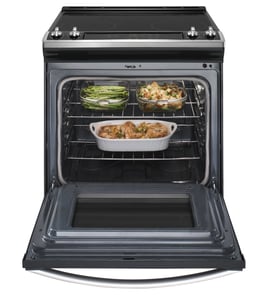



Is GE Profile considered high end?
Yes. GE Profile is widely considered GE’s higher-end mainstream line, positioned above standard GE models with more premium design and feature sets. If you’re comparing options for a GE slide-in electric range like model JS760SL4SS, Profile typically represents the “step-up” tier.
How GE Profile typically compares to standard GE
GE Profile appliances usually focus on upgraded cooking performance, convenience features, and a more premium look and feel.
- More advanced controls and cooking modes (varies by model)
- More premium finishes and styling details
- More feature-rich oven and cooktop configurations
- More emphasis on convenience features (timers, settings, guided modes)
- Often a higher price point than standard GE
What “high end” means in practice
“High end” can mean different things depending on what you value most. Here’s a quick way to frame it:
| Tier (common shopper view) | Typical focus | Examples of what changes |
|---|---|---|
| Standard GE | Core performance | Basic features, simpler controls |
| GE Profile | Premium mainstream | More features, upgraded design |
| Luxury brands | Pro-style, specialty | Heavier build, niche capabilities |
Why it matters when you’re shopping or repairing
Knowing the product tier helps set expectations for features, styling, and parts cost. For example, premium models may use more specialized components (controls, sensors, glass, or elements), and that can affect repair decisions and part pricing.
Where to confirm features for your exact range
GE uses model-specific feature sets, so the most accurate way to confirm what your unit includes is to check the feature and care sections in the JS760SL4SS owner’s manual.
Last updated: January 2026
How do I reset my GE oven control board?
To reset the control on your GE JS760SL4SS slide-in electric range, press Cancel/Off to stop the current function; if the display or keypad is still acting up, turn the range power off at the breaker for at least 30 seconds, then restore power and let it complete the startup.
Quick reset options (try in this order)
- Press Cancel/Off once to clear an active cooking mode.
- If an error code is flashing, press Cancel/Off, then let the oven cool for up to 1 hour.
- If the issue returns, switch OFF the range circuit breaker (or unplug if accessible) for 30 to 60 seconds.
- Restore power and wait for the control to fully power up before pressing keys.
- Reset the clock after a power outage or surge.
What to do for common symptoms
| Symptom | What usually works | What it means |
|---|---|---|
| Display blank | Reset the house breaker or replace a blown fuse | Power supply issue is most common |
| “F-” plus a number/letter flashes | Cancel/Off, cool 1 hour, then power reset 30 seconds | Function error code condition |
| Controls won’t respond | Check if Control Lock is on; unlock, then power reset | Keypad locked or control glitch |
Check Control Lock (easy to miss)
Your JS760SL4SS has a control lock feature that prevents the pads from working. To lock or unlock, press and hold the Lock Controls pad (or the number pads, depending on the control) for 3 seconds. Cancel/Off stays active even when locked. See the steps in the JS760SL4SS owner’s manual.
Why it matters
A proper reset clears temporary control glitches and many “F-” function errors without replacing parts. If the code repeats after the cool-down and power reset, the problem is typically in the control system (keypad, wiring, or the electronic control).
Last updated: January 2026
What does F76 mean on an oven?
On the GE JS760SL4SS slide-in electric range, an F76 code is a function error that points to an electronic control problem, most often involving the touch control (keypad) or the oven control board. Start by clearing the code with a power reset; if it returns, service is typically needed.
What to do first (safe reset steps)
- Press Cancel/Off to stop the current cycle.
- Let the oven cool down for about 1 hour (heat can trigger or worsen control faults).
- Turn power off to the range for at least 30 seconds (breaker off is best), then restore power.
- If the code returns right away, avoid repeated resets; focus on diagnosis and repair.
- Use the troubleshooting steps in the JS760SL4SS owner’s manual to confirm the recommended reset sequence for “F- and a number or letter” errors.
What usually causes an F76 code
F76 is commonly tied to a control system communication or input failure. Typical causes include:
- A failing touch control panel (keypad) sending incorrect signals
- A failing oven control board (ERC)
- Loose or damaged wiring connections between the control and keypad
- Heat or moisture intrusion behind the control panel
Parts that are commonly involved
If the error repeats after the reset, the repair often centers on the control electronics.
| Symptom pattern | Most likely area | What we recommend |
|---|---|---|
| F76 returns immediately after power is restored | Control input or board fault | Inspect wiring, then test/replace control as needed |
| Buttons act “stuck” or random beeping | Touch panel issue | Check for contamination, then replace the control interface if required |
| Oven works until it heats up, then faults | Heat-related control failure | Verify cooling airflow and control compartment condition |
If you’re tracing wiring or checking connections, our how to use a multimeter to test electrical parts video is a good primer before you start.
Why it matters
A repeating F76 can prevent reliable baking or broiling and can cause the oven to shut down mid-cycle. Addressing it early helps protect the control compartment from heat-related damage and reduces the chance of intermittent failures.
Last updated: January 2026
How long do GE Profile ovens last?
GE Profile ovens typically last about 12 years. With normal home use and basic care (keeping vents clear, avoiding heavy spills, and fixing small issues early), many owners see up to 15 years of service. For your GE slide-in electric range model JS760SL4SS, follow the care and operating guidance in the JS760SL4SS owner’s manual.
Typical lifespan and what affects it
Most oven life is driven by heat exposure, electrical load, and how often high-heat features are used.
- Usage frequency: daily cooking wears elements, fans, and controls faster
- Self-clean habits: frequent self-clean cycles add high-heat stress to wiring and electronics
- Power quality: surges and loose connections can shorten control board life
- Ventilation and cooling: blocked airflow can overheat the control area
- Maintenance: cleaning spills early helps prevent smoke, odors, and corrosion
Parts that commonly drive “end of life” decisions
If the oven still heats but performance is inconsistent, a few parts often make the difference.
| Symptom | Common culprit | Example part for JS760SL4SS |
|---|---|---|
| Oven not heating evenly or not heating | Failed bake element | Range bake element WB44X45499 |
| Oven won’t broil or broil is weak | Failed broil element | Range broil element WB44X45491 |
| Oven acts erratic, won’t hold temp, display issues | Control problem | Range oven control board and overlay WB27X33138 |
Care tips that extend oven life
These steps reduce stress on the bake element, broil element, and oven control board.
- Wipe up sugary or greasy spills after the oven cools
- Use cookware that fits the rack; avoid foil blocking airflow
- Run self-clean only when needed; remove non-enameled racks and accessories first
- Keep the control area vents unobstructed so the cooling fan can do its job
- If you smell burning insulation or see flickering display behavior, stop using the oven and inspect wiring connections
Why it matters
A GE Profile oven that is maintained typically reaches its full service life; avoiding repeated overheating events (especially around the control panel area) helps prevent premature failures of electronics and heating components.
Last updated: January 2026