Owner’s manual
 Error Codes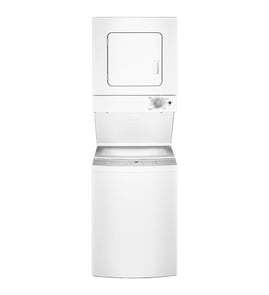


How many cubic feet is the Kenmore washer model 1108873279A?
The Kenmore stacked laundry center model 1108873279A uses a compact top-load washer platform; the washer capacity for units in this class is typically about 2.0 to 2.5 cubic feet. For the exact published capacity for your specific unit, check the model’s documentation in the owner's manual.
What capacity to expect for this type of laundry center
Most thin-twin washer/dryer combos are designed for smaller loads than full-size top-load washers.
- Typical washer capacity: 2.0 to 2.5 cu. ft.
- Best load size: small to medium (avoid packing the basket)
- Bulky items: wash one at a time when possible
- Overloading increases out-of-balance spinning and wear on the drive system
How to confirm the exact capacity for 1108873279A
Use the owner's manual and look for these terms:
- Capacity
- Basket volume
- Washer specifications
- Model information
If you see capacity listed in liters, convert it to cubic feet.
| If the manual shows | Multiply by | Result |
|---|---|---|
| Liters (L) | 0.0353 | Cubic feet (cu. ft.) |
Why it matters
Capacity affects how well clothes circulate during agitation and how stable the unit is during spin. Keeping loads within the intended size helps prevent vibration, reduces strain on the motor drive, and improves cleaning.
Last updated: February 2026
How to read Kenmore washer model numbers?
Kenmore washer model numbers are structured so you can identify who built the unit and which design family it belongs to. For your Kenmore thin-twin washer/dryer model 1108873279A, the digits help narrow down the correct parts list and the right owner's manual.
What the numbers usually mean
Most Kenmore laundry model numbers follow this pattern:
- Prefix (first 3 digits): identifies the original manufacturer (the company that built the Kenmore unit)
- Middle digits: identify the base model or design series
- Suffix letters/numbers: show feature, color, or production variations
- Full model number: is what we use to match the correct diagrams and replacement parts
Why the full model number matters for parts
Even small suffix changes can affect fit and wiring. When ordering parts for 1108873279A, always match the full model number on the tag, not just the first few digits.
Common examples on this model where exact matching matters:
- Washer drive and spin components
- Water inlet and drain components
- Dryer door and heating circuit components
Parts on this model that are commonly matched by exact model
| System | Example part name | Example part ID |
|---|---|---|
| Washer drain | Washer drain pump | WP3363394 |
| Washer drive | Coupling | 285753A |
| Dryer door latch | Strike | 279570 |
Where to find the model number on a thin-twin laundry center
On stacked laundry centers like the Kenmore 1108873279A, the model/serial tag is typically:
- On the washer lid opening or underside of the washer lid
- On the dryer door opening or inside the dryer door frame
- On the cabinet frame behind the front panel area (varies by revision)
Why it matters
Reading the model number correctly prevents wrong-part returns and speeds up troubleshooting because the wiring, timer/control, and mechanical drive parts can change between revisions.
Last updated: February 2026
What is the average lifespan of a Kenmore washer?
A Kenmore washer typically lasts 10 to 15 years. For your Kenmore 1108873279A thin-twin washer/dryer laundry center, lifespan depends most on load size, water quality, and how quickly you address wear items; routine care helps you reach the full service life (and beyond). See the maintenance and use recommendations in the owner's manual.
Typical lifespan and what affects it
Most washers land in the same general range, but these factors move the needle:
- Overloading (stresses the drive system, clutch, and tub support)
- Detergent type and amount (too much can cause residue and odor issues)
- Drain performance (slow draining strains the pump and can leave water behind)
- Out-of-balance loads (increases vibration and wear)
- Small leaks (can lead to corrosion and bearing or motor issues)
Quick “is it wear or a bigger failure?” checklist
Use symptoms to decide whether you are dealing with normal wear parts or a major repair.
| Symptom | Common cause | Often involves |
|---|---|---|
| Agitator moves poorly or “ratchets” | Worn agitator dogs | Agitator dog 80040 |
| Washer won’t spin or makes grinding noise | Drive coupling or clutch wear | Coupling 285753A, clutch 285785 |
| Water left in tub, slow drain | Clogged or failing drain pump | Washer drain pump WP3363394 |
| Loud banging, walking | Leveling or chronic unbalance | Setup and loading changes |
Maintenance that extends washer life
These habits reduce strain on the motor, transmission, and tub components:
- Keep loads balanced; mix items and avoid washing one heavy item alone
- Use HE detergent only if your model calls for it; measure carefully
- Check pockets; coins and screws can damage the basket and pump
- Periodically run a hot wash (or cleaning cycle if equipped) to reduce buildup
- Inspect hoses and connections for drips; fix leaks promptly
Why it matters
A washer that is maintained and repaired early usually avoids secondary damage. For example, a weak drain can lead to repeated wet loads and extra motor run time, while chronic unbalance can shorten the life of the tub support and drive components.
Last updated: February 2026