Error Codes


How many cubic feet is my Maytag dryer?
Your Maytag MVW6230HC3 is a washer model, not a dryer, so its cubic-foot capacity is not the same spec used for dryers. Most full-size Maytag dryers are typically about 7.0 to 7.4 cu. ft., depending on the exact dryer model.
How to get the exact cubic feet for your Maytag dryer
Use the dryer’s model number from the data plate (usually inside the door opening) and match it to the product specs.
- Open the dryer door and look for the model/serial tag on the door frame.
- Write down the full model number exactly as shown.
- If you have a gas dryer, confirm it is gas; capacity can vary by series.
- Compare your model’s listed capacity to common Maytag ranges below.
- If you are shopping parts, always search by the dryer model number (not the washer model).
Typical Maytag dryer capacity ranges (quick reference)
| Dryer type | Typical capacity | What it means |
|---|---|---|
| Compact dryer | 3.4 to 4.4 cu. ft. | Smaller loads, tighter spaces |
| Full-size dryer | 7.0 to 7.4 cu. ft. | Most common Maytag size |
| Extra-large full-size | 7.4+ cu. ft. | Bulkier items, fewer loads |
Why it matters
Dryer capacity affects how much laundry you can dry at once and how well items tumble. Overloading a dryer can cause longer dry times, more wrinkles, and extra wear on the drive system.
If you meant “washer capacity” for MVW6230HC3
Washer capacity is also measured in cubic feet, but the exact value depends on the specific configuration. If you are troubleshooting performance issues (not filling, not spinning, or stopping mid-cycle), start with common Maytag top-load diagnostics in our how to troubleshoot Maytag centennial washer problems guide.
Last updated: January 2026
What is the most common problem with a Maytag washer?
The most common Maytag washer problem is a no-spin or no-drain condition. On the Maytag MVW6230HC3, this usually traces to a lid lock or lid strike issue, a worn drive belt, or a drain restriction (pump or hose) that prevents proper draining and spin.
Quick checks we recommend first
- Make sure the lid fully closes and clicks; a misaligned lid can stop spin.
- Run a Drain/Spin cycle with the tub empty to confirm it can drain.
- Check the drain hose for kinks and confirm the standpipe is not clogged.
- Listen for the drain pump; a hum with no water movement points to a blockage.
- If the washer drains but will not spin, inspect the belt and drive system.
Common causes and the parts that usually fix them
| Symptom | Most likely cause | What to check next |
|---|---|---|
| Won’t spin, lid won’t lock | Failed lid lock or lid strike | Look for a loose strike or a lock that never engages |
| Won’t drain, water left in tub | Clogged or failed drain pump | Check for debris, coins, socks, or a jammed impeller |
| Agitates but won’t spin well | Worn/slipping belt or drive pulley | Look for belt glazing, cracks, or pulley damage |
| Intermittent shifting between agitate/spin | Shift actuator problem | Watch for repeated clicking or failure to transition |
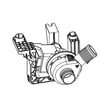
If you suspect a specific failure, these model-matched parts are common fixes: lid lock-sol W11700916, washer lid strike W11457841, pump assembly, drain W11399437, and washer drive belt WPW10006384.
Why it matters
A washer that cannot drain will not spin by design; leaving water in the tub can also strain the drain pump and drive motor. Catching a simple clog, lid lock failure, or slipping belt early often prevents bigger drive-system damage.
When an error code is involved
If the display shows an error, use the code to narrow the diagnosis before replacing parts. We recommend starting with Maytag bravos vmw top load washer error codes.
Last updated: January 2026
What is the average lifespan of a Maytag washing machine?
A Maytag washing machine typically lasts 11 years. For a Maytag top-load washer like MVW6230HC3, that same 11-year average applies; consistent cleaning, correct loading, and fixing small problems early help you reach or beat that lifespan.
Typical lifespan and what affects it
Most washer life is driven by how hard it works and how well it is maintained.
- Average lifespan: 11 years
- Common real-world range: 10 to 13 years
- Heavy use (large households): tends to shorten life
- Light use and good care: often extends life
- Hard water and excess detergent: can increase wear and odor issues
Maintenance that extends washer life
These habits reduce strain on the drive system, drain system, and lid lock.
- Do not overload; keep loads balanced to reduce vibration
- Use the right amount of HE detergent; too much causes residue and extra rinsing
- Run a monthly cleaning cycle (or hot wash) to reduce buildup
- Check pockets to prevent coins and debris from damaging the drain pump
- Level the washer to reduce suspension and bearing wear
When a repair makes sense (quick guide)
If the washer is within its typical lifespan, repairing common wear parts is often worthwhile.
| Symptom | Common cause | Example part for MVW6230HC3 |
|---|---|---|
| Won’t spin or makes squealing noise | Worn belt or pulley | Washer drive belt WPW10006384 |
| Lid won’t lock, won’t start | Lid lock or strike issue | Lid lock-sol W11700916 |
| Won’t drain or drains slowly | Drain pump problem or blockage | Pump assembly, drain W11399437 |
Why it matters
Knowing the typical lifespan helps you decide whether to maintain, repair, or replace. A washer near 11 years old that needs multiple major repairs (motor, control, tub) is often a better replacement candidate than one needing a single wear-part fix.
For troubleshooting help when the washer shows a code, use our Maytag bravos vmw top load washer error codes.
Last updated: January 2026
Can too much detergent cause an E3 error?
Yes. In a Maytag MVW6230HC3 washer, using too much detergent can create excess suds that interfere with proper water-level sensing and normal draining; that can trigger an E3-type condition (often tied to water level, load balance, or drain performance).
What to do first (quick fixes)
- Pause the cycle and let suds settle for 30 to 60 minutes.
- Run a Rinse and Spin (or a Drain and Spin) with no detergent.
- If suds remain, run an additional rinse; use cool water.
- Reduce detergent on the next load (especially with HE detergent).
- Avoid adding more detergent to “help” a problem load; it makes sudsing worse.
How detergent causes the problem
Too much detergent (or non-HE detergent) can create a thick foam layer that traps air and changes how the washer “reads” water level and load movement. Suds can also slow down draining, which makes the control more likely to stop the cycle and post an error.
Detergent and load guidelines that prevent repeat errors
- Use HE detergent only.
- Measure detergent for your water hardness and soil level.
- Use less detergent for small loads and cold-water cycles.
- Do not use extra detergent for “extra dirty” unless the label specifically calls for it.
- If you use pods, use one; do not double up.
| Situation | What to change | Why it matters |
|---|---|---|
| Oversudsing (lots of foam) | Cut detergent by about 25% to 50% | Suds can confuse sensing and slow draining |
| Soft water | Use less than the label “normal” amount | Soft water increases sudsing |
| Large or bulky loads | Use the correct cycle and avoid overfilling | Overloading increases out-of-balance events |
| Slow drain symptoms | Check drain hose routing and pump area | Poor drain performance can trigger errors |
When to check parts
If you are using the right detergent amount and E3-type errors keep returning, focus on drain and lid-lock related items that commonly stop a cycle:
- Pump assembly, drain W11399437 (if the washer will not drain or drains slowly)
- Lid lock-sol W11700916 and washer lid strike W11457841 (if the lid will not lock or the cycle stops)
Why it matters
Oversudsing is one of the fastest ways to cause false water-level and drain-related faults, longer cycle times, and poor rinsing. Correct detergent use protects the drive system, drain pump, and control logic from repeated interruptions.
Last updated: January 2026