Error Codes


How to tell what model Kenmore refrigerator?
Your Kenmore refrigerator’s model number is printed on the appliance ID label; for Kenmore model 59679213013, you will typically find that label inside the fresh food (refrigerator) compartment on a side wall or ceiling, or behind the toe grille (kick plate) at the bottom front.
Where to look first (fastest checks)
- Inside the refrigerator section: check the left or right side wall near the crisper drawers
- Ceiling of the fresh food compartment: especially near the light housing
- Behind a crisper drawer: remove the drawer and look on the liner wall
- Behind the toe grille (kick plate): along the lower front frame
- On the back exterior panel: less common, but worth a quick look
What the label should show
Most Kenmore ID labels include these fields:
| Label item | What it’s used for | Example (what you’ll see) |
|---|---|---|
| Model number | Matching parts and diagrams | 59679213013 |
| Serial number | Production run identification | Letters and numbers |
| Electrical ratings | Service checks | Volts/amps |
Tips to make sure you copy the right number
- Write down the full model number exactly (all digits, no spaces).
- If the label is worn, take a photo and zoom in; a single wrong digit can pull the wrong parts list.
- Use the model number (not the serial number) when ordering parts like a gasket, fan motor, or control board.
Why it matters
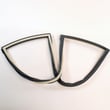
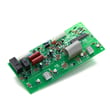
Kenmore refrigerators share similar styling across many series, but parts are model-specific. Using the exact model number helps us match the correct items, such as the refrigerator electronic control board WPW10503278 or the refrigerator door gasket W10830189, and avoid returns caused by look-alike parts.
Last updated: February 2026
Can I replace fridge parts myself?
Yes, for Kenmore model 59679213013, we can replace many common refrigerator parts ourselves (especially door-seal and airflow parts) using basic hand tools and careful safety steps. For sealed-system work (refrigerant) or complex electrical diagnosis, we use a qualified technician.
Good DIY repairs vs. pro-only repairs
DIY-friendly (most homeowners):
- Door sealing issues (cleaning, warming and reshaping a gasket)
- Fan-related airflow problems (noisy fan, weak cooling due to poor circulation)
- Drawer and rail hardware that binds or won’t slide
- Light switch issues (door light not turning on or off)
- Basic cleaning and inspection (condenser area, drain pan area)
Usually pro-only:
- Refrigerant leaks, compressor replacement, or any sealed-system repair
- Rewiring beyond simple plug-in harness swaps
- Control-board diagnosis when symptoms are intermittent or involve multiple circuits
Parts on this model that are commonly DIY-replaceable
If the symptom matches, these parts for model 59679213013 are typical DIY replacements:
| Symptom | Common DIY part to check/replace | Example part on this model |
|---|---|---|
| Warm fridge, fan noise, poor airflow | Evaporator fan motor or blade | Refrigerator evaporator fan motor WPW10128551, refrigerator evaporator fan blade WP2169142 |
| Frost buildup, not defrosting | Defrost heater | Refrigerator defrost heater WP12729128 |
| Door not sealing, moisture, frosting near door | Door gasket | Refrigerator door gasket W10830189 or refrigerator door gasket W10830162 |
DIY safety checklist (do this first)
- Unplug the refrigerator before removing panels, switches, fans, or wiring.
- Wear cut-resistant gloves; sheet-metal edges inside the cabinet can be sharp.
- Take a photo of wire connections before disconnecting anything.
- Keep screws organized by location; lengths often vary.
- If you see damaged wiring insulation or burnt connectors, stop and replace the affected harness or get service.
Why it matters
Replacing the right part yourself can restore proper temperatures, reduce frost buildup, and prevent food spoilage. It also helps avoid unnecessary replacement of expensive components like the compressor or electronic control.
For step-by-step help on door-seal problems, we use how to fix a fridge door seal.
Last updated: February 2026
What are the most common problems with Kenmore refrigerators?
The most common problems we see on Kenmore refrigerators like model 59679213013 are cooling issues, ice maker and water dispensing problems, leaks, frost buildup, and unusual noises. Many are caused by airflow restrictions, dirty condenser coils, door seal leaks, or a failing fan or defrost component.
Most common symptoms and what they usually mean
- Not cooling or warm refrigerator section: blocked vents, dirty condenser coils, evaporator fan not running, or a control issue
- Freezer cold but fridge warm: airflow problem between compartments, evaporator fan or damper issue
- Water leaking or puddles: clogged/iced defrost drain, cracked drain pan, or water line connection issue
- Heavy frost on back wall or freezer: defrost heater or defrost control problem
- Noisy operation (buzzing, rattling, grinding): condenser fan area debris, worn fan motor, or fan blade rubbing
- Lights not working when door opens: door switch problem
Quick checks we recommend before replacing parts
- Confirm temperatures: set refrigerator to about 37°F and freezer to about 0°F.
- Check airflow: make sure food packages are not blocking return vents.
- Clean condenser coils: dust buildup commonly causes poor cooling and longer run times.
- Listen for fans: you should typically hear a fan running when the compressor is running.
- Inspect door seals: look for gaps, tears, or areas that do not grip a dollar bill.
Parts that commonly solve these problems on model 59679213013
| Symptom | Common fix | Example part for this model |
|---|---|---|
| Warm temps, weak airflow | Replace evaporator fan motor | Refrigerator evaporator fan motor WPW10128551 |
| Frost buildup, warm temps | Repair defrost system | Refrigerator defrost heater WP12729128 |
| Noisy fan area | Replace fan blade (if cracked or rubbing) | Refrigerator evaporator fan blade WP2169142 |
| Intermittent cooling or dead display | Replace main control | Refrigerator electronic control board WPW10503278 |
| Door not sealing, moisture/frost | Replace door gasket | Refrigerator door gasket W10830189 |
Why it matters
Cooling and frost problems usually get worse over time. A small airflow issue can turn into spoiled food, excessive ice buildup, and longer compressor run time. Fixing the root cause early also helps protect major sealed-system components.
For display or diagnostic issues, we also use error code guidance to narrow down likely failures; see Kenmore 111 model bottom freezer refrigerator error codes.
Last updated: February 2026