Error Codes


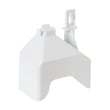
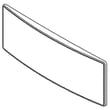
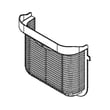
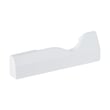
How to remove bottom grille on GE refrigerator?
On the GE PYE22KYNJFS refrigerator, the bottom grille (toe grille or base grille) usually removes by releasing snap-in tabs or by taking out a small number of Phillips screws first, then pulling the grille straight toward you. This gives access to the condenser area for cleaning and inspection.
Safe, reliable removal steps
- Unplug the refrigerator or switch off power at the breaker.
- Open both fresh food doors for better hand room.
- Look along the top edge and both ends of the grille for locking tabs or Phillips screws.
- If screws are present, remove them and set them aside.
- If tabs are present, press the tabs inward or upward (depending on style) while pulling the grille forward.
- Work one side loose first, then move across to the other side to avoid cracking the plastic.
What you might find (and what to do)
| What holds the grille on | What to do | Tool |
|---|---|---|
| Snap tabs/clips | Depress tabs, pull grille straight out | None (flat-blade helps gently) |
| 1 to 2 Phillips screws | Remove screws, then pull grille out | Phillips screwdriver |
| Tabs plus screws | Remove screws first, then release tabs | Phillips screwdriver |
Reinstall tips
- Line up the grille tabs with the cabinet slots.
- Push evenly across the grille until it seats flush.
- Reinstall screws snugly (do not overtighten).
Why it matters
Removing the toe grille is the first step for cleaning condenser coils, checking airflow, and listening for condenser fan noise. A grille that is fully seated helps protect components and supports normal cooling performance.
For another GE trim and clip removal technique that helps prevent broken plastic tabs, use how to remove a GE french door refrigerator flipper mullion.
Last updated: January 2026
What is the most common problem with GE profile refrigerators?
The most common issue we see with GE Profile refrigerators like model PYE22KYNJFS is cooling trouble (fresh food section warm, freezer warming, or temperatures swinging). Close behind are ice maker and dispenser problems, unusual noises from fans, and water leaks from the defrost drain or water supply.
Most common problems (and what they usually point to)
- Not cooling or weak cooling: dirty condenser coils, evaporator fan issue, airflow blocked by frost, or a temperature control/sensor problem
- Ice maker not making ice: clogged water filter, low water pressure, frozen fill tube, or inlet valve issue
- Water dispenser not working: air in the line, filter restriction, frozen reservoir/line, or dispenser switch problem
- Strange noises (buzzing, rattling, clicking): evaporator fan, condenser fan, or ice maker cycling
- Leaking water: clogged/iced defrost drain, cracked drain pan, loose water line connection
Quick checks we recommend first (fast, no tools)
- Confirm the temperature settings were not changed accidentally.
- Make sure air vents are not blocked by food packages.
- Clean condenser coils (dust buildup commonly causes warm temps).
- If you have an ice maker or dispenser issue, replace the water filter and purge the dispenser.
- Look for ice buildup on the freezer back wall (often signals a defrost or airflow problem).
Symptom-to-likely-cause guide
| Symptom | Most likely area to check first | Best next step |
|---|---|---|
| Fresh food warm, freezer OK | Evaporator fan, airflow, frost buildup | Follow how to fix your evaporator cooling fan |
| No ice, dispenser still works | Ice maker fill, filter, water supply | Follow how to replace the water filter in a GE refrigerator |
| Water under fridge | Defrost drain, drain pan | Follow how to get rid of refrigerator puddles |
| Door alarm keeps sounding | Door not sealing, door not closing | Follow how to reset the door alarm on a GE refrigerator |
Why it matters
Cooling and airflow problems can quickly lead to food spoilage and extra compressor run time. Catching coil, fan, filter, or drain issues early usually prevents bigger repairs.
Last updated: January 2026
How do I find the model number on my PYE22KYNJFS?
The model number for your GE refrigerator is printed on the appliance’s rating label; on most GE bottom-mount and French door styles like PYE22KYNJFS, that label is inside the fresh food compartment near the door opening. Match the full model number exactly before ordering parts.
Where to look on a GE PYE22KYNJFS refrigerator
Check these common label locations first:
- Inside the refrigerator section on the left or right wall near the front frame
- On the ceiling of the fresh food compartment near the light housing
- Behind the crisper drawers on the side wall (you may need to slide drawers out)
- Along the door jamb area where the door gasket seals
- On the back exterior panel near the bottom (less common, but possible)
What the label looks like and what to copy
The rating label usually includes the model and serial information together. Copy the model number exactly as shown (letters, numbers, and any suffixes).
| Label item | What it’s used for | Example (format) |
|---|---|---|
| Model number | Ensures correct diagrams and parts | PYE22KYNJFS |
| Serial number | Helps identify production run details | Letters and numbers |
| Electrical ratings | Useful for service checks | Volts/amps |
Tips to avoid ordering the wrong part
Use these quick checks when you write the model number down:
- Use a flashlight; labels are often small and lightly printed
- Don’t confuse 0 (zero) with O (letter O)
- Include every letter at the end of the model number (suffix matters)
- If the label is worn, take a clear photo and zoom in
Why it matters
GE can use similar-looking cabinets across multiple refrigerator models, but parts like door gaskets, water filters, ice maker components, and control boards can vary by model and suffix. Using the exact model number keeps your parts match accurate.
For more GE refrigerator help topics, we use step-by-step DIY guides like [GE refrigerator error codes].
Last updated: March 2026