Installation guide
 Owner’s manual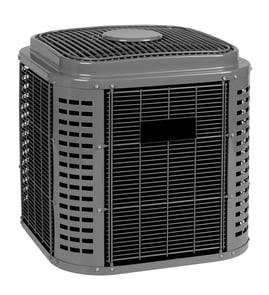



What is the life expectancy of a Carrier air conditioner?
A Carrier central air conditioner like model 38TKB024 typically lasts 15 to 20 years. Lifespan depends most on airflow (clean filters and clear outdoor coil area), avoiding damaging operating habits (rapid cycling), and keeping the system maintained so the compressor and electrical parts are not overstressed.
Most split-system central AC condensing units fall into this range when installed correctly and maintained:
| Condition | Typical lifespan | What usually shortens it |
|---|---|---|
| Normal use, routine maintenance | 15 to 20 years | Dirty filters, restricted airflow, neglected cleaning |
| Heavy use (long cooling seasons) | 12 to 18 years | High run time, poor airflow, electrical wear |
| Harsh environment (salt air, debris) | 10 to 15 years | Corrosion, clogged coil, overheating |
The manual emphasizes that airflow and proper operation protect efficiency and life. We recommend:
- Keep a clean air filter installed; a clogged filter raises operating cost and shortens unit life.
- Keep supply and return registers unblocked (furniture, drapes, toys restrict airflow).
- Maintain unrestricted airflow around the outdoor unit; keep debris off and keep vegetation back.
- Avoid using the thermostat to “jiggle” temperatures; rapid cycling can damage the compressor.
- Do not run cooling when outdoor temperatures are below 55°F.
For model-specific operating and care notes, use the owner's manual.
These symptoms usually mean the system is wearing out or running under strain:
- Frequent breakdowns (especially electrical or compressor-related)
- Rising energy bills with no change in thermostat settings
- Uneven cooling or long run times
- Outdoor unit is loud, hard-starting, or short-cycling
- Repeated capacitor or contactor failures
A central AC’s most expensive components (compressor, condenser fan motor, and electrical controls) fail faster when airflow is restricted or the unit short-cycles. Keeping filters clean and the outdoor unit clear reduces heat stress and helps the system reach its full 15 to 20-year service life.
Last updated: February 2026
What is the tonnage of Carrier 38TKB024?
Carrier model 38TKB024 is a 2-ton (24,000 BTU/hr) outdoor condensing unit. In Carrier model numbers, “024” indicates a nominal capacity of about 24,000 BTU/hr, which equals 2 tons.
- 1 ton = 12,000 BTU/hr
- 2 tons = 24,000 BTU/hr
- “024” in the model number typically maps to 24,000 BTU/hr
| Model size code | Nominal BTU/hr | Nominal tons |
|---|---|---|
| 018 | 18,000 | 1.5 |
| 024 | 24,000 | 2.0 |
| 030 | 30,000 | 2.5 |
| 036 | 36,000 | 3.0 |
Correct tonnage helps you match the outdoor unit to the indoor coil/air handler, refrigerant line sizes, and charging method. A mismatch can cause poor comfort, higher energy use, and compressor stress.
For 38TKB units, the installation guidance groups sizes (including 018 and 024) together for refrigerant connection recommendations and emphasizes checking charge using the charging information on the control box cover. For the most accurate, model-specific setup details, use the installation guide.
When a 38TKB024 is not starting or the outdoor fan is not running, common service items include:
- Contactor (switches high voltage to the compressor and fan)
- Run capacitor (helps start and run the compressor/fan motor)
- Fan blade/prop and mounting grommets (vibration and airflow)
If you are diagnosing an electrical issue, follow the wiring and safety steps in the owner's manual before testing components.
Last updated: February 2026
What is the average cost to replace a central air conditioner?
Central air conditioner replacement typically costs about $5,000 to $12,000 installed for most homes, with higher totals when ductwork, electrical upgrades, or a higher-efficiency system is involved. For a Carrier 38TKB024 condensing unit, the exact price depends on system size match, labor, and site conditions.
Replacement cost is mostly labor and system scope, not just the outdoor condensing unit.
- System size and efficiency (SEER2): higher efficiency usually costs more up front
- Indoor equipment included: evaporator coil and possibly the furnace/air handler
- Refrigerant line set work: reuse vs. replace, flushing, brazing, pressure testing
- Electrical and pad changes: disconnect, whip, breaker, condenser pad, leveling
- Permits and code requirements: varies by location
- Ductwork changes: sealing, repairs, resizing, or full replacement
These are common national ranges for a full central AC replacement; use them to sanity-check quotes.
| Replacement scope | What’s usually included | Typical installed range |
|---|---|---|
| Outdoor unit only | Condensing unit swap, basic startup | $3,500 to $7,500 |
| Full AC system | Outdoor unit + indoor coil, refrigerant work | $5,000 to $12,000 |
| AC plus ductwork | Full system + duct repairs/replacement | $8,000 to $20,000 |
Your Carrier split system relies on correct airflow and clean filtration; poor airflow raises operating cost and shortens equipment life.
- Confirm the indoor coil match and correct system tonnage
- Ask whether the quote includes new filter/drier, evacuation, and charge verification
- Verify the outdoor unit will have unrestricted airflow and proper clearances
- Make sure the installer addresses air filter condition and blocked registers
- Review startup and safety steps in the installation guide
A low quote can skip critical steps (like proper refrigerant handling and airflow checks), which leads to higher energy bills, nuisance shutdowns, and premature compressor or capacitor failures. A complete scope protects comfort and helps the system reach its expected service life.
Last updated: February 2026
How many square feet will a 3 ton AC unit handle?
A 3-ton central AC system typically covers about 1,500 to 1,800 sq. ft. in an average, well-insulated home. Actual coverage can be lower or higher based on insulation, ceiling height, windows, duct condition, and climate; use a load calculation for accurate sizing.
- Average conditions: 1,500 to 1,800 sq. ft.
- Hot climates, lots of glass, poor insulation: 1,200 to 1,500 sq. ft.
- Mild climates, great insulation, tight home: 1,800 to 2,200 sq. ft.
- Rule of thumb: about 500 sq. ft. per ton (use only as a starting point)
These factors swing the result the most:
- Insulation level and air sealing (attic, walls, rim joists)
- Ceiling height and open floor plans (more air volume to cool)
- Window size, orientation, and shading (solar heat gain)
- Duct leakage and duct insulation (especially in attics)
- Local design temperatures and humidity
Your Carrier 38TKB024 is a condensing unit. The installation information for this model focuses on correct setup and operating limits (for example, maintaining proper clearances and staying within outdoor ambient ranges); it does not translate directly into a “sq. ft. covered” number because coverage depends on the full system and the home.
Use the installation guide to confirm setup items that can impact capacity and efficiency:
- Clearances for airflow and service access
- Outdoor operating ambient limits
- Refrigerant line set sizing guidance (especially on longer runs)
| If the system is… | Common outcome | What to check first |
|---|---|---|
| Too small | Runs constantly, struggles on hottest days | Insulation, duct leakage, load calc |
| Too large | Short cycles, uneven temps, humidity issues | Load calc, airflow, thermostat setup |
| Correct size | Longer steady cycles, stable temps | Duct condition, charge, airflow |
Correct sizing protects comfort and equipment life. An oversized unit can short-cycle and leave humidity high; an undersized unit can run nonstop and still fall behind on peak days.
Last updated: February 2026