Owner’s manual
 Error Codes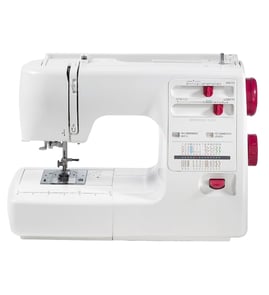

What are the parts of the electric sewing machine?
On the Kenmore Elite sewing machine model 38519365990, the main parts include the needle area components (needle, presser foot, needle plate), thread handling parts (spool pin, thread guides, take-up lever, tension control), and the electronic controls (LCD, touchpad, speed control lever). For the exact names and locations, use the owner's manual.
Common parts you will see on this model
These are called out in the parts-name section of the manual for model 38519365990:
- Extension table (accessory box)
- Needle plate, needle, presser foot, and foot holder
- Needle threader and thread cutter
- Thread take-up lever, upper thread guide, and top thread tension control
- Hook cover plate and hook cover plate release button
- Handwheel and reverse stitch button
Electronic controls and power-related parts
Because this is an electronic sewing machine, it also includes controls and connections you will use often:
- Liquid crystal display (LCD)
- Function touchpad
- Electronic sewing speed control lever
- Up/Down needle position button
- Auto-lock button
- Power switch, machine sockets, and foot control
Quick reference table
| Area | What it includes | What it does |
|---|---|---|
| Thread path | Spool pin, guides, tension control, take-up lever | Feeds and controls upper thread tension |
| Stitching area | Needle, presser foot, needle plate, feed system | Forms stitches and moves fabric |
| Controls | LCD, touchpad, speed control, reverse/lock buttons | Selects stitches and controls operation |
| Power | Power switch, plugs/sockets, foot control | Powers the machine and controls speed |
Why it matters
Knowing the correct part names helps you follow troubleshooting steps, thread the machine correctly, and describe what you need when ordering replacement sewing machine parts for the Kenmore 38519365990.
Last updated: February 2026
How old is the Kenmore sewing machine model 38519365990?
The Kenmore Elite sewing machine model 38519365990 is part of the 385.19365 model series shown in the documentation; that series format is commonly associated with Kenmore machines produced in the late 20th century. For the most accurate age, match your machine’s serial/date information to the identification details in the 38519365990 owner's manual.
How to estimate the age (practical checks)
Use these quick checks to narrow it down without guessing:
- Confirm the model format in the manual: 385.19365XXX (your model ends in 990, which fits the “XXX” range).
- Look for a serial number plate on the back, underside, or near the power inlet.
- Check for any date code on the rating label or inside the accessory compartment.
- Compare your machine’s features and specs to the manual (speed control lever, electronic speed control, stitch counts).
- If you have the original receipt, use the purchase date as the best “age” reference.
Model-series match for 38519365990
Your model number aligns to the manual’s series notation:
| What you have | How it maps in the manual | What it means |
|---|---|---|
| 38519365990 | 385.19365XXX | “XXX” represents 000 through 999; 990 fits this series |
| Kenmore Elite | Electronic sewing machine | Electronic speed control and multiple built-in stitches |
Why it matters
Knowing the approximate age helps us choose compatible parts and maintenance steps (for example, correct foot controller type, bulbs, and cleaning intervals). It also helps when troubleshooting issues like noisy operation, thread jams in the hook race, or stitch quality problems.
Helpful model identifiers from the manual
These manual details can help confirm you are looking at the right documentation:
- Maximum sewing speed: 820 RPM
- Maximum stitch length: 5 mm
- Maximum stitch width: 7 mm
- Machine dimensions: 410 mm x 180 mm x 295 mm (about 16.4 in x 7.2 in x 11.6 in)
- Net weight: 8.5 kg (about 18.5 lb)
Last updated: February 2026
How do I find out how much my sewing machine is worth?
The value of your Kenmore Elite sewing machine model 38519365990 depends most on condition, completeness (feet, accessories, case), and whether it sews correctly at full speed. We recommend using the model and serial information from your 38519365990 owner's manual to match your exact version, then comparing recent sold prices for similar machines.
What to gather before you price it
Use this checklist so your comparisons are apples-to-apples:
- Exact model number: 38519365990
- Serial number (from the machine label)
- Working status: stitches form correctly, reverse works, lights work
- Included accessories: presser feet, bobbins, needles, manuals, hard case
- Cosmetic condition: cracks, missing knobs, corrosion, heavy wear
- Key specs buyers often ask about (from the manual): 820 spm max, 5 mm stitch length max, 7 mm stitch width max, 410 x 180 x 295 mm, 8.5 kg
How to estimate a realistic price
We use a simple approach: start with comparable sales, then adjust for condition and completeness.
- Search for sold listings using “Kenmore 385.19365” and “Kenmore 38519365990” (both formats show up).
- Filter to machines that include similar accessories and are in similar cosmetic shape.
- Adjust up or down based on what yours includes and whether it needs service.
Quick adjustment guide
| Factor | Typically increases value | Typically decreases value |
|---|---|---|
| Sewing performance | Clean stitches, smooth feed, consistent speed | Skipped stitches, jams, noisy motor |
| Completeness | Original feet, attachments, case, manual | Missing foot pedal, missing bobbin case, missing accessories |
| Condition | Clean, minimal wear | Cracks, heavy discoloration, rust |
Why it matters
Sewing machines are priced on confidence: buyers pay more when they can see it runs smoothly, includes the right accessories, and matches a known spec set. Your manual helps you document features and specs accurately, which supports a higher, faster sale.
Last updated: February 2026
What are the features of the Kenmore 38519365990?
The Kenmore Elite sewing machine model 38519365990 is a household-use electronic sewing machine with electronic sewing speed control (speed control lever plus foot control). It also includes a set of standard sewing accessories such as multiple presser feet, bobbins, spool holders, and a seam ripper; see the owner's manual for the full feature and accessory list.
Key features you can use right away
- Electronic sewing speed control: set a maximum speed with the speed control lever
- Foot control operation: sewing speed varies with how far you press the foot control
- Polarized plug design: intended to fit a polarized outlet one way (do not modify the plug)
- Household-use design: built for home sewing projects
Included accessories (common items listed for this model series)
The manual’s parts and accessories list for the 385.19365XXX series includes items like:
- Bobbins
- Assorted needle set (multiple sizes and types)
- Presser feet (examples: zigzag foot, zipper foot, satin stitch foot, blind hem foot, straight stitch foot, automatic buttonhole foot)
- Lint brush
- Seam ripper/buttonhole opener
- Spool holders and an additional spool pin
Quick reference table
| Feature or item | What it does | Where to confirm details |
|---|---|---|
| Speed control lever | Sets the maximum sewing speed | Owner's manual |
| Foot control | Varies speed while sewing | Owner's manual |
| Presser feet and needles | Supports different stitch types and fabrics | Owner's manual |
Why it matters
Speed control and the right presser foot or needle make a big difference in stitch quality, especially when switching between light fabrics, knits, and heavier materials. Using the correct accessory also helps prevent thread breaks and uneven stitches.
Last updated: February 2026
What are the 7 common sewing machine troubles?
The 7 most common sewing machine troubles on a Kenmore Elite sewing machine like model 38519365990 are: thread bunching (bird’s nests), thread breaking, skipped stitches, fabric not feeding smoothly, needle problems (bent or breaking), seam puckering, and the machine jamming or not running. Our owner's manual includes a troubleshooting chart that targets these exact symptoms.
The 7 troubles and what usually causes them
- Thread bunching (bird’s nests): upper thread not seated in the tension path, presser foot up while threading, or bobbin not threaded correctly.
- Needle thread breaking: incorrect threading, tension too tight, wrong needle size for thread, or thread tails not held at start.
- Bobbin thread breaking: lint in the bobbin holder/hook area, bobbin not turning smoothly, or incorrect bobbin threading.
- Skipped stitches: bent/blunt needle, needle inserted incorrectly, wrong needle type for fabric (especially stretch/synthetics), or incorrect threading.
- Fabric not feeding smoothly: feed dogs packed with lint, presser foot pressure too weak, stitches set too fine, or drop-feed not returned to the raised position.
- Needle breaking: wrong needle plate, bent needle, pulling/pushing fabric, or needle installed incorrectly.
- Machine jams or won’t run: thread caught in the hook race, machine not plugged in, or bobbin winder still in the winding position.
Quick fixes we recommend first (in order)
- Turn the machine off and unplug it before cleaning, clearing a jam, or changing the needle.
- Rethread the upper thread with the presser foot raised, then lower the presser foot before sewing.
- Remove the bobbin and clean lint from the bobbin holder/hook race area.
- Install a new needle (correct type and size for your fabric and thread) and insert it fully.
- Reset to a basic stitch (medium length, normal tension) and test on scrap fabric.
Symptom-to-check cheat sheet
| Symptom | Most common check | What to do |
|---|---|---|
| Thread breaking | Threading and tension | Rethread; reduce tension; match needle to thread |
| Skipped stitches | Needle condition/type | Replace needle; use stretch needle for knits |
| Not feeding | Lint or drop-feed | Clean feed area; raise feed dogs; adjust pressure |
| Won’t run/jams | Hook race thread snag | Clear thread; rethread bobbin; test slowly |
Why it matters
Most “mystery” stitch problems come from three basics: threading, needle choice/condition, and lint buildup around the feed dogs and hook race. Fixing those first prevents repeated jams, broken needles, and uneven seams.
Last updated: February 2026