Owner’s manual
 Error Codes



Are Kenmore dryers made by Whirlpool?
Kenmore is a brand name, not a single manufacturer; different Kenmore dryer lines have been built by different companies. For Kenmore model 79691392610, the 796 model prefix is commonly associated with LG-built Kenmore dryers, so this model is typically considered LG-manufactured.
How to tell who built your Kenmore dryer
The most reliable way is to match the model prefix and the data plate information.
- Model prefix: The first 3 digits often indicate the original manufacturer (for example, 796 is widely tied to LG-built Kenmore laundry).
- Data plate: Check the manufacturer information on the rating label (usually inside the door opening).
- Parts cross-reference: Many internal parts and assemblies align with the original manufacturer’s designs.
- Manual family: The use and care guide often covers a model family (for example, 796.8139* and 796.9139*).
What this means for parts and repairs
Even when the Kenmore badge is on the front, parts selection should be based on the exact model number and the correct component design.
| What you’re doing | What to use | Why it helps |
|---|---|---|
| Ordering replacement parts | Model 79691392610 and the part ID | Prevents mismatched fit and wiring |
| Diagnosing a symptom | Error codes and troubleshooting steps | Speeds up pinpointing the failed component |
| Planning a common repair | Matched wear parts (belt, rollers, idler) | Reduces repeat tear-downs |
Common wear parts on this model family
If you are chasing squealing, thumping, or a drum that will not turn, these are frequent suspects:
- Lg dryer drum belt 4400EL2001F
- Dryer drum support roller 4581EL2002H
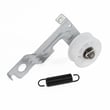
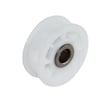
- Lg dryer idler pulley 4561EL3002A
Why it matters
Manufacturer lineage affects part compatibility, service procedures, and troubleshooting logic. Using the correct model number (79691392610) and the right documentation avoids ordering the wrong belt, roller, thermostat, or control.
For model-specific operation and troubleshooting details, use the 79691392610 owner's manual.
Last updated: February 2026
How do I know if my Kenmore dryer thermal fuse is blown?
If your Kenmore dryer model 79691392610 will not start or stops mid-cycle, a blown thermal fuse is a common cause. We confirm it by unplugging the dryer and testing the fuse for continuity with a multimeter; a blown fuse shows no continuity.
Quick symptoms that point to a blown thermal fuse
- Dryer will not start even though the outlet has power
- Dryer starts, then shuts off quickly
- Motor runs but heat is inconsistent (often paired with airflow problems)
- You recently had a clogged vent or the CHECK VENT light blinking
How we test the thermal fuse (safe, reliable method)
- Unplug the dryer (or switch off the breaker).
- Access the thermal fuse (location varies by design; use the 79691392610 owner’s manual for access steps and panel removal guidance).
- Pull one wire off the fuse terminal (so you do not read through the circuit).
- Set your multimeter to continuity (or lowest ohms).
- Touch a probe to each terminal:
- Good fuse: continuity (beep or near 0 ohms)
- Blown fuse: no beep (open circuit)
What to do if the fuse is blown
A thermal fuse usually blows because the dryer overheated, most often from restricted airflow.
- Clean the lint screen and lint housing
- Inspect and clear the exhaust duct to the outside
- Make sure the outside damper opens freely
- If your model shows CHECK VENT blinking, correct the restriction and run several cycles; the indicator can take multiple cycles to reset
Airflow check: what “good” looks like
| Check | Good result | Problem sign |
|---|---|---|
| Outside vent flap | Opens strongly | Weak airflow or flap barely moves |
| Duct run | Short, smooth, not crushed | Long run, kinks, heavy lint buildup |
| Lint filter | Clean, air passes easily | Film buildup, blocked mesh |
Why it matters
The thermal fuse is a safety device; replacing it without fixing venting can cause repeat failures and poor drying performance. Keeping airflow clear also helps prevent long dry times and overheating.
Last updated: February 2026
How do I tell what model my Kenmore dryer is?
Your Kenmore dryer’s model number is printed on the identification plate inside the dryer door opening. For model 79691392610, open the door and look along the door frame area for the model and serial number label; write both down for parts and service.
Where to look on Kenmore model 79691392610
Check these common label locations first:
- Inside the door opening on the cabinet frame (most common)
- Along the door opening edge near the latch area
- On the inner front panel just inside the door
- If the label is damaged, check for a second sticker nearby inside the door opening
For diagrams and the exact “product record” section, use the 79691392610 owner's manual.
What to record (and why)
Having the full ID prevents ordering the wrong dryer parts (belt, rollers, control board) and speeds up troubleshooting.
- Model number (example: 79691392610)
- Serial number (unique to your dryer)
- Date of purchase (helpful for maintenance history)
Quick ID checklist
| Item | What it does | When you need it |
|---|---|---|
| Model number | Identifies the exact Kenmore dryer design | Ordering parts, looking up specs |
| Serial number | Identifies your specific unit | Service history, diagnostics |
| Date of purchase | Tracks age and maintenance timing | Planning upkeep, comparing symptoms |
If you still cannot find the label
Use these practical steps to confirm the model:
- Look for a faint “imprint” where the sticker used to be inside the door opening
- Check your purchase receipt or delivery paperwork
- If your dryer has a diagnostic feature, follow the steps in the 79691392610 owner's manual to contact service with your unit details
Why it matters
Kenmore model numbers can look similar, but small differences change which drum belt, idler pulley, thermostat, or lint screen fits. Using the exact model number helps us match the correct parts the first time.
Last updated: February 2026
What are common problems with Kenmore dryers?
Common problems we see with Kenmore dryer model 79691392610 include no heat, not starting, long dry times from restricted venting (often triggering the Check Vent light), control lock issues, and unusual noises from worn drum support parts. Use the 79691392610 owner's manual to match symptoms to the right checks.
Most common symptoms and what usually causes them
- Dryer will not turn on: loose power cord, tripped breaker, blown fuse, or Control Lock enabled
- Runs but does not heat: breaker/fuse issue (electric can run without heat), gas shutoff closed (gas models)
- Long dry times or Check Vent light: restricted exhaust venting, lint buildup, or oversized loads back to back
- Buttons do not work / CL on display: Control Lock is on (often cleared by holding the Drum Light button for 3 seconds)
- Thumping, squealing, or rumbling: worn belt, idler pulley, or drum support rollers
Quick checks we recommend first (fast, no tools)
- Confirm power: plug fully seated; reset the breaker (dryers often use a 2-pole breaker).
- Check airflow: clean the lint screen and confirm strong airflow at the outside vent.
- Avoid false Check Vent triggers: very large loads (comforters) or several large loads in a row can activate the vent monitor.
- If gas model: confirm both the house gas shutoff and dryer gas shutoff valves are fully open.
- If CL shows: turn off Control Lock (see the 79691392610 owner's manual for the exact control sequence).
Parts that commonly fix noise or poor tumbling
If the dryer runs but makes noise or the drum slips, these model-matched parts are common fixes:
| Symptom | Likely wear item | Example model-matched part |
|---|---|---|
| Drum not turning, burning rubber smell | Drum belt | Lg dryer drum belt 4400EL2001F |
| Squeal or chirp while running | Idler pulley | Lg dryer idler pulley 4561EL3002A |
| Thump or rumble | Drum support roller | Dryer drum support roller 4581EL2002H |
Why it matters
Most dryer complaints trace back to airflow and venting. Poor exhaust venting can cause long dry times, overheating symptoms, and repeated Check Vent alerts. Fixing vent restrictions also protects heating components like thermostats and sensors.
Last updated: February 2026
Why is my Kenmore Elite dryer not spinning?
If our Kenmore 79691392610 dryer runs but the drum will not spin, the most common causes are a broken drum belt, a seized drum support roller, or a failed idler pulley. Start by unplugging the dryer, then inspect the belt and drum support system before moving to electrical checks.
Quick checks (fastest wins)
- Confirm the door fully closes; a bad door switch can stop tumbling.
- Try turning the drum by hand (with power off); hard-to-turn points to rollers, drum seal drag, or a jam.
- Listen for motor hum with no drum movement; that often indicates a belt or idler issue.
- Check for a heavy lint blockage; overheating can trigger safety devices and cause shutdowns mid-cycle.
- Review the troubleshooting section in the 79691392610 owner's manual for model-specific symptoms and “before calling for service” guidance.
Parts that most often stop the drum from turning
If the dryer motor runs but the drum does not move, these are the top mechanical suspects:
- Lg dryer drum belt 4400EL2001F (broken, stretched, or slipped off the drum)
- Dryer drum support roller 4581EL2002H (roller seized or flat-spotted, drum binds)
- Lg dryer idler pulley 4561EL3002A or dryer idler pulley 4560EL3001A (pulley seized, belt loses tension)
What the symptom usually means
| Symptom | Most likely cause | What we check first |
|---|---|---|
| Motor runs, drum does not move | Belt off or broken | Belt condition and routing |
| Loud thumping or squeal, then no spin | Roller or idler failing | Roller spin and idler bearing |
| Drum is very hard to turn by hand | Roller seized or drum binding | Rollers, drum seal, foreign object |
| Dryer stops and shows airflow warning | Vent restriction | Lint filter and exhaust duct |
Why it matters
A non-spinning drum is usually a mechanical drive issue; continuing to run the dryer can overheat the motor, damage the blower wheel, and increase drying time. Fixing the belt, rollers, or idler early restores normal tumbling and protects the motor.
Last updated: February 2026