
Can I use sae 30 oil in my air compressor?
Yes. For a Craftsman 10217521 (1, 1.5 & 2-hp 2-stage 2-cylinder compressor), SAE 30 is commonly an acceptable compressor lubricant when it is non-detergent and you are operating in moderate temperatures; for colder conditions, a lighter compressor oil viscosity is typically a better choice.
What oil type to use (what matters most)
Use oil that matches these basics for most reciprocating air compressors:
- Non-detergent oil (detergent automotive engine oils can foam and leave deposits)
- Correct viscosity for your ambient temperature
- Labeled for air compressor or suitable for reciprocating compressor pumps
- Clean, fresh oil (old oil carries moisture and wear particles)
SAE 30 vs other common choices
Here is a practical guide for typical home-shop conditions.
| Ambient temperature | Common oil choice | Why it helps |
|---|---|---|
| Above about 40°F | SAE 30 non-detergent | Good film strength for warm starts and steady running |
| Around freezing and below | Lighter compressor oil (often SAE 20 or synthetic equivalent) | Easier cold starts, faster lubrication |
| Wide temperature swings | Synthetic compressor oil (correct grade) | Better cold flow and heat stability |
Quick checks before you fill
These steps prevent most lubrication-related compressor problems:
- Confirm your pump is an oil-lubricated design (not oil-free).
- Check the oil level at the sight glass or dipstick; do not overfill.
- Drain and refill when the oil looks dark, milky, or smells burnt.
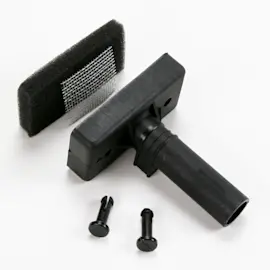
- Keep the intake filter clean; dirty intake air accelerates oil breakdown.
- If the unit trips breakers on startup in cold weather, switch to a lighter viscosity oil and recheck extension cord length and gauge.
Why it matters
Using the right non-detergent compressor oil reduces foaming, lowers pump temperature, and protects the crankshaft bearings and cylinder walls. That directly improves compression efficiency and extends pump life.
For model-specific parts and diagrams for the Craftsman 10217521, start with the parts list for this model; for broader part searches by model number, use Sears PartsDirect.
Last updated: February 2026
What are the 4 types of compressors?
The four common compressor types are reciprocating (piston), rotary screw, centrifugal, and axial. Your Craftsman 10217521 is a reciprocating, 2-stage, 2-cylinder style compressor, which is a positive-displacement design used for higher pressure shop-air needs.
The 4 compressor types (and what they’re best for)
- Reciprocating (piston): Uses pistons and valves to compress air in cylinders; common in garages and small shops.
- Rotary screw: Uses two intermeshing rotors for continuous airflow; common in commercial and industrial settings.
- Centrifugal: Uses a high-speed impeller to add velocity and convert it to pressure; common for large-volume plant air.
- Axial: Uses multiple rotating and stationary blade stages; most common in very high-flow applications.
Positive displacement vs dynamic: quick comparison
| Category | Types included | How it builds pressure | Typical use case |
|---|---|---|---|
| Positive displacement | Reciprocating, rotary screw | Traps air then reduces volume | Tools, shop air, general industrial |
| Dynamic | Centrifugal, axial | Adds velocity then converts to pressure | Large facilities, high-flow systems |
Why it matters for your Craftsman 10217521
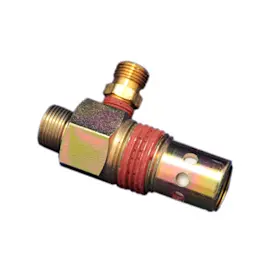
Knowing the compressor type helps you troubleshoot correctly and choose compatible maintenance parts. For example, piston compressors commonly involve checks of valves, cylinder sealing, pressure switch operation, and tank check valve behavior.
Practical tips when you’re identifying a compressor
- Look for cylinders and a flywheel (reciprocating) versus a sealed air-end (rotary screw).
- Note whether airflow is pulsed (often piston) or very steady (often screw).
- Match parts by the exact model number 10217521 to avoid fit issues.
- If you’re shopping for maintenance items, start with the parts list for this model, then broaden your search on Sears PartsDirect.
Last updated: February 2026
What is the most common cause of air compressor failure?
The most common cause of failure on a Craftsman air compressor like model 10217521 is poor preventive maintenance that leads to overheating, excessive wear, and moisture-related damage. Electrical problems (power supply, wiring, motor start components) are also a frequent root cause when the compressor will not start or trips breakers.
Most common failure causes (what we see most often)
- Lack of maintenance: dirty intake filter, low or contaminated oil (oil-lube units), loose fasteners, and ignored leaks.
- Overheating: restricted airflow, clogged cooling fins, running beyond duty cycle, or high ambient temperatures.
- Moisture and corrosion: not draining the tank causes internal rust and can damage valves and regulators.
- Air leaks: fittings, hoses, drain valve, check valve, or pressure switch plumbing leaks force longer run times.
- Electrical issues: weak outlet circuit, damaged cord, failing capacitor (if equipped), or worn motor.
- Dirty or sticking valves: reed valves or check valves can stick from carbon, debris, or moisture.
Quick symptom-to-cause guide
| Symptom | Most likely cause | What to check first |
|---|---|---|
| Runs constantly, won’t reach cut-out pressure | Air leak or valve issue | Listen for leaks; soap-test fittings |
| Trips breaker on start | Electrical or motor start issue | Outlet/circuit rating; cord; wiring condition |
| Starts, then shuts off hot | Overheating or airflow restriction | Cooling fins, ventilation, duty cycle |
| Water spits from tools | Excess moisture in tank/lines | Drain tank; add water separator |
What to do first (safe, high-impact checks)
- Unplug the compressor; let it cool completely before touching the pump or motor.
- Drain the tank fully; then close the drain and refill to confirm normal pressure build.
- Check for leaks with soapy water at fittings, regulator, and tank drain.
- Inspect the intake filter and cooling fins; clean debris so the pump can breathe.
- Verify the power source: dedicated outlet, correct voltage, and no undersized extension cord.
- Look for heat discoloration, melted insulation, or loose terminals in accessible wiring.
Why it matters
When maintenance is skipped, the compressor runs hotter and longer to do the same work. That accelerates wear on the pump, valves, and motor, and it increases the chance of electrical overloads and nuisance breaker trips.
If you need replacement parts for Craftsman 10217521, start with the parts list for your model; you can also search by model number on Sears PartsDirect.
Last updated: February 2026
How to tell if an air compressor pressure switch is bad?
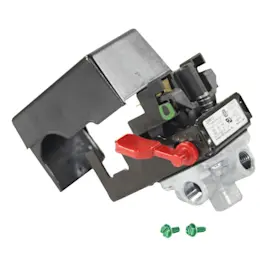
A bad pressure switch on a Craftsman 10217521 air compressor usually shows up as starting or stopping problems: the motor will not start, it runs nonstop past normal cut-out, it short-cycles, or it shuts off too early. These symptoms happen because the switch is not correctly sensing tank pressure and controlling power to the motor.
Common symptoms to look for
- Compressor will not turn on even with low tank pressure
- Compressor will not shut off (keeps running)
- Rapid on/off cycling (short-cycling)
- Hissing air leak at the switch area (often the unloader circuit)
- Clicking/chattering from the switch when it should stay engaged
- Visible heat damage, discoloration, or pitted contacts inside the switch housing
Quick checks you can do safely
- Unplug the compressor and bleed the tank to 0 PSI before removing any covers.
- Inspect wiring at the pressure switch for loose spade terminals, burnt insulation, or broken wires.
- With the tank empty, move the switch lever (if equipped). It should feel positive, not mushy.
- Listen during shutdown: a brief “psst” is normal (unloader releasing head pressure). Continuous leaking points to an unloader or switch issue.
- If you have a meter, use a continuity test to see whether the switch opens and closes as pressure changes (only if you are comfortable working around electrical parts).
What “normal” operation looks like (typical)
Pressure settings vary by compressor, but most 2-stage units behave like this:
| What you observe | Usually normal? | What it suggests if not normal |
|---|---|---|
| Starts at low tank pressure | Yes | Switch not closing, wiring issue, motor/capacitor issue |
| Stops at a consistent high pressure | Yes | Switch not opening, contacts welded, misadjusted switch |
| Brief unloader release at shutoff | Yes | Constant leak can indicate unloader valve problem |
| No rapid cycling | Yes | Short-cycling can indicate switch, check valve, or leak |
Why it matters
The pressure switch is the main control that protects the motor and tank by stopping the compressor at the correct pressure. When it fails, you can get hard-starts, overheating, nuisance tripping, or unsafe over-pressurizing behavior.
Parts and next steps
For the Craftsman 10217521, match the replacement pressure switch by model number, pressure range, port size, and whether it includes an unloader connection. If the parts list for your model does not show the switch you need, search by model number on Sears PartsDirect.
Last updated: February 2026
How to read compressor model number?
For a Craftsman air compressor like model 10217521, the model number is the identifier we use to match the correct parts list and diagrams to your exact compressor configuration (motor/horsepower range, pump style, and production run). The fastest way to “read” it is to use it to confirm you are looking at the right Craftsman parts breakdown on Sears PartsDirect.
Where to find the model number on a Craftsman compressor
Look for a data label or stamped plate on the compressor; common locations include:
- The tank near the motor/pump mounting area
- The frame or base rail
- Near the pressure switch cover
- Near the regulator/gauge panel
What to copy from the label
Write down these items exactly as shown:
- Model number (example: 10217521)
- Serial number (helps distinguish production runs)
- Voltage and phase (often 120V or 240V; single-phase for most home units)
- Tank size and max PSI (useful for matching safety and control parts)
How the model number helps you pick the right parts
Craftsman model numbers do not work like a universal “code” that always tells you horsepower, voltage, and certification by digit. Instead, the model number primarily ties to a specific parts breakdown. That matters because parts like a pressure switch, check valve, regulator, or motor capacitor can look similar but differ by rating and port size.
| What you’re trying to match | What to use | Why it matters |
|---|---|---|
| Correct parts diagram | Model number (10217521) | Ensures the right component layout |
| Correct version/run | Serial number | Prevents ordering a similar but incompatible part |
| Electrical parts | Voltage on label | Avoids wrong capacitor, motor, or switch ratings |
| Air system parts | Max PSI and fitting sizes | Prevents leaks and unsafe operation |
Why it matters
Using the exact model number and label details prevents mismatched parts that can cause air leaks, nuisance tripping, slow recovery, or improper cut-in/cut-out pressure control.
Helpful DIY reference for identifying and searching
If the label is worn or you are unsure which number is the model, use how to find your appliance model number (and what it means for parts) to confirm what to enter when searching.
Last updated: February 2026