Error Codes




What is the life expectancy of a Maytag washer?
Maytag washers, including the Maytag MVW7230HC1, typically last 10 to 13 years with normal household use. Consistent maintenance (proper loading, correct detergent, and keeping the tub and hoses in good shape) is what most often determines whether you land closer to 10 years or push beyond it.
What affects lifespan the most
- Load size and balance: chronic overloading and unbalanced loads strain the drive system and suspension.
- Water quality: hard water can increase detergent buildup and wear on valves.
- Detergent habits: too much detergent can cause residue, odors, and poor rinsing.
- Drain and fill health: slow draining or restricted filling makes cycles run harder and longer.
- Vibration and leveling: a washer that rocks during spin wears parts faster.
Maintenance habits that help MVW7230HC1 last longer
- Keep loads loosely packed; avoid compressing bulky items.
- Run periodic cleaning cycles and wipe down the lid and rim; use our guide how to clean and maintain your washing machine.
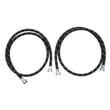
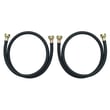
- Replace worn hoses before they leak; consider a fresh set like washer fill hose set 8212545RP if your hoses are aging or cracking.
- Make sure the washer sits solidly; replace damaged feet such as washer leveling leg WPW10687506 if it will not level correctly.
Quick lifespan expectations (typical)
| Usage pattern | Typical lifespan | What usually shortens it |
|---|---|---|
| Light (few loads/week) | 12 to 14 years | Long periods of non-use with moisture/odor buildup |
| Average family use | 10 to 13 years | Overloading, poor leveling, detergent overuse |
| Heavy (daily loads) | 8 to 11 years | Frequent unbalanced spins, hose/valve wear |
Why it matters
Knowing the expected lifespan helps you decide when maintenance is worth it versus when repeated issues (leaks, no-drain, no-spin, lid lock problems) point to a larger repair plan. For troubleshooting patterns, we often reference Maytag bravos vmw top load washer error codes as a starting point for Maytag top-load behavior.
Last updated: January 2026
Can I still use my washer with an F7E1 error?
No. On the Maytag MVW7230HC1 washer, an F7E1 error indicates the washer is not sensing or controlling drive speed correctly, so we do not recommend continuing to run cycles. Using it can lead to poor spinning, out-of-balance banging, and added stress on the drive system.
What to do first (safe steps)
- Press Cancel/Stop to end the cycle.
- If the tub is full, try Drain/Spin once; stop immediately if the basket surges or bangs.
- Unplug the washer (or switch off the breaker) for 1 minute, then restore power.
- Run a short Rinse/Spin with the tub empty to see if the code returns.
- If F7E1 comes back, stop using the washer until the cause is corrected.
Parts that commonly relate to F7E1 on MVW7230HC1
On this model, F7E1 troubleshooting often focuses on the drive system components and the control that interprets speed feedback. These model-compatible parts are common suspects when you have no-spin or erratic-spin symptoms:
Quick symptom-to-likely-cause guide
| What you notice | What it often points to | What we recommend |
|---|---|---|
| Won’t spin or stops quickly | Drive system problem (motor/rotor area), wiring, control | Check for loose connections; inspect for damage; diagnose components |
| Spins briefly then throws F7E1 | Speed feedback not being read consistently | Inspect harness routing and connectors; consider control diagnosis |
| Grinding or loud rubbing during spin | Mechanical drive issue (clutch/slider area) | Inspect drive components before running again |
Why it matters
When the washer cannot reliably sense speed, it may not ramp up or regulate spin correctly. That can leave loads soaking wet, increase vibration, and accelerate wear on the drive and electronic control.
For general Maytag top-load error code meanings and what they typically indicate, see Maytag bravos vmw top load washer error codes.
Last updated: January 2026
What is the most common problem with a Maytag washer?
On the Maytag MVW7230HC1 washer, the most common service complaints are “won’t drain or spin” and excessive vibration or noise during spin. These issues are often caused by load balance, a drain restriction, or a lid-lock or drive system component starting to fail.
Quick checks first (no parts needed)
- Redistribute the load; bulky items can stop spin if the basket is off balance.
- Make sure the washer is level and does not rock; adjust the leveling legs.
- Inspect the drain hose for kinks or crushing; confirm it is not shoved too far into the standpipe.
- Run a Drain/Spin cycle with the tub empty to compare results.
- Power reset: unplug for 2 minutes, then restart.
When it becomes a parts issue on MVW7230HC1
If the quick checks do not help, these model-compatible parts are common suspects:
- Drain problems (slow drain, standing water): washer drain hose W11244231, washer pump drain hose W11553446
- Won’t start or won’t spin with lid closed: lid lock-sol W11700916, washer lid strike W11457841
- Loud banging or shaking: suspension wear such as damper asm - W11400156
- Grinding, slipping, or weak spin: clutch/drive wear such as slider W10734521
Symptom-to-likely-cause guide
| Symptom | What it often points to | What we check next |
|---|---|---|
| Wet clothes, standing water | Drain restriction or drain path issue | Hose routing, clogs, pump drain hose |
| Won’t spin with lid closed | Lid lock not engaging | Lock, strike alignment, wiring connections |
| Loud thumping during spin | Unbalanced load or weak suspension | Leveling legs, dampers |
| Grinding or slipping sounds | Drive/clutch wear | Slider, clutch-related components |
Why it matters
Drain and spin problems leave clothes soaking wet and can strain the drive system. Fixing a drain restriction or a failing lid lock early helps prevent repeat shutdowns and reduces wear on the motor and clutch.
For deeper troubleshooting by symptom, use our guide: washer slow or no agitation or spinning.
Last updated: January 2026