
What is the average lifespan of a whirlpool dryer?
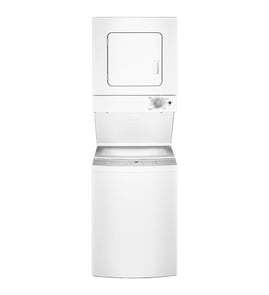
For a Whirlpool dryer, the typical lifespan is 10 to 15 years with normal household use and basic maintenance. In a stacked laundry center like Whirlpool WGT4027HW1, keeping airflow strong and fixing wear parts early is what most often determines whether you land closer to 10 years or 15+.
What affects dryer lifespan the most
- Vent restriction (long runs, crushed flex duct, clogged hood) increases heat and wear
- Lint buildup in the lint screen housing and blower area reduces airflow
- Overloading strains the drum support system and drive components
- High heat, back-to-back loads accelerates thermal cycling on controls and thermostats
- Worn drum support parts can cause noise and extra drag on the motor
Maintenance that adds years (simple, high impact)
- Clean the lint screen every load
- Check outside vent airflow monthly; it should be strong and steady
- Clean the full vent path at least once per year (more often with pets or heavy use)
- Stop using the dryer if you hear grinding or thumping; address it before it damages the drum or motor
Common “wear parts” that can extend life when replaced
If your dryer still heats and tumbles but is noisy or rough, replacing wear items is often the difference between a quick failure and years of added service.
| Symptom | Most likely wear area | Example part for WGT4027HW1 |
|---|---|---|
| Thumping, rumbling | Drum support system | Dryer drum support roller WPW10314173 |
| Squealing, dragging | Drum support and belt path | Dryer repair kit 4392065 |
| Weak airflow, longer dry times | Blower system or venting | Dryer blower wheel WP697772 |
Why it matters
A dryer usually does not “wear out” all at once; it loses airflow, runs hotter, and then heat and friction shorten the life of the motor, thermostats, and drum supports. Preventing overheating and fixing noise early is the most cost-effective way to reach the upper end of the lifespan range.
Last updated: January 2026
How to dry clothes using a whirlpool washing machine?
On the Whirlpool WGT4027HW1 laundry center, the washer does not “dry” clothes; it removes water by draining and spinning. To actually dry clothes, move the load to the dryer section and run a timed or automatic dry cycle.
What you can do in the washer (to get clothes as dry as possible)
- Choose the highest spin option available for the cycle you selected.
- Avoid overloading; a packed basket cannot spin water out efficiently.
- Use the correct cycle for the fabric (bulky items often need extra spin).
- If the load is still very wet, run an extra drain and spin.
- Make sure the washer is level; an unbalanced tub can reduce spin speed.
How to dry using the dryer section (typical steps)
- Clean the lint screen before every load.
- Load the dryer loosely (do not pack items tight).
- Select an automatic dry cycle for most loads, or timed dry for a set number of minutes.
- Start the cycle; check dryness near the end and add time if needed.
Quick guide: washer vs. dryer
| Task | Washer section | Dryer section |
|---|---|---|
| Remove water | Drain + spin | Not applicable |
| Fully dry clothes | Not possible | Yes (heated air + tumbling) |
| Best “extra” option | Extra drain and spin | Timed dry add-on |
If clothes are still too wet after spinning
These issues commonly reduce water removal and can make drying take much longer:
- Drive system problems (belt or pulley slipping)
- Suspension problems causing out-of-balance spinning
- Drain performance issues (slow drain can limit spin)
If you hear squealing, burning rubber smell, or the basket struggles to reach speed, check the drive belt W11239857 and the Whirlpool washer drive pulley W10721967.
Why it matters
Getting the load properly spun out in the washer reduces dryer time, improves energy efficiency, and helps prevent musty odors from clothes sitting damp too long.
Last updated: January 2026
How does the whirlpool washer-dryer combo work?
The Whirlpool WGT4027HW1 is a stacked laundry center, meaning it has a top-load washer on the bottom and a separate dryer on the top. You wash a load in the washer, then move the clothes to the dryer; it does not wash and dry the same load in one continuous cycle.
How the WGT4027HW1 laundry center runs a load
A stacked laundry center works in two distinct steps: wash first, then dry.
- Washer step: Fill, agitate, drain, and spin to remove water.
- Transfer step: Move wet clothes from the washer basket to the dryer drum.
- Dryer step: Tumble with heated air (or unheated air on air-fluff) until dry.
- Exhaust step: Most units vent moist air outside through a vent duct (electric and gas dryers both vent).
What people often mean by “combo” (and why it matters)
Many customers use “washer-dryer combo” to describe two different products. Here is the practical difference:
| Type | What it is | Do you move clothes? | Typical drying method |
|---|---|---|---|
| Stacked laundry center (WGT4027HW1) | Separate washer + separate dryer in one cabinet | Yes | Vented dryer |
| All-in-one washer/dryer | Single drum does both | No | Often ventless (condensing/heat pump) |
Why it matters
If you expect a true all-in-one, the biggest surprise is cycle time and workflow. With the WGT4027HW1, you can start the dryer only after you transfer the load, but you also get the familiar performance of a dedicated dryer.
Common “how it works” troubleshooting clues
If the washer or dryer is not behaving normally, these parts are often involved:
- Washer not spinning or agitating well: check the washer actuator W10913953
- Washer making belt or slipping noises: check the drive belt W11239857
- Dryer thumping or squealing: check the dryer drum support roller WPW10314173
- Dryer not heating (gas models): check the dryer valve coil kit 279834 and the igniter 279311
Quick safety and setup reminders
- Unplug power before opening panels.
- For gas dryers, shut off the gas supply before service.
- Keep the lint screen and venting clear to prevent long dry times.
Last updated: January 2026
Are 2 in 1 washer dryer combos worth it?
For most households, a 2-in-1 washer/dryer combo is worth it only when space and “wash-to-dry” convenience matter more than speed and capacity. Since you already have a Whirlpool stacked laundry center model WGT4027HW1, you typically get faster drying and better laundry throughput than most all-in-one combo units.
When a 2-in-1 combo is worth it
A combo can be the right choice when you cannot fit a separate washer and dryer or a stacked laundry center.
- You have a very small laundry footprint (closet, condo, RV)
- You want one machine to wash and dry without moving loads
- You do smaller loads and can wait longer for drying
- You do laundry less often (lower weekly volume)
- You prefer fewer hookups and a simpler install layout
When it usually is not worth it
Combos are commonly a poor fit for busy households because drying takes longer and you cannot wash the next load while the first load is drying.
- You run back-to-back loads (family laundry)
- You need fast turnaround (uniforms, work clothes)
- You wash bulky items often (towels, bedding)
- You want easier service access and simpler repairs
Quick comparison
| Feature | 2-in-1 combo | Stacked laundry center (like WGT4027HW1) |
|---|---|---|
| Wash-to-dry convenience | High | Medium |
| Drying speed | Slower | Faster |
| Laundry throughput | Lower | Higher |
| Typical load flexibility | Smaller | Larger |
If your decision is really “repair vs replace”
If your WGT4027HW1 dryer is noisy (thumping or squealing), worn drum support rollers are a common cause. Pricing and replacing a known-fit roller such as the dryer drum support roller WPW10314173 (part number W10314171) is often more cost-effective than switching appliance types.
Why it matters
“Worth it” comes down to throughput. A combo can take hours to finish a full wash-and-dry cycle, which limits how much laundry you can complete in a day compared with a dedicated dryer section.
Last updated: January 2026