Installation guide
 Owner’s manual


How do I tell what model KitchenAid dishwasher I have?
Your KitchenAid dishwasher’s model number is printed on the rating label inside the door area. For model KUDS03FTSS2, the label is located near the door on the right-hand or left-hand side of the dishwasher interior; it also lists the serial number.
Where to look (fast checklist)
- Open the dishwasher door fully.
- Look along the inner tub frame near the door opening.
- Check both the right-hand and left-hand sides.
- Find the model number line first, then the serial number.
- Write the full model number exactly as shown (letters and numbers).
What the label helps you do
Having the exact model number lets us match the correct KitchenAid parts and instructions for your dishwasher, including items like the drain pump, water inlet valve, and electronic control board.
| You need | Where it’s used | Example for this page |
|---|---|---|
| Model number | Finding diagrams, parts, and manuals | KUDS03FTSS2 |
| Serial number | Confirming production details for service | Printed on same label |
Why it matters
KitchenAid dishwashers can look similar across multiple model series, but parts and wiring can differ. Using the rating label prevents ordering the wrong part and helps you follow the correct procedures in the KUDS03FTSS2 owner’s manual.
Last updated: February 2026
What's the average lifespan of a KitchenAid dishwasher?
A KitchenAid dishwasher typically lasts 10 to 14 years with normal household use. For your KitchenAid KUDS03FTSS2, consistent cleaning, correct detergent use, and fixing small problems early help you reach the high end of that range.
What affects dishwasher lifespan most
- Water quality: hard water speeds up mineral buildup on the heating system and internal parts
- How often you run it: multiple loads daily shortens overall service life
- Maintenance habits: cleaning and checking for clogs prevents pump strain
- Loading practices: stable loading reduces rack damage and spray arm interference
- Fast response to symptoms: addressing leaks, poor draining, or no-start issues prevents bigger failures
Typical lifespan by use pattern
| Use pattern | Typical lifespan | What to watch for |
|---|---|---|
| Light (2 to 3 loads/week) | 12 to 15 years | seals drying out, occasional clogs |
| Average (4 to 7 loads/week) | 10 to 14 years | drain performance, wash motor noise |
| Heavy (1 to 2 loads/day) | 7 to 11 years | pump wear, control issues, leaks |
Maintenance that extends life (high impact)
We recommend these routine steps from day one:
- Clean the interior and remove debris from the bottom after heavy soil loads
- Use the right detergent amount and avoid over-sudsing
- Run hot water at the sink before starting a cycle to improve wash performance
- Inspect the door sealing surfaces and wipe them clean regularly
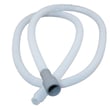
- If draining slows, check the drain path and consider replacing a worn drain component such as the dishwasher drain pump WPW10348269 or dishwasher drain hose 8269144A
Why it matters
Most “end of life” dishwasher failures start as small issues (slow drain, intermittent starting, minor leaks). Catching those early protects major components like the wash and drain motor and electronic controls, which are some of the most expensive repairs.
For model-specific operating and care guidance, follow the KUDS03FTSS2 owner’s manual.
Last updated: February 2026
Can a dishwasher be pulled out?
Yes. A built-in dishwasher like the KitchenAid KUDS03FTSS2 can be pulled out of the cabinet for service, but it must be unsecured first and moved carefully to avoid tipping, kinking the drain hose, or stressing the wiring and water line. Follow the steps and clearances in the KUDS03FTSS2 installation guide.
Before you pull it out (safety and prep)
- Turn off power at the breaker; do not rely only on the control panel.
- Shut off the dishwasher water supply valve.
- Remove the lower dishrack to reduce weight and prevent damage.
- Protect the floor with cardboard or a towel; the leveling legs can scratch.
- Have two people available; dishwashers are heavy and awkward to handle.
What you typically have to remove or loosen
Most pull-outs fail because the unit is still anchored or the lines are too tight.
| Item to check | Where it is | What to do |
|---|---|---|
| Mounting screws/brackets | Top under the counter or side tabs | Remove screws so the tub can slide forward |
| Leveling legs | Front bottom corners | Raise slightly if the legs catch on flooring |
| Drain hose slack | Under sink/disposal connection | Ensure enough slack; avoid sharp bends |
| Water line slack | Under sink or toe-kick area | Confirm it will move without pulling tight |
Pull-out tips that prevent leaks and damage
- Pull straight out a few inches, then pause and check that hoses and wires are moving freely.
- Keep the door closed while moving; an open door increases tip risk.
- Maintain the installation clearance; the guide calls for 2 in. (5.1 cm) minimum between the side of the door and adjacent wall/cabinet.
- If the dishwasher is hard to slide, check for an uneven floor and shims; shims must be secured so the unit does not shift during operation.
When a part is involved
If you are pulling the dishwasher out because it will not drain, inspect the drain path first. A clogged hose or failing pump is common; the model uses parts such as the dishwasher drain pump WPW10348269 and the dishwasher drain hose 8269144A.
Why it matters
Pulling a dishwasher out the right way prevents tip-over injuries, avoids cracked water lines, and helps you reinstall it centered so the door does not rub on brackets or screw heads.
Last updated: February 2026
How to fix rubber seal on KitchenAid dishwasher?
On the KitchenAid KUDS03FTSS2 dishwasher, fixing the rubber door seal usually means reseating the gasket evenly in the door channel or replacing it if it is torn, hardened, or permanently deformed. Press it in section-by-section so the door closes smoothly and seals all the way around.
Quick fix: reseat the seal (most common)
- Turn off power to the dishwasher at the breaker.
- Open the door and inspect the seal for twists, gaps, or sections pulled out of the channel.
- Starting at the top center, press the seal into the channel with your fingers, working evenly down both sides.
- Make sure the corners are fully seated; corners are where leaks start most often.
- Close and latch the door for several hours so the gasket “sets” into position.
When to replace the seal
Replace the seal if you see any of these:
- Cracks, splits, or missing chunks
- Flattened areas that no longer spring back
- Persistent leaking at the same spot after reseating
- Moldy odor that does not clean off the gasket surface
If you’re replacing it, follow the step-by-step procedure in the KUDS03FTSS2 installation guide for safe access and handling around the door and tub opening.
Leak check after the repair
Run a short cycle and watch the door perimeter:
- Check the top corners first
- Look for drips at the bottom center (often caused by a folded seal)
- Confirm the dishwasher is level and not leaning forward
Common causes vs. what to do
| What you notice | Likely cause | What we do next |
|---|---|---|
| Drip at one corner | Seal not seated in corner | Reseat corner, latch door to set |
| Drip along one side | Twisted or stretched gasket | Reinstall evenly from top center |
| Leak continues | Seal worn or deformed | Replace the door seal |
Why it matters
A properly seated door seal keeps wash water inside the tub, protects the floor from damage, and helps the dishwasher maintain correct water pressure for cleaning performance.
Last updated: February 2026
What is the most common problem with a KitchenAid dishwasher?
For the KitchenAid KUDS03FTSS2 dishwasher, the most common problems we see are not draining, not cleaning well, and not starting or stopping mid-cycle. These issues usually trace back to a clogged drain path, restricted wash water flow, or a power/door-latch related interruption (all covered in the troubleshooting section of the KUDS03FTSS2 owner's manual).
Most common symptoms and what they usually mean
- Standing water in the tub: drain hose restriction, drain pump issue, or a blockage in the sump area
- Dishes still dirty: spray arm flow blocked, overloading, or wash system circulation problem
- Unit has power but will not run: door not fully latched, cycle selection issue, or a blown dishwasher fuse
- Leaks at the door: worn door seal or debris on the sealing surfaces
- Cycle pauses or stops: normal pauses in some cycles, or a temporary motor overload that resets
Quick checks we recommend first (fast, no parts)
- Confirm the door closes tightly and latches.
- Re-select a cycle and start it again (some cycles pause briefly during the main wash).
- Check the home breaker or fuse; reset if tripped.
- Verify the water shutoff valve is fully open.
- Clean out visible debris in the bottom of the tub and around the sump area.
Common part fixes for KUDS03FTSS2 (when symptoms match)
| Symptom | Most likely area | Example part for this model |
|---|---|---|
| Won’t drain / water left in tub | Drain system | Dishwasher drain pump WPW10348269 or dishwasher drain hose 8269144A |
| Dead or intermittent power | Electrical protection/control | Fuse W10258275 or dishwasher electronic control board WPW10084141 |
| Not filling well | Water supply into tub | Dishwasher water inlet valve WPW10158389 |
| Leaks at the door | Door sealing | Dishwasher door seal W11196317 |
Why it matters
Drain and wash performance problems can make cycles run longer, leave odors, and cause repeat clogs. Power and latch related interruptions can look like a “bad control” when the real fix is a simpler electrical or door closure issue.
For fault codes and what they point to, we use the KitchenAid microclean he dishwasher error codes reference to narrow the diagnosis before replacing parts.
Last updated: February 2026
How far from the sink can a dishwasher be?
For KitchenAid model KUDS03FTSS2, the dishwasher can be as far from the sink as your water line, drain hose, and electrical connection can reach while still meeting the required drain-connection height and routing rules. We follow the placement and hookup requirements in the KUDS03FTSS2 installation guide.
What actually limits the distance
The installation rules focus on correct access and drain routing, not a single “maximum feet” number.
- The location must provide easy access to water, electricity, and drain.
- Route the drain hose through the cabinet wall or floor on the side closest to the sink.
- Connect the drain hose to a waste tee or disposer inlet.
- Make the drain connection before the drain trap.
- Keep the drain connection at least 20 inches (50.8 cm) above the floor where the dishwasher sits.
Practical placement guidance
Most installs work best when the dishwasher is in the cabinet opening next to the sink base. Farther placements add hose length and turns, which increases the chance of kinks, low spots, and slow draining.
| Dishwasher location vs. sink | Typical result | Main risk to prevent |
|---|---|---|
| Adjacent cabinet | Best practice | None if routed cleanly |
| One cabinet away | Commonly workable | Sagging or rubbing hose |
| Two+ cabinets away | Higher risk | Poor drain performance |
If distance causes draining issues
A long or poorly routed drain path is a top cause of standing water.
- Secure a high loop under the countertop to reduce backflow.
- Avoid low spots where water can sit in the hose.
- Confirm the disposer knockout plug is removed (if connected to a disposer).
- Replace a kinked, split, or too-short hose with the correct dishwasher drain hose 8269144A.
Why it matters
Correct distance and routing protect against dirty water backing up into the tub, odors, and cabinet leaks; they also help the drain pump move water out efficiently.
Last updated: February 2026