Error Codes



How to find wall oven model number?
For Kenmore electric wall ovens like model 8504218390, the model number is usually on the oven frame around the door opening; if it is not there, check the door edge and then inside the oven cavity along the side trim panels.
Check these common ID tag locations in order:
- Oven frame: around the front frame behind the door (most common)
- Door edge: along the side or top edge of the oven door
- Oven cavity: on a side panel, just inside the opening
- Lower trim area: near the bottom vent or trim (some installations)
- Behind the control panel: less common, but possible on older units
The ID label typically includes more than just the model number.
- Model number (example format: 8504218390)
- Serial number
- Brand name (Kenmore)
- Electrical rating (often 240V for electric built-in ovens)
| Label item | Why it matters | Example |
|---|---|---|
| Model number | Ensures diagrams and parts match your oven | 8504218390 |
| Serial number | Helps confirm production run details | Varies |
| Electrical rating | Helps match elements and wiring specs | 240V |
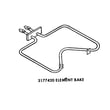
Using the exact model number helps us match the correct wall oven parts and avoid returns, especially for common replacements like a bake element WP3177420 or light bulb 8009.
Last updated: January 2026
Are all 30 inch wall ovens the same size?
No. “30-inch” wall ovens are grouped by a nominal width, but the exact outside width and the required cabinet cutout can vary by brand and design. For Kenmore model 8504218390, you should match the cabinet cutout dimensions and electrical requirements, not just the “30-inch” label.
Most wall ovens are marketed in common width classes (24, 27, and 30 inches). In practice, manufacturers allow small differences in:
- Overall width (the oven frame)
- Cutout width (the cabinet opening)
- Cutout height (single vs. double oven)
- Depth (how far the oven extends into the cabinet)
- Trim overlap (how much the front frame covers the cutout)
Use these checks to avoid a fit problem when replacing a built-in electric oven:
- Measure the cabinet cutout width, height, and depth in inches.
- Check for a solid, level support platform and adequate ventilation space.
- Confirm the electrical supply matches the oven (typically 240V for electric built-in ovens).
- Verify door swing clearance and nearby drawer or cabinet interference.
- Compare trim overlap so the new oven fully covers the cutout edges.
| What you’re comparing | Why it varies | What to do |
|---|---|---|
| Overall width vs. cutout width | Trim and side clearances differ | Match the cutout spec first |
| Single vs. double oven height | Stacked cavities change height | Measure cutout height carefully |
| Depth | Cabinet depth and rear clearance differ | Confirm depth plus wiring space |
A wall oven that is “30-inch” wide can still be the wrong choice if the cutout is even slightly off. Getting the cutout dimensions right prevents gaps, binding doors, overheating from poor airflow, and costly cabinet modifications.
If you’re troubleshooting performance after installation, these common parts can help, but they will not change fit:
- Bake element WP3177420 (heating performance issues)
- Light bulb 8009 (interior light out)
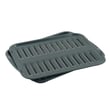
- Broiler pan 4396923 (missing or damaged accessory)
Last updated: January 2026
Are electric wall ovens 110 or 220?
Most Kenmore electric wall ovens, including model 8504218390, are designed for a 240-volt (often called 220-volt) circuit, not a standard 120-volt (110-volt) outlet. A built-in electric oven typically uses a dedicated double-pole breaker and hardwired or junction-box connection.
- Look at the home electrical panel for a double-pole breaker labeled “oven” (commonly 30A to 50A).
- Confirm the supply is 240V (two hot legs) and that the wiring is sized for the breaker.
- Check whether your oven is hardwired (common for wall ovens) versus cord-and-plug.
- If the oven has lights or a control display but won’t heat, the issue can still be a missing leg of 240V.
- If you are testing voltage, use safe meter practices and shut off power before touching wiring.
For safe electrical testing basics, use how to use a multimeter to test electrical parts video.
| Supply type | What you’ll usually see | What it typically powers |
|---|---|---|
| 120V (110V) | Single-pole breaker | Gas oven controls, small appliances |
| 240V (220V) | Double-pole breaker | Electric bake and broil heating elements |
Electric heating elements need 240V to reach and hold proper temperature. If the oven is connected to 120V, it may power the light or clock but it will not bake or broil correctly, and it can lead to repeated “no heat” symptoms.
These are common next checks on an electric built-in oven:
- Inspect the bake element for visible damage; replace if failed (example part: bake element WP3177420).
- Verify the broil function heats; if neither bake nor broil heats, suspect a power supply issue.
- Check for a blown fuse in the home circuit (if used) using how to tell if a fuse is blown.
- If wiring looks overheated or brittle, repair safely using how to repair broken or damaged wires video.
Last updated: January 2026