Installation guide
 Owner’s manual
 Error Codes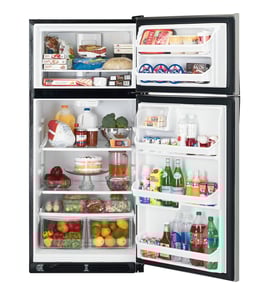




What is the upper part of a fridge called?
On the Frigidaire LFHT1817LW4 top-mount refrigerator, the upper section is the freezer compartment. It is the colder compartment designed to keep foods frozen; it may also house the ice maker (if equipped) and freezer temperature control settings. See the LFHT1817LW4 owner's manual for your exact compartment features and control locations.
- Maintains temperatures cold enough for long-term frozen storage
- Helps freeze fresh foods quickly when set correctly
- Often contains the ice maker area (if your model has one installed)
- Circulates cold air that also supports fresh-food cooling
| What people call it | What it usually means | Where it is on this model |
|---|---|---|
| Freezer | Freezer compartment | Top section |
| Freezer box | The insulated freezer area | Top section |
| Upper compartment | The top door area | Typically the freezer |
Knowing the correct name helps when you are adjusting controls, describing a cooling problem, or ordering parts for the correct section (freezer vs. fresh food). The installation checklist also calls out items like door sealing and freezer door leveling, which directly affect freezer performance.
- Set controls and wait 24 hours before making additional adjustments
- Confirm the freezer door seals fully on all sides
- Keep the refrigerator level and slightly tilted back (about 1/4 inch) so doors close reliably
- Avoid blocking freezer air vents with packages
Last updated: January 2026
Which is better, top mount or bottom mount refrigerator?
A top-mount refrigerator (like the Frigidaire LFHT1817LW4) is usually the better choice for value, energy efficiency, and simpler repairs; a bottom-mount is usually better for everyday convenience because fresh food sits at eye level and you bend less.
| Feature | Top mount (freezer on top) | Bottom mount (freezer on bottom) |
|---|---|---|
| Everyday access | More bending for fresh food | Less bending for fresh food |
| Energy use | Typically lower | Typically higher |
| Repair complexity | Typically simpler | Typically more complex |
| Cost | Typically lower | Typically higher |
| Freezer access | Easier access | More bending for freezer |
Top-mount refrigerators are a strong pick when you want dependable cooling with fewer “extras” to maintain.
- You want a straightforward, budget-friendly refrigerator
- You prefer simpler mechanical design (often fewer components to troubleshoot)
- You do not use the freezer constantly throughout the day
- You want a layout that is easy to place in tighter kitchens
- You want to follow the manufacturer setup steps for leveling and door sealing (see the LFHT1817LW4 installation guide)
Bottom-mount models usually win on daily ergonomics and fresh-food organization.
- You cook often and access the refrigerator section many times per day
- You want shelves and drawers at a more comfortable height
- You like wider, pull-out freezer storage (depending on the model)
- You are willing to pay more up front for convenience
The “better” choice is the one that matches how you use the refrigerator. Layout affects comfort (bending and reaching), operating cost (energy use), and long-term ownership (how complex repairs tend to be).
No matter which style you choose, correct installation prevents common complaints like warm spots, sweating, and doors that do not close.
- Make sure the cabinet is level side-to-side
- Tilt the refrigerator slightly back (many models use about 1/4 inch) so doors self-close
- Confirm door seals contact the cabinet on all sides
Last updated: January 2026
What are the disadvantages of a top mount fridge?
Top-mount refrigerators like the Frigidaire LFHT1817LW4 are reliable and space-efficient, but the main disadvantages are less convenient fresh-food access (more bending), fewer premium organization features, and fewer built-in dispenser options compared with many bottom-freezer designs.
- Fresh-food items sit lower: you bend more often to reach produce, deli items, and leftovers.
- Freezer is at eye level: great for frozen foods, but it pushes the refrigerator section down.
- Typically fewer “premium” storage features: fewer full-width pantry drawers, split shelves, and specialty bins on many top-mount models.
- Less common to have external water or ice dispensing: many top-mount units are simpler by design.
- Door swing and clearance planning matters: you may need to remove doors for tight entries and then re-level the cabinet after placement.
Use the setup and adjustment steps in the LFHT1817LW4 installation guide to get the best performance and usability.
- Confirm door seals close fully on all sides.
- Level the refrigerator side-to-side and tilt it about 1/4 inch front-to-back so doors close more naturally.
- Set temperature controls, then wait 24 hours before making more adjustments.
- Keep clearances for airflow (commonly 3/8 inch at sides and top, 1 inch at back).
| Feature | Top mount (like LFHT1817LW4) | Bottom freezer (typical) |
|---|---|---|
| Fresh-food access | Lower, more bending | Higher, less bending |
| Freezer access | Higher, easier reach | Lower, more bending |
| Organization features | Often simpler | Often more feature-rich |
| Dispensers | Less common | More common |
Most “disadvantages” come down to ergonomics and storage layout. If your household uses fresh food more than frozen, a bottom-freezer layout usually feels more convenient; if you use frozen foods often, a top mount can feel more efficient.
Last updated: January 2026
What is the most common problem with a Frigidaire refrigerator?
The most common Frigidaire refrigerator problem is not cooling properly, and it usually comes down to airflow, dirty condenser areas, or a defrost system issue. On the Frigidaire LFHT1817LW4 top-mount refrigerator, start with temperature control settings and basic airflow checks in the freezer and fresh food sections using the LFHT1817LW4 owner's manual.
- Refrigerator warm, freezer also warm: condenser airflow problem, compressor start issue, or sealed system concern
- Freezer cold but refrigerator warm: evaporator airflow problem (fan, frost buildup, blocked vents)
- Heavy frost on freezer back wall: defrost heater, defrost thermostat, or defrost control issue
- Runs constantly: warm room, frequent door openings, dirty condenser, door not sealing, or controls set too cold
- Water leaks or puddles: clogged/iced defrost drain or water line connection issue
- Confirm control settings: after changing controls, wait 24 hours before adjusting again.
- Check door sealing: the installation checklist calls out that the door should seal completely on all sides.
- Verify leveling: the refrigerator should be level side-to-side and tilted about 1/4 inch (6 mm) front to back.
- Look for frost buildup: frost on the freezer panel often signals a defrost problem.
- Listen for the evaporator fan: if the freezer is cold but airflow is weak, the fan system is a prime suspect.
| Symptom | Common area | Example part for this model |
|---|---|---|
| Frost buildup, poor cooling | Defrost system | Refrigerator defrost heater 242044008, refrigerator defrost bi-metal thermostat 5303918202 |
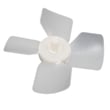
| Warm fresh food, freezer cold | Air circulation | Refrigerator evaporator fan blade 5308000010, refrigerator evaporator fan motor 241854301 |
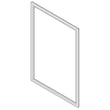
| Door not sealing, sweating | Door seal | Refrigerator gasket 242193213 |
A refrigerator that is not cooling can spoil food quickly, and a unit that runs constantly wastes energy and can accelerate wear on the compressor and fan motors. Catching airflow and defrost problems early helps prevent bigger repairs.
Related DIY help: how to fix your evaporator cooling fan
Last updated: January 2026