 Owner’s manual
 Error Codes



How to raise a refrigerator off the floor?
To raise a Kenmore Elite refrigerator model 59672289202 off the floor, we adjust the front roller screws to lift the cabinet, then set the stabilizing (leveling) legs down to carry the weight. This improves door closing and helps prevent vibration and noise.
How to raise (level up) the refrigerator safely
Follow the leveling procedure in the 59672289202 owner's manual. Use hand tools only.
- Protect soft flooring with cardboard or a rug before you start.
- Remove the toe grille and any bottom bracket covers.
- Turn the left and right front roller adjustment screws to raise the front of the refrigerator.
- Level side-to-side by adjusting the left and right roller screws until the cabinet is even.
- Turn the stabilizing legs clockwise until they are firmly against the floor.
- After that, turn the roller adjustment screws 2 to 3 turns counterclockwise so the refrigerator’s full weight rests on the stabilizing legs.
Target level (what “raised correctly” looks like)
The manual’s goal is a slight backward tilt so the doors close on their own.
| Check | What to aim for | Why it helps |
|---|---|---|
| Side-to-side level | Cabinet level left to right | Prevents door swing and uneven sealing |
| Front-to-back tilt | Front about 1/4 inch (6 mm) higher than the back (about 1/2 bubble on a level) | Improves door closure and reduces vibration |
Why it matters
When the refrigerator is too low in front or not level, you can get poor door closure, warm spots, and extra operating noise. Proper leveling also helps keep the cabinet stable so the compressor and fans run with less vibration.
If you need extra clearance
If you are trying to gain a little space under cabinets or in a tight opening, the manual notes you can sometimes gain clearance using the leveling procedure. Also remember to keep about 1/2 inch of air space at the top and back for ventilation.
Last updated: January 2026
Why is my refrigerator not getting cold at the bottom?
If your Kenmore Elite refrigerator model 59672289202 is warmer at the bottom, the most common causes are restricted airflow (blocked rear air grille or overcrowded shelves), dirty condenser coils, or temperature controls that need adjustment. Start with cleaning and airflow checks, then verify temperatures using the steps in the 59672289202 owner's manual.
Quick checks that fix most “warm bottom” complaints
- Clean the condenser coils (dust and pet hair make the refrigerator run longer and cool poorly).
- Make sure the rear air grille is not blocked by food containers or packaging.
- Avoid overcrowding shelves; tight packing reduces air circulation.
- Confirm the doors seal and close fully; a poor seal causes warm spots and long run times.
- Give temperatures time to stabilize after changes; allow 5 to 8 hours after a control adjustment.
Set and verify temperatures the right way
The manual guidance for this model is to start with the recommended control settings and then measure actual temperatures.
| What to check | Target temperature | How to check it |
|---|---|---|
| Fresh food (refrigerator) | 34°F to 40°F (optimum 37°F) | Thermometer in a glass of water in the center; check after 24 hours |
| Freezer | About 0°F | Thermometer between frozen packages; check after 24 hours |
Control tips (from the manual):
- Manufacturer recommended setting is 4 for both compartments.
- Do not change either control more than one number at a time.
- Allow 24 hours for temperature to stabilize after initial setup or major loading.
Why it matters (and why the bottom shows it first)
On bottom-mount refrigerators like the Kenmore 59672289202, cold air movement and return airflow are critical. When the rear air grille is blocked or shelves are packed too tightly, the lower section often warms up first even though the unit is running.
When to move from maintenance to parts diagnosis
If coils are clean, airflow is clear, and temperatures still stay high, the issue can shift to cooling system or control components.
Common next suspects include:
- Defrost control problems (can lead to frost buildup and weak airflow)
- A failing compressor or sealed system issue
- Water leaks or icing that interferes with airflow and cooling
If you suspect a defrost-related cooling problem, the refrigerator adaptive defrost board W11227239 is a model-matched part to review.
Last updated: January 2026
Why is my Kenmore Elite refrigerator leaking water out of the bottom?
Water leaking from the bottom of your Kenmore Elite refrigerator model 59672289202 is usually caused by a defrost drain problem (water cannot reach the drain pan), a leak in the water supply/dispenser tubing, or a water connection issue such as low pressure or the wrong type of tubing. See the 59672289202 owner's manual for model-specific water connection and leak checks.
Quick checks we recommend first
- Unplug the refrigerator and dry the floor so you can spot fresh water.
- Check whether the water is clear (often water supply/defrost) or sticky/dirty (spill or drain pan overflow).
- Look for water under the freezer drawer (common with a clogged defrost drain).
- Inspect the water line connection behind the unit for drips.
- If you have an ice maker, check the fill area and tubing near the ice maker.
Most common causes (and what to do)
1) Clogged or frozen defrost drain
When the defrost drain clogs, defrost water can back up and leak out near the bottom.
What to do
- Remove the freezer drawer and look for ice or water pooling on the freezer floor.
- Clear visible ice; then flush the drain path with warm water (a turkey baster works well).
- Make sure the drain pan underneath is seated correctly and not cracked.
2) Water supply connection problems (tubing, valve, pressure)
Your manual notes that plastic tubing is less durable and can leak, and that water pressure should be 20 to 100 psi (with 35 psi minimum recommended for refrigerators using water filters).
What to do
- Confirm the supply line is copper (recommended) and fittings are snug.
- Avoid self-piercing/saddle valves; they can restrict flow and clog over time.
- If you suspect the inlet valve is seeping or leaking, inspect the refrigerator valve WP12544002 for signs of dripping or mineral buildup.
Symptoms-to-cause guide
| What you notice | Most likely cause | Where to look |
|---|---|---|
| Water under freezer drawer | Clogged/frozen defrost drain | Freezer floor, drain trough |
| Water near back/bottom | Supply line fitting leak | Rear connection, shutoff valve |
| Slow water flow plus leaks | Low pressure or restricted valve | House valve, inlet valve |
| Leaks after filter change | Filter not seated or O-ring issue | Filter head/housing |
Why it matters
Bottom leaks can lead to floor damage and can also cause ice buildup in the freezer, which reduces airflow and cooling performance. Fixing the drain or water connection early prevents repeat leaks and temperature problems.
Last updated: January 2026
What are the common problems with Kenmore Elite refrigerators?
For the Kenmore Elite refrigerator model 59672289202, the most common problems are warm temperatures (often airflow or dirty condenser coils), water or ice issues (low water pressure or valve problems), frost or moisture from door sealing issues, and normal but unfamiliar operating noises. Use the 59672289202 owner's manual troubleshooting chart to match symptoms to causes.
Most common symptoms and what usually causes them
- Food temperature too warm: dirty condenser coils, blocked rear air grille, doors not closing, controls need adjustment
- Runs too frequently: dirty coils, frequent door openings, warm room location, door not sealing
- Water droplets inside or outside: high humidity, frequent door openings, gasket not sealing
- Odors: spills, uncovered foods, compartments needing cleaning
- Unfamiliar noises: compressor hum, clicking, buzzing during ice maker fill, defrost heater sizzling (often normal)
Quick checks we recommend first (fast, no parts)
- Confirm doors close fully and drawers are not preventing closure.
- Clean condenser coils and make sure the rear air grille is not blocked.
- Verify temperature controls are set correctly and allow 24 hours after changes.
- Check door gaskets for a full seal; clean the gasket sealing surface.
- If you hear buzzing during ice maker fill, confirm the water supply is connected and turned on.
When a part is commonly involved
| Symptom | Commonly involved part | Example part for this model |
|---|---|---|
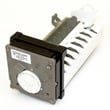
| No ice or intermittent ice | Ice maker assembly or ice maker components | Refrigerator ice maker D7824706Q |
| Slow water flow, small/hollow cubes | Water inlet valve or low house water pressure | Refrigerator valve WP12544002 |
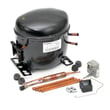
| Clicking, loud hum, not cooling | Sealed system or compressor-related issue | Refrigerator compressor W10160407 |
Why it matters
Catching airflow, sealing, and water-supply issues early helps the refrigerator hold steady temperatures, reduces run time, and prevents secondary problems like frost buildup, leaks, and poor ice production.
Last updated: January 2026





