Owner’s manual
 Error Codes


When was Kenmore Elite made?
Kenmore Elite is a premium Kenmore product line that has been produced across multiple years (not a single one-time release). For your Kenmore Elite washer model 11049962602, the exact manufacture date is best confirmed by checking the model and serial information listed in the 11049962602 owner's manual and on the washer’s serial tag.
How to find the manufacture date on your washer
Most Kenmore Elite washers use a model and serial tag to identify the production date code.
- Unplug the washer or switch off the breaker before inspecting inside the door area
- Check the door opening area and the door frame for a model/serial label
- Also check the back panel if you do not see a label at the door
- Write down the full serial number exactly as shown
- Use the date code format described in the 11049962602 owner's manual
What “Kenmore Elite” means (and why dates vary)
Kenmore Elite is a line name, not a single model. Different Kenmore Elite washers were made in different years, and the only reliable way to date yours is by the serial number tied to model 11049962602.
Quick comparison
| Term | What it identifies | Example |
|---|---|---|
| Kenmore Elite | Product line | “Elite washer” |
| 11049962602 | Specific washer model | Your exact unit |
| Serial number | Production date code | Found on the serial tag |
Why it matters
Knowing the manufacture date helps us match the right replacement parts and revisions for your washer, especially for common wear items like the drain system and door seal.
If you are troubleshooting symptoms that can be age-related (leaks, no-drain, vibration), checking parts like the pump 280187 and the washer door boot WP8182119 is a practical next step.
Last updated: February 2026
How to hard reset kenmore washer?
For the Kenmore Elite washer model 11049962602, the most reliable “hard reset” is a power reset: unplug the washer (or switch off the breaker) for 5 minutes, then restore power and start a cycle. This clears many control glitches without changing settings.
Hard reset steps (recommended)
- Press Power/Cancel to stop the cycle.
- Unplug the washer (or turn OFF the dedicated breaker).
- Wait 5 minutes.
- Restore power.
- Open and close the door firmly.
- Select Drain/Spin (or a quick cycle) and press Start.
For model-specific control behavior and cycle cancellation, follow the steps in the 11049962602 owner's manual.
If the washer still will not start
These checks fix the most common “looks reset but still won’t run” situations:
- Confirm the outlet has power (test with a lamp) and the breaker is fully reset.
- Make sure the door closes and latches; a door lock issue can mimic a control problem.
- If the door will not lock or unlock correctly, inspect the washer door lock WP8183270.
- If the tub will not drain, clear the drain path; a drain problem can stop the cycle early.
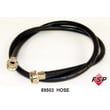
- Check the drain pump area and hose for clogs; the pump 280187 and washer tub-to-pump hose WPW10467168 are common service points.
What a “hard reset” does (and does not do)
| Action | What it affects | What it will not fix |
|---|---|---|
| Unplug 5 minutes | Clears temporary control memory | Broken door lock, failed pump, damaged wiring |
| Cancel/Power off | Stops the current cycle | Persistent error conditions |
| Drain/Spin test | Confirms basic drain and spin operation | Mechanical noise, leaks, severe imbalance |
Why it matters
A power reset is the fastest way to rule out a temporary control-board glitch before replacing parts like a door lock, pump, or motor control board. It also helps you avoid chasing symptoms caused by a simple stalled cycle.
Last updated: February 2026
What model is my Kenmore Elite washer?
Your Kenmore Elite washer’s model number is printed on a rating label on the cabinet. On Kenmore Elite front-load washers like model 11049962602, the label is commonly found behind the door or on the door opening (door jamb); some versions also place it on the back or side of the cabinet.
Where to look on a Kenmore Elite front-load washer
Check these spots in order (they are the most common locations):
- Open the door and look along the door opening (door jamb)
- Look just behind the door on the front frame area
- Check the side of the main cabinet near the bottom edge
- Check the back of the control panel area
- Look on the rear panel of the washer cabinet
How to read the label correctly
The label usually includes several identifiers. Use the model number for parts lookup and the serial number for age and service history.
| What you see on the label | What it’s used for | Example format |
|---|---|---|
| Model number | Matching parts and manuals | 110.4996… (may include dots) |
| Serial number | Manufacturing details and service | Letters and numbers |
| Type/series info | Internal product family reference | Varies |
Why it matters
Kenmore Elite washers often have similar-looking control panels across multiple model families. Using the exact model number (for example, 11049962602) helps us match the correct parts like a door boot, door lock, or drain pump and avoid ordering a look-alike part that will not fit.
Helpful tip for parts matching
When you write down the model number:
- Copy it exactly as shown (including any dots or suffixes)
- Take a clear photo of the label for reference
- Use the model number to confirm diagrams and part compatibility in the 11049962602 owner's manual
Last updated: February 2026
Does my Kenmore Elite washing machine have a filter?
Yes. Your Kenmore Elite washer model 11049962602 uses a drain pump clean-out area (often called a pump filter or coin trap) that catches lint and small items before they reach the drain system; cleaning it helps prevent slow draining and drain errors.
Where the “filter” is on this washer
On most Kenmore front-load designs like 11049962602, the filter is part of the drain system at the bottom front of the washer, integrated with the drain pump housing.
Use these common access cues:
- A small lower access panel (kick plate) near the floor
- A round twist cap or clean-out plug behind that panel
- A short emergency drain hose (on some versions)
For the exact access method and panel removal steps for your unit, follow the 11049962602 owner's manual.
How to clean the pump filter (safe, quick steps)
- Unplug the washer.
- Place towels and a shallow pan under the lower front access area.
- Open the lower access panel.
- Drain any water slowly (if your model has a small drain hose, use it first).
- Unscrew the clean-out cap and remove debris (coins, lint, buttons).
- Rinse the cap and wipe the housing; reinstall the cap snugly.
What to check if it still will not drain
A clogged filter is common, but these issues also cause slow or no drain:
- Kinked or partially blocked drain hose
- Blocked tub-to-pump hose
- Failed drain pump
- Loose wiring to the pump
| Symptom | Most likely cause | What we check first |
|---|---|---|
| Hums but no drain | Pump jam or blockage | Clean-out and pump impeller area |
| Drains slowly | Partial clog | Filter and drain hose routing |
| Leaks at clean-out | Cap seal issue or cross-threading | Reseat cap; inspect housing |
If you find the pump is noisy, seized, or leaking, replacement is typically the fix; the correct drain pump for this model is the pump 280187.
Why it matters
Keeping the pump filter clean protects the drain pump, reduces standing water and odors, and helps the washer complete the rinse and spin portions of the cycle without interruption.
Last updated: February 2026
What is the average lifespan of a Kenmore washer?
Most Kenmore washers last 10 to 15 years with normal household use and basic maintenance; your Kenmore Elite 11049962602 is built for long-term service when it’s installed, operated, and cared for as described in the 11049962602 owner's manual.
Typical lifespan (what to expect)
A washer’s life is usually limited by wear items (seals, hoses, pump, belt) more than the cabinet or drum.
- Average range: 10 to 15 years
- Heavy use (large families, daily loads): closer to 8 to 12 years
- Light use (few loads per week): often 12 to 15 years
- Common “end-of-life” drivers: leaks, repeated drain problems, loud bearing noise, control issues
Lifespan quick guide
| Usage pattern | What “normal” looks like | Typical outcome |
|---|---|---|
| Light | 2 to 4 loads/week | Longer service life |
| Average | 4 to 7 loads/week | 10 to 15 years |
| Heavy | 1 to 2 loads/day | More repairs over time |
Maintenance that extends washer life
The manual for model 11049962602 emphasizes routine care such as cleaning the washer, checking water inlet hoses, and proper loading. These habits reduce leaks, vibration, and drain strain.
- Clean the door seal area and dispenser regularly to prevent odor and residue buildup
- Avoid overloading; it stresses the suspension, belt, and motor control
- Check inlet hoses periodically and replace aging hoses before they burst
- Use the right detergent type and amount to reduce oversudsing and residue
- Address slow draining early; a failing drain system can lead to repeated errors and leaks
When a repair is worth it (and when it isn’t)
Repairs are usually most cost-effective when the issue is isolated to a common service part.
| Symptom | Often related to | Example part for this model |
|---|---|---|
| Won’t drain, water left in tub | Drain pump or drain path restriction | Pump 280187 |
| Excess vibration or banging | Suspension wear or load balance | (Inspect springs and mounting) |
| Door won’t lock or won’t start | Door lock system | (Check lock and wiring) |
Why it matters
Knowing the typical 10 to 15 year lifespan helps you plan: routine washer care can delay major repairs, and recognizing early symptoms (leaks, drain issues, abnormal noise) prevents secondary damage to the tub, motor control, and wiring.
Last updated: February 2026
How to force a Kenmore Elite washer to drain?
To force-drain a Kenmore Elite washer model 11049962602, we unplug the washer, manually release any trapped water from the front drain area, then correct the most common drain restrictions (filter, hose, or pump). This restores draining so you can restart a cycle or run a drain/spin.
Safe force-drain steps (front-load style)
- Unplug the washer to prevent shock and to reset the control.
- Put towels down and place a shallow pan in front of the lower access area.
- Open the lower access panel and slowly loosen the pump filter cap (if equipped) to let water trickle out.
- Remove debris (coins, lint, socks) from the filter cavity and reinstall the cap snugly.
- Check the drain hose for kinks, crushing, or a clog; correct routing and avoid forcing excess hose into the standpipe (we follow the guidance in the owner's manual).
- Plug the washer back in and try Drain/Spin (or a similar drain-only option).
If it still will not drain
These checks target the most common failed parts on this model family.
- Listen for the drain pump: a steady hum with no water movement usually points to a blockage or weak pump.
- Inspect the tub-to-pump hose for obstructions; replace if it is split or collapsing (see washer tub-to-pump hose WPW10467168).
- If the pump is noisy, seized, or leaking, replacement is the typical fix (see pump 280187).
- If the door stays locked and the washer will not start a drain command, a failed lock can prevent operation (see washer door lock WP8183270).
Quick symptom-to-cause guide
| What you notice | Most likely cause | What we do next |
|---|---|---|
| Water drains very slowly | Filter or hose restriction | Clean filter; check hose routing/clogs |
| Pump hums but no drain | Blocked hose or failing pump | Check hose; replace pump if needed |
| No pump sound at all | Control, wiring, or door lock issue | Check door lock; inspect harness connections |
Why it matters
A restricted drain can leave water in the tub, trigger drain-related errors, and strain the drain pump. Correct hose routing also helps prevent backflow and leaks during draining.
Last updated: February 2026
Is the Kenmore Elite a HE washer?
Yes. The Kenmore Elite washer model 11049962602 is a high-efficiency (HE) washer; it is designed to wash with less water and requires HE detergent to prevent oversudsing, longer cycle times, and drain or performance issues (see the 11049962602 owner's manual).
How to tell you are using the right detergent
Use detergent labeled HE or High Efficiency and measure carefully; too much detergent is one of the most common causes of excess suds in HE washers.
- Look for "HE" on the detergent bottle or box
- Use less detergent than you would in a non-HE washer (follow the detergent label)
- Avoid adding extra soap for “extra dirty” loads; use the correct cycle instead
- If you see lots of foam, run a rinse and spin to clear suds
- Do not use hand-wash detergents or non-HE powders that create heavy suds
What HE design changes in everyday use
HE washers clean differently than older, high-water machines. Less water plus controlled tumbling means detergent choice and load size matter more.
| Item | HE washer (11049962602) | Non-HE washer (typical) |
|---|---|---|
| Water level | Lower | Higher |
| Detergent required | HE only | Standard OK |
| Suds sensitivity | High | Lower |
| Common symptom when over-soaped | Long cycles, errors, poor rinsing | Extra suds but often finishes |
Why it matters
Using non-HE detergent (or too much HE detergent) can create excessive suds that interfere with rinsing and draining. Over time, that can contribute to odors and extra wear on components like the drain system.
If your washer is not draining well after a suds event, the drain components most often involved are the pump 280187 and the washer tub-to-pump hose WPW10467168.
Last updated: February 2026