Owner’s manual
 Error Codes


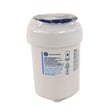

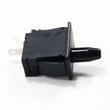
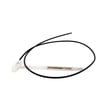
How to find GE appliance parts?
To find the right parts for your GE appliance, we match parts to your exact model number. For the GE GNE25JSKFFSS bottom-mount refrigerator, start with the model number, then use the parts list and diagrams to choose the correct replacement part and confirm fit.
Step-by-step: how we recommend finding the correct part
- Locate the model number on the appliance ID tag (inside the fresh food compartment on most GE refrigerators).
- Write the model number exactly as shown (letters and numbers matter).
- Use the model number to pull up the correct parts breakdown for your refrigerator.
- Identify the part by section (water and ice system, cooling system, door parts, lighting, etc.).
- Cross-check the part name and part ID before ordering.
- Use the exploded-view diagram to confirm mounting position and included hardware.
Common parts customers replace on model GNE25JSKFFSS
If you are troubleshooting water, cooling, or door issues, these are frequent starting points:
| Symptom | Common part to check | Example part ID |
|---|---|---|
| Slow water flow or bad taste | Refrigerator water filter | MWFP |
| No water to dispenser or ice maker | Water inlet valve assembly | WR57X30890 |
| Warm temperatures or erratic cooling | Temperature sensor | WR55X10025 |
| Frost buildup, warm freezer | Defrost heater or defrost thermostat | WR51X10108 or WR50X10069 |
For water filter replacements specifically, the refrigerator water filter MWFP is the filter listed for this model.
Why it matters
Using the exact model number prevents ordering look-alike parts that do not fit your wiring harness, mounting points, or water line connections. That saves time and helps your refrigerator return to proper temperature control, ice production, and water dispensing faster.
Helpful model-specific reference
Your GNE25JSKFFSS owner's manual explains key maintenance items (like filter use and shelf adjustments) and helps you identify the correct replacement parts by section and diagram.
Last updated: March 2026
How to remove bottom grille on GE refrigerator?
On the GE GNE25JSKFFSS bottom-mount refrigerator, the bottom grille (base grille) typically comes off by releasing its retaining screws or clips, then pulling the grille straight out from the bottom front of the cabinet. We recommend following the exact fastener locations shown in the GNE25JSKFFSS owner's manual.
Steps to remove the bottom grille
- Unplug the refrigerator (or switch it off) for safety.
- Pull the refrigerator straight out a few inches if you need more access.
- Look along the top edge and corners of the grille for fasteners.
- If screws are present, remove them with a Phillips screwdriver.
- Grasp the grille at both ends and pull straight outward to release the tabs.
- Set the grille aside; reinstall by aligning tabs and pushing in, then reinstall screws.
What to check before you pull
- Confirm the grille is not blocked by flooring or trim.
- Check for hidden screws near the ends.
- Pull evenly from both sides to avoid cracking plastic tabs.
- If it feels stuck, stop and re-check for a missed fastener.
- Keep screws together so they go back into the same holes.
Quick troubleshooting guide
| What you see | Most likely cause | What to do |
|---|---|---|
| Grille won’t budge | A screw is still installed | Re-check both ends and the top edge |
| One side releases, other won’t | Tab is still engaged | Pull evenly with two hands |
| Grille flexes a lot | Pulling from one corner | Move hands to both ends and pull straight out |
Why it matters
Removing the base grille gives access for cleaning and inspection near the bottom front of the refrigerator. Keeping the grille properly seated also helps protect components and maintain normal airflow.
Last updated: February 2026
What is the most common problem with a GE refrigerator?
The most common GE refrigerator complaint is not cooling properly; on the GE GNE25JSKFFSS, that usually traces back to airflow issues (frost buildup or a failed fan), temperature sensing, or a sealed-system problem. Start with simple checks, then move to the most likely parts.
Quick checks first (fastest wins)
- Confirm the controls are set correctly and the doors fully close and seal.
- Make sure vents inside the fresh food section are not blocked by food packages.
- Listen for the evaporator fan; it should run when the compressor is running.
- Check for heavy frost on the freezer back wall (often points to a defrost problem).
- If you recently started the ice maker, discard the first 24 hours of ice to avoid odor and taste issues.
Most common symptoms and what they usually mean
| Symptom | Most likely cause | Common next step |
|---|---|---|
| Warm fridge, freezer OK | Airflow problem in fresh food section | Check fan operation and vents |
| Warm freezer and fridge | Compressor/start issue or control problem | Check start relay, then diagnostics |
| Frost buildup on freezer panel | Defrost system failure | Inspect heater and defrost thermostat |
| Noisy humming or rattling | Fan blade/motor or condenser fan | Inspect fan blade and motor |
| Water leaking | Defrost drain issue or water supply/valve issue | Clear drain, inspect valve and lines |
Parts we commonly see involved on this model
- Evaporator airflow: refrigerator evaporator fan motor WR60X32614, refrigerator evaporator fan blade WR60X30922
- Defrost problems (frost buildup): refrigerator defrost heater WR51X10108, refrigerator defrost bi-metal thermostat WR50X10069
- Temperature sensing/control: GE profile refrigerator temperature sensor WR55X10025, refrigerator main board assembly WR55X46945
- Water and ice issues: refrigerator water inlet valve assembly WR57X30890, GE refrigerator water filter MWFP
Why it matters
A refrigerator that is not cooling can spoil food quickly and can also force the compressor to run longer than normal. Catching a simple airflow or defrost issue early often prevents bigger, more expensive repairs.
Helpful model-specific references
Use the GNE25JSKFFSS owner's manual for control settings, door alignment guidance, and maintenance intervals (including water filter replacement timing).
Last updated: February 2026