


Why is the KitchenAid food processor not working?
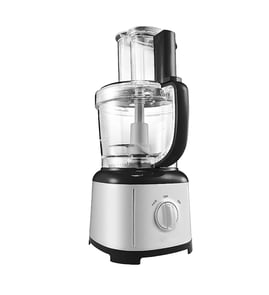
If your KitchenAid KFP0718BM0 food processor will not run, the most common cause is the safety interlock not being satisfied (bowl and lid not fully locked). If it is assembled correctly and still dead, the issue is usually power to the base, a stuck switch/interlock, or an internal electrical failure.
Quick checks (no tools)
- Confirm the outlet works by testing a lamp or phone charger.
- Unplug the unit for 2 minutes, then plug it back in.
- Remove and reinstall the bowl and lid; rotate until they fully lock.
- Check for food buildup in the lid and bowl locking tabs; clean and dry them.
- Try a different speed or pulse button (a single stuck button can prevent operation).
Parts to inspect on KFP0718BM0
Interlock problems are often caused by fitment issues or worn locking features.
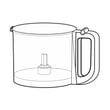
- Inspect the bowl W11319163 for cracked tabs, warping, or a loose fit on the base.
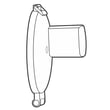
- Inspect the food processor bowl lid W11551396 for damaged latch points or debris in the lock area.
- Make sure the pusher is seated correctly if your lid design requires it; check the food processor pusher assembly W11569314 for cracks or misalignment.
If it hums, stalls, or stops under load
This usually points to a jam, overload, or a blade/disc not seated correctly.
- Remove the blade/disc and check for binding, then reinstall.
- Reduce batch size; avoid forcing dense dough or hard foods.
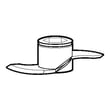
- Verify the blade is not damaged; inspect the food processor multi-purpose blade W11239491.
Simple symptom guide
| Symptom | Most likely cause | What we recommend |
|---|---|---|
| No lights/sound | No power, interlock not engaged | Outlet test, re-lock bowl/lid, clean lock points |
| Runs then stops | Overload, overheating, intermittent interlock | Reduce load, let it cool 20 minutes, recheck lid/bowl fit |
| Hums but won’t spin | Jammed blade/disc, seized drive | Remove obstruction, reseat blade/disc |
Why it matters
The interlock is a built-in safety feature; if the bowl or lid is even slightly out of position, the motor circuit stays open and the processor will not start. Keeping the locking surfaces clean and using undamaged bowl and lid parts prevents nuisance no-start issues.
Last updated: January 2026
How do I put my KitchenAid food processor back together?
To reassemble your KitchenAid KFP0718BM0 food processor, set the bowl onto the base and lock it in place, install the correct blade or disc on the center drive, then lock the lid and insert the pusher. If parts will not lock, something is misaligned.
Reassembly steps (KFP0718BM0)
- Unplug the food processor and place the base on a flat counter.
- Set the bowl onto the base; rotate until it seats and locks (it should sit flush).
- Install one attachment:
- For chopping or pureeing: place the food processor multi-purpose blade W11239491 onto the center post.
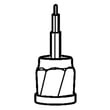
- For slicing or shredding: place the food processor disc shaft adapter W11239489 on the post, then set the disc on top.
- Place the lid on the bowl and rotate until it locks.
- Insert the food processor pusher assembly W11569314 into the feed tube.
Quick fit check (what should feel “right”)
| Part | Correct fit | If it does not fit |
|---|---|---|
| Bowl | Sits level; locks with a short twist | Remove and reseat; check for food debris on the rim or base coupler |
| Blade/disc | Drops onto the post; spins freely by hand (unplugged) | Confirm you are using the correct adapter; reseat until fully down |
| Lid | Locks without forcing | Verify bowl is fully locked first; align lid tabs with bowl slots |
Common reasons it will not lock
- Bowl not fully seated on the base.
- Blade or disc not pushed fully down on the drive post.
- Lid tabs not aligned with the bowl slots.
- Food residue on the bowl rim, lid groove, or interlock area.
- Using a disc without the disc shaft adapter.
Why it matters
The KFP0718BM0 uses safety interlocks; if the bowl and lid are not locked correctly, the motor typically will not run. Proper assembly also prevents leaks, wobble, and uneven chopping.
Last updated: January 2026
Is the KitchenAid food chopper the same as a food processor?
A KitchenAid food chopper is not the same as a full-size food processor like the KitchenAid KFP0718BM0. A chopper is essentially a compact “mini processor” for quick chopping and mixing, while a food processor is built for larger batches and more attachments (like slicing and shredding).
Key differences (chopper vs. food processor)
- Capacity: Choppers are smaller; food processors handle bigger volumes.
- Attachments: Food processors typically support slicing/shredding discs and specialty blades; choppers usually do basic chopping/pureeing.
- Power and workload: Food processors are designed for heavier prep and longer runs.
- Feed tube use: Food processors often use a feed tube and pusher for continuous slicing.
- Versatility: Food processors can cover more tasks (dough, slicing, shredding) depending on included parts.
What this means for KFP0718BM0
KitchenAid KFP0718BM0 is a food processor model, so it is designed to use a bowl, lid, pusher, blades, and discs that support broader meal-prep tasks.
| Task | Food chopper | Food processor (KFP0718BM0) |
|---|---|---|
| Chop herbs/onions | Yes | Yes |
| Make sauces/dressings | Yes | Yes |
| Slice vegetables | Usually no | Yes (with slicing disc) |
| Shred cheese | Usually no | Yes (with reversible disc) |
| Mix dough | Usually no | Yes (with dough blade) |
Parts that support “food processor” functions
If you are trying to do slicing, shredding, or dough work, these model-specific components are what make KFP0718BM0 different from a chopper:
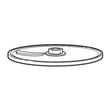
- Disc, slicing W11319164 for slicing tasks
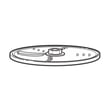
- Disc, reversible W11319167 for shredding/slicing-style prep (depending on disc design)
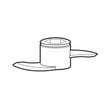
- Blade, dough W11319166 for dough mixing
- Food processor multi-purpose blade W11239491 for chopping and general processing
Why it matters
Choosing between a chopper and a food processor affects prep time and results. A chopper is great for quick, small jobs; a food processor like KFP0718BM0 is the better fit when you want consistent slices, shredded ingredients, or larger-batch processing.
Last updated: January 2026
Can KitchenAid food processor parts go in the dishwasher?
For KitchenAid food processor model KFP0718BM0, many removable accessories (like the bowl, lid, and pusher) are typically safe on the top rack of the dishwasher, while the motor base and any drive-related pieces should never be immersed. When you want the safest results, hand-wash and dry thoroughly.
What’s usually OK in the dishwasher (top rack)
Place parts so they cannot flip into the heating element area.
- Bowl
- Bowl lid
- Pusher and feed-tube components
- Discs and disc adapter (secure them so they do not move)
- Non-electrical accessories
If a plastic part warps or cracks, match replacements to KFP0718BM0, such as the bowl W11319163 or food processor bowl lid W11551396.
What should stay out of the dishwasher
These items can be damaged by water intrusion or should not be submerged.
- Motor base (wipe only)
- Any part that interfaces with the motor/drive and could trap water
- Components with tight crevices where water can sit after washing
Quick cleaning guide
| Part | Best cleaning method | Notes |
|---|---|---|
| Bowl, lid, pusher | Top-rack dishwasher or hand-wash | Avoid high heat if you’re concerned about warping |
| Slicing/shredding discs, blades | Hand-wash preferred | Sharp edges; dry immediately to reduce spotting |
| Motor base | Damp cloth wipe-down | Never immerse or spray with water |
Why it matters
Dishwasher heat and strong detergents can cloud plastics and dull cutting edges over time. Keeping the base and drive area dry helps prevent corrosion and premature wear.
Last updated: January 2026