



Can you mix and match air handler and condenser?
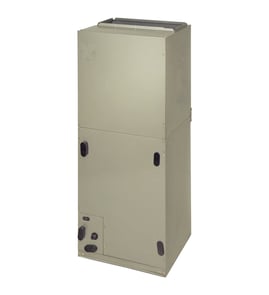
Yes, you can mix and match an air handler and an outdoor condenser in some situations, but we only recommend doing it when the equipment is AHRI-matched and the blower, coil, refrigerant type, and controls are compatible. For a Carrier FB4BNF060000 fan coil, mismatching can cause poor comfort, efficiency loss, and reliability problems.
What must match for a reliable system
To avoid airflow and refrigerant issues, confirm these items before pairing equipment:
- AHRI match: the indoor unit (fan coil/coil) and outdoor unit are listed together as a certified combination.
- Refrigerant: both sides are designed for the same refrigerant (for example, R-410A vs. R-22).
- Capacity: condenser tonnage matches the indoor coil and duct system (common residential ranges are 2 to 5 tons).
- Metering device: TXV or fixed orifice is correct for the outdoor unit and refrigerant.
- Airflow: blower speed and static pressure capability support roughly 350 to 450 CFM per ton.
- Controls and staging: single-stage vs. two-stage vs. variable-speed operation is supported by the air handler controls.
Quick compatibility checklist (what to verify)
Use this as a fast go or no-go screen before you invest time or money.
| Item to verify | Good sign | Red flag |
|---|---|---|
| AHRI certificate | Exact indoor and outdoor model numbers listed together | No certified match available |
| Refrigerant | Same refrigerant on both units | Different refrigerants |
| Coil size | Coil is rated for the condenser capacity | Coil is undersized or unknown |
| Electrical/control | Thermostat and staging logic align | Staging or communication mismatch |
Why it matters
A mismatched condenser and air handler often shows up as icing, high energy use, humidity problems, noisy airflow, and compressor stress. Getting the match right protects comfort and helps the system hit its intended SEER performance.
Parts that commonly come up during pairing or troubleshooting
If you are correcting airflow or control issues on the FB4BNF060000, these model-matched parts are commonly involved:
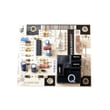
- Central air conditioner air handler fan control board HK61EA006
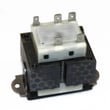
- Central air conditioner air handler transformer HT01CN241
Last updated: February 2026
How big is a 4 ton air handler?
A “4 ton” air handler refers to cooling capacity (about 48,000 BTU/hr), not a single standard cabinet size. For a Carrier fan coil like model FB4BNF060000, the physical dimensions vary by series and installation style, but most 4-ton air handlers are roughly 21 to 24 inches wide, 50 to 60 inches tall, and 21 to 26 inches deep.
Typical 4-ton air handler size ranges
These ranges cover many common residential 4-ton fan coils and air handlers (including multi-position units):
- Width: 21 to 24 inches
- Height: 50 to 60 inches
- Depth: 21 to 26 inches
- Weight (typical): 90 to 160 lb (varies by coil and cabinet)
What changes the size the most
Even at the same 4-ton capacity, cabinet dimensions change based on configuration and options:
- Orientation: upflow, downflow, horizontal left, horizontal right
- Coil style: cased A-coil vs slab coil, and coil depth
- Heat kit installed: electric heat strips can change internal layout and service clearance needs
- Filter setup: internal rack vs external filter grille
- Drain pan and piping: secondary pan, trap, and condensate routing
Quick reference table (what to measure)
| What to measure | Where to measure | Why it matters |
|---|---|---|
| Width | left to right across cabinet | fit between framing or in closet |
| Height | base to top of cabinet | door clearance, platform height |
| Depth | front to back including panels | closet depth, return plenum space |
| Service clearance | in front of access panel | room to reach blower, coil, wiring |
Why it matters
Getting the right size prevents airflow restrictions and makes service easier. Tight installs can also complicate electrical access (transformer, control board) and condensate drainage, which can lead to nuisance shutdowns or water damage.
If you are planning a repair or replacement
If your goal is to restore operation (not replace the whole unit), we recommend matching parts to your exact model FB4BNF060000. Common electrical parts that affect blower operation include the central air conditioner air handler fan control board HK61EA006 and the central air conditioner air handler transformer HT01CN241.
Last updated: February 2026
What is FB4BNF060000?
FB4BNF060000 is the model number for a Carrier fan coil (air handler) used with a central HVAC system. It is the indoor unit that moves air across the evaporator coil and distributes conditioned air through your ductwork; it also houses key electrical controls.
What this air handler does in your HVAC system
An air handler like Carrier FB4BNF060000 typically includes the blower assembly, electrical controls, and connections for the indoor coil and condensate drain.
Common functions include:
- Circulating air through the home (blower motor and fan speeds)
- Supporting heating and cooling operation (control signals to the outdoor unit)
- Providing low-voltage power for controls (transformer)
- Managing blower timing and fan operation (control board)
- Handling condensate drainage from the indoor coil
Parts you will commonly service on this model
If you are troubleshooting a no-blower, intermittent fan, or no-power-to-controls issue, these model-specific parts are common starting points:
- Central air conditioner air handler fan control board HK61EA006
- Central air conditioner air handler transformer HT01CN241
Quick “symptom to part” guide
| Symptom | What to check first | Why |
|---|---|---|
| Blower will not run | Control board, thermostat signal, wiring | The board often controls blower relays and timing |
| No 24V control power | Transformer, fuse (if equipped), wiring | 24V powers thermostat and control circuits |
| Fan runs at wrong time/speed | Control board settings, wiring | Fan timing/speed control is commonly board-driven |
Why it matters
Using the exact model number FB4BNF060000 helps us match the correct Carrier air handler parts (like the fan control board and transformer) so your repair fits and the electrical ratings match.
Last updated: February 2026
What is a carrier air handler?
A Carrier air handler (like the Carrier FB4BNF060000 fan coil) is the indoor unit that moves conditioned air through your home’s ductwork. It typically contains the blower, controls, and electrical components that work with your outdoor AC or heat pump to deliver steady airflow and comfort.
What an air handler does in your HVAC system
An air handler is the “air-moving” side of a split HVAC system. It supports heating and cooling by circulating air across the indoor coil and pushing it through supply ducts.
- Pulls air in through the return duct and filter
- Moves air across the indoor evaporator coil (cooling) or heated coil/heat strips (heating)
- Distributes air through the supply ductwork
- Uses low-voltage controls (thermostat signals) to manage blower operation
- Helps manage humidity during cooling by supporting proper airflow across the coil
Common parts inside a Carrier air handler
Many air handlers share a similar set of serviceable components. For the FB4BNF060000, examples of parts we commonly see customers replace include:
- Central air conditioner air handler fan control board HK61EA006
- Central air conditioner air handler transformer HT01CN241
- Blower motor and blower wheel (varies by configuration)
- Door/latch and cabinet hardware (for safe access and proper sealing)
Quick part role guide
| Part | What it controls | Common symptom when failing |
|---|---|---|
| Fan control board | Blower commands, timing, fan speeds (varies) | Blower will not run, runs at wrong speed, intermittent operation |
| Transformer | Steps voltage down for controls | No thermostat response, no 24V control power |
Why it matters
Correct airflow is the foundation of comfort and efficiency. When an air handler has a control, power, or airflow issue, you can see problems like weak airflow, icing at the indoor coil, uneven temperatures, or the system short cycling.
Before you service an air handler
Air handlers contain high-voltage and low-voltage circuits.
- Shut off power at the breaker and verify power is off
- Confirm the access panel is fully secured before running
- Replace filters regularly to protect the blower and coil
- If you are testing voltage, use a proper meter and safe procedures
For electrical troubleshooting basics, we recommend how to use a multimeter to test electrical parts video.
Last updated: February 2026