Owner’s manual
 View engine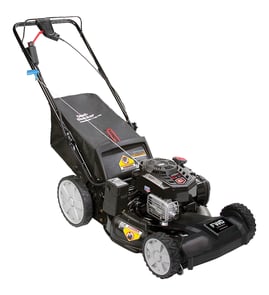




What type of gas should I use in my lawn mower?
For your Craftsman lawn mower model 917378892, use fresh, clean regular unleaded gasoline (most owners use 87 octane). The key is keeping fuel fresh and free of water, rust, and dirt; stale or contaminated gas is a common no-start cause (see the owner's manual).
What to use (and what to avoid)
- Use fresh, clean unleaded gasoline from a clean fuel can
- Use regular octane (typically 87) for normal mowing conditions
- Avoid stale fuel (old gas is a frequent starting problem)
- Avoid fuel contaminated with water, rust, or dirt
- Do not store gasoline from one season to the next
Fuel freshness checklist
Old fuel causes hard starting, surging, and stalling. We recommend:
- Buy only what you will use in about 30 days
- Keep the gas can tightly closed and stored in a dry place
- Replace a gas can that starts to rust
- If the mower has been sitting, drain old fuel and refill with fresh gas
Quick troubleshooting: fuel-related no-start symptoms
If the engine will not start, fuel issues are high on the list.
| Symptom | Likely fuel cause | What to do |
|---|---|---|
| Won’t start after storage | Stale fuel | Drain tank; refill with fresh gas |
| Starts then dies | Water in fuel | Drain tank/carb bowl if equipped; refill |
| Runs rough | Dirty fuel | Replace fuel; use a clean can |
Why it matters
Fresh fuel protects the carburetor and helps the engine start reliably. The manual specifically calls out stale fuel and water in fuel as common causes of a mower that does not start, and it also warns that rust and dirt in gasoline will cause problems.
Last updated: February 2026
How to find Craftsman mower model number?
On the Craftsman walk-behind mower model 917378892, the model and serial numbers are printed on a decal on the rear of the lawn mower housing. We use that model number to match the correct parts list and the right owner’s manual for maintenance specs.
Where to look on the mower
Check these common label locations first:
- Rear of the mower deck or housing (most common on this model)
- Back edge of the deck near the discharge opening
- Near the rear wheels on the frame
- On the handle support area (lower handle brackets)
- Near the engine mounting area (less common on walk-behind units)
What to write down (and why)
Record both numbers exactly as shown:
| Item | What it’s used for | Example format |
|---|---|---|
| Model number | Identifies the exact mower version for parts diagrams | 917378892 |
| Serial number | Helps match production run details and decals | Letters and numbers |
| Date of purchase | Useful for maintenance tracking | Month/day/year |
Tips to read a worn or dirty decal
If the decal is hard to read:
- Wipe it with a damp rag and mild soap; avoid harsh solvents
- Use a flashlight at an angle to make embossed printing stand out
- Take a close-up photo and zoom in
- Copy the full string, including dots or dashes
Why it matters
Using the correct model number prevents ordering the wrong blade, drive parts, or handle hardware. For example, parts like the upper handle 583703501 and lawn mower ground drive belt, 3/8 x 32-1/2-in 532175436 are matched by model-specific diagrams.
For additional identification and maintenance details (oil type, spark plug, blade bolt torque), use the owner's manual.
Last updated: February 2026
How much does a 48 inch walk behind mower weigh?
A 48-inch walk-behind mower typically weighs about 300 to 450 lb depending on whether it is a commercial mid-size unit, the engine size, and whether it has a sulky or heavy-duty deck. Your Craftsman 917378892 is a smaller walk-behind mower, so it weighs far less than most 48-inch models (see the 917378892 owner's manual for your mower’s specifications and setup details).
Typical weight ranges (what to expect)
Most 48-inch walk-behind mowers fall into these ranges:
- Commercial mid-size 48-inch: ~300 to 450 lb
- Heavier commercial configurations (thicker deck, larger engine, added accessories): ~400 to 550 lb
- Residential 48-inch walk-behind (less common): ~250 to 400 lb
Why weights vary so much
Weight changes quickly based on a few build choices:
- Deck construction (stamped vs. fabricated, deck thickness)
- Engine size (larger displacement typically adds weight)
- Drive system (gear drive vs. hydro drive)
- Wheel and axle hardware (commercial hubs, bearings, larger tires)
- Accessories (bagger, mulch kit, sulky, guards)
Quick comparison table
| Mower type | Deck size | Typical weight |
|---|---|---|
| Residential push mower (like many Craftsman walk-behinds) | 21 in | ~60 to 100 lb |
| Commercial walk-behind | 36 to 48 in | ~250 to 450 lb |
| Stand-on or zero-turn (for reference) | 48 in | ~550 to 900+ lb |
Why it matters
Knowing mower weight helps you choose the right ramp, trailer tie-down points, and loading method, and it also affects traction and how easily the mower can be maneuvered on slopes.
Last updated: February 2026
What time of year is it cheapest to buy a mower?
For a Craftsman walk-behind mower like model 917378892, the cheapest time to buy is typically late summer through fall, when many stores clear out outdoor power equipment to make room for winter inventory. You can also find strong deals in early winter on remaining stock.
Best times to shop (and why)
- Late August to October: end-of-season clearance on gas walk-behind mowers
- November: deeper markdowns as floor space shifts to holiday merchandise
- December to January: leftover inventory discounts (selection is usually smaller)
- Early spring: more selection, but prices are usually higher
What to compare before you buy
Even when the mower price is great, we recommend checking these items so you do not overpay later in parts and upkeep:
- Deck size and cutting options (bagging, mulching, side discharge)
- Wheel and height adjuster condition (common wear points)
- Drive system performance (self-propelled models)
- Availability of routine wear parts (blade, belt, wheels)
- Storage and maintenance needs listed in the owner's manual
Quick seasonal shopping guide
| When you buy | Typical price | Typical selection | Best for |
|---|---|---|---|
| Late summer to fall | Lowest | Medium | Best overall value |
| Early winter | Low | Low | Bargain hunters |
| Spring | Highest | Highest | Specific features/models |
Why it matters
Buying at the right time can save money up front, but long-term value comes from keeping the mower maintained. For example, the manual calls out end-of-season storage steps and battery charging guidance for electric-start setups, which helps prevent no-start issues next season.
Last updated: February 2026
What are the common lawn mower problems?
Common problems on the Craftsman 917378892 walk-behind mower include no-start conditions (stale fuel, dirty air filter, disconnected spark plug wire), loss of power from grass and debris buildup under the deck, excessive vibration from a worn or loose blade, and drive issues when the front drive wheels are packed with clippings. See the owner's manual for the model-specific troubleshooting chart and maintenance steps.
Most common symptoms and what usually causes them
- Won’t start: stale fuel, water in fuel, dirty air filter, bad spark plug, control bar not held to the handle
- Loss of power: clogged air filter, cutting too much grass, debris buildup under the mower
- Poor cut or uneven cut: uneven wheel height settings, worn or bent blade, deck packed with clippings
- Excessive vibration: loose blade hardware, damaged blade, broken blade adapter
- Hard to push or self-propel slows: drive wheel area clogged with grass, worn drive components
Quick checks we recommend first (fast, no special tools)
- Confirm the control bar is held firmly to the handle while starting.
- Drain and refill with fresh, clean gasoline if fuel is old.
- Inspect and service the air filter.
- Check the spark plug wire is fully seated on the plug.
- Tip the mower safely (spark plug wire off) and clear grass buildup under the deck.
- If the mower is self-propelled, clean the front drive wheel area so wheels turn freely.
Drive wheel problems: what the manual calls out
If the front drive wheels do not turn freely, the manual directs cleaning the area around the dust cover, pinion, and gear teeth. When reassembling, use the correct hardware such as the dust cover 581840401 and the lawn mower drive pinion gear 532137054 if yours is damaged.
| Symptom | Likely area | Typical fix |
|---|---|---|
| Won’t start | Fuel, ignition, control bar | Fresh fuel, reconnect wire, replace spark plug |
| Vibrates | Blade, blade adapter | Tighten blade bolt, replace worn parts |
| Self-propel weak | Drive wheels, pinion/gear teeth | Clean debris, replace worn gear/dust cover |
Why it matters
Most “mower problems” come from basic maintenance items (fuel quality, airflow, and debris buildup). Fixing those early prevents hard starting, poor cutting, and premature wear on drive wheels and bearings.
Last updated: February 2026