Owner’s manual
 View engine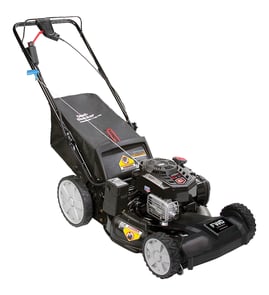


What is the best lawn mower for an elderly person?
For many elderly homeowners, the best lawn mower is a lightweight, easy-start walk-behind mower with simple height adjustment, strong safety controls, and minimal pushing effort. If you already own the Craftsman 917388103, setting it up correctly and keeping the blade sharp makes it easier and safer to use (see the 917388103 owner's manual).
What to look for (features that matter most)
- Easy starting: primer or other simple start system; fewer pulls and less strain
- Strong safety controls: an operator presence control bar that stops the engine when released
- Easy height adjustment: simple wheel adjusters so you can raise the cut in thicker grass
- Manageable weight and balance: easier turning and less fatigue
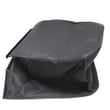
- Bagging and discharge options: reduces raking time when paired with a good grass catcher
How to make mowing easier with the Craftsman 917388103
Our manual highlights a few setup and technique choices that reduce effort:
- Raise the cutting height when grass is tall or thick; a higher cut reduces pushing effort.
- Mow when grass is dry; wet grass clumps and increases resistance.
- Cut only the top one-third of the grass for best results and less engine load.
- Overlap passes and mow slower in heavy grass to avoid bogging down.
Quick comparison: best mower type by mobility needs
| Mobility need | Best mower type | Why it helps |
|---|---|---|
| Mild joint pain, small yard | Lightweight push mower | Simple, low maintenance, easy storage |
| Moderate fatigue, larger yard | Self-propelled walk-behind | Less pushing effort on flat or sloped lawns |
| Limited strength or balance | Assisted mowing option (help from another person or service) | Reduces fall risk and strain |
Why it matters
A mower that is easier to start, steer, and stop helps prevent overexertion and reduces the chance of losing control. On the 917388103, the operator presence control bar is a key safety feature because releasing it stops the engine.
Last updated: January 2026
How much oil does a Craftsman 6.75 lawn mower take?
For the Craftsman walk-behind mower model 917388103 (Briggs & Stratton 625 Series), the engine oil capacity is 20 ounces. For a brand-new, first-time fill, it typically takes about 18 ounces because a small amount of oil can remain in the engine from factory testing; confirm the final level on the dipstick using the 917388103 owner's manual.
Oil capacity and what to pour in
Use these amounts as your target, then finish by checking the dipstick (fill to the full mark, not above it).
- Oil capacity (normal fill or oil change): 20 oz
- Initial oil fill (first use): about 18 oz
- Check oil level: before each use
- Change interval: about every 25 hours or each season
| Situation | Typical amount to add | Best way to confirm |
|---|---|---|
| First-time fill (new/just serviced) | ~18 oz | Dipstick full mark |
| Oil change/refill | Up to 20 oz | Dipstick full mark |
Oil type recommendations (by temperature)
The manual lists these common viscosity choices for this mower’s engine:
- SAE 30 for temperatures above 32°F
- SAE 5W-30 for temperatures below 32°F
- Use a clean funnel and wipe the dipstick area before checking to keep dirt out
Why it matters
Running low on oil can cause hard starting, overheating, and accelerated engine wear. Overfilling can also create smoking and performance issues, so we always recommend adding oil gradually and using the dipstick as the final authority.
Last updated: January 2026
How much does a 48 inch walk behind mower weigh?
A 48-inch walk-behind mower typically weighs about 450 to 650 lb, depending on whether it’s a commercial hydro-drive unit or a lighter belt-drive design. Your Craftsman 917388103 is a 21-inch walk-behind mower, so it weighs far less than any 48-inch model; see the 917388103 owner's manual for your mower’s specifications and features.
Typical weight ranges for 48-inch walk-behind mowers
Most 48-inch walk-behind mowers fall into these ranges:
- Commercial hydro-drive: heavier frames, pumps, and wheel motors
- Commercial belt-drive: usually lighter than hydro-drive
- Stand-on capable platforms: often heavier due to reinforced decks and controls
- With accessories (sulky, catcher, striping kit): weight increases
| 48-inch mower type | Typical weight (lb) | What drives the weight |
|---|---|---|
| Belt-drive commercial walk-behind | 350 to 500 | Simpler drive system, lighter chassis |
| Hydro-drive commercial walk-behind | 450 to 650 | Hydro pumps, wheel motors, heavier frame |
| Heavy-duty/stand-on platform style | 550 to 750 | Reinforced deck and operator platform |
Why your Craftsman 917388103 is not comparable to a 48-inch mower
The Craftsman 917388103 is a smaller rotary mower (the manual lists a 21-inch blade), so it’s in a different class than a 48-inch commercial walk-behind. Parts like the lawn mower blade 532406712 and blade adapter 532418373 are sized for a 21-inch deck, not a 48-inch deck.
Why it matters
Weight affects how a mower handles slopes, how easily it loads into a truck or trailer, and how much traction it has in thick grass. A 48-inch commercial unit is built for productivity and durability, so it carries much more mass than a homeowner 21-inch mower.
Last updated: January 2026
How to tell the year of a Craftsman lawn mower?
For a Craftsman walk-behind mower like model 917388103, the most reliable way to determine the year is to use the engine identification (model, type, and code) and the mower’s product tag information; the engine code typically includes the manufacture date. Use the 917388103 owner's manual to confirm where your mower’s ID labels are located.
Where to look on a Craftsman walk-behind mower
Check these common label locations first:
- Mower product tag on the rear of the deck, near the height adjuster, or near the handle mounting area
- Engine shroud label (top or side of the Briggs & Stratton engine)
- Valve cover area or recoil starter housing (engine model/type/code stamping)
- Under the grass bag frame area (if equipped)
How to decode the year (what works most often)
Because Craftsman mower model numbers do not consistently encode the build year, we use these methods in order:
- Briggs & Stratton engine code: Many Briggs & Stratton engines use a numeric code that includes the date of manufacture.
- Mower product number and serial: Some Craftsman tags include a serial format that can be date-coded.
- Parts list cross-check: Matching key parts in the illustrated parts list can help confirm the production era.
Quick comparison: mower tag vs. engine code
| What you find | What it tells you | Best use |
|---|---|---|
| Mower model number (example: 917388103) | Identifies the mower family and parts | Ordering correct parts |
| Mower serial/product number | Sometimes date-coded | Estimating mower build year |
| Engine model/type/code | Often includes a build date | Determining year most accurately |
Why it matters
Knowing the year helps us match the correct blade, blade adapter, control cable, and discharge components, especially when a model has mid-year design changes.
Parts that commonly get replaced (and help confirm the correct build)
If you are verifying the mower version while ordering parts, these are common reference items for model 917388103:
- Lawn mower blade 532406712 (wear item; replaced when bent or too thin to sharpen)
- Blade adapter 532418373 (common if the blade hits an object)
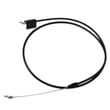
- Lawn mower zone control cable 532183281 (if the engine won’t stay running when you release the handle)
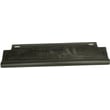
- Discharge/mulch components such as the discharge guard and mulcher door
Last updated: January 2026