 Owner’s manual



Does my Samsung dishwasher have a filter?
Yes. Your Samsung DW80F600UTB dishwasher uses a filter system in the bottom of the tub to catch food soil and help protect the wash pump and spray system. Cleaning the filter regularly helps prevent poor cleaning, odors, and drain problems; see the DW80F600UTB owner's manual for the exact filter location and removal steps.
How to check and clean the dishwasher filter
Most Samsung dishwashers like the DW80F600UTB have a twist-lock filter assembly near the sump area under the lower rack.
- Turn off power at the breaker before reaching into the sump area
- Pull out the lower rack for access
- Remove any standing water with a cup or towel
- Twist the filter counterclockwise to unlock (typical Samsung design)
- Lift the filter out and rinse under warm water
- Use a soft brush to remove grease and debris; avoid sharp tools
What you should notice after cleaning
A clean filter improves water flow and helps the dishwasher drain correctly.
| Symptom | Common filter-related cause | What to do |
|---|---|---|
| Grit on dishes | Filter clogged, recirculating debris | Clean filter and run a hot cycle |
| Bad odor | Food trapped in filter/sump | Clean filter and wipe sump area |
| Not draining well | Restricted flow to drain path | Clean filter; then check drain hose routing |
When it is not just the filter
If the filter is clean but the dishwasher still will not drain or you see water in the base, check these common items next:
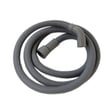
- Kinked or restricted drain line; inspect the dishwasher drain hose DD67-00059A
- Drain path inside the unit; inspect the dishwasher inner drain hose DD81-01502A
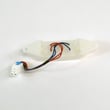
- Water in the base triggering protection; inspect the dishwasher leak detector sensor DD94-01062A
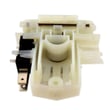
- Door not latching fully; test the dishwasher door switch DD81-01629A
Why it matters
A clogged filter makes the wash system work harder, reduces spray pressure, and can leave soil on dishes. Keeping the filter clean is one of the fastest ways to restore normal cleaning performance and reduce service calls.
Last updated: February 2026
What are common problems with DW80F600UTB?
Common problems we see with the Samsung DW80F600UTB dishwasher include leaking or overflow symptoms, flashing/blinking lights (often tied to an error condition), and drain or fill issues that stop a cycle mid-stream. Use the DW80F600UTB owner's manual to match symptoms to the correct checks and reset steps.
Most common symptoms and what they usually point to
- Leaking or water in the base: door seal issues, loose hoses, or a triggered leak detection circuit
- Overflowing: overfilling, suds from wrong detergent, or a fill control problem
- Lights flashing or blinking: stored error code, door not sensed as closed, or a control fault
- Not draining: drain path restriction, kinked hose, or drain pump/sump issue
- Not filling: water supply off, inlet screen clogged, or inlet valve problem
Quick checks we recommend first (fast, no parts)
- Confirm the door closes firmly and latches; remove any rack items blocking closure.
- Run the kitchen faucet hot first; then start the cycle to improve wash performance.
- Use only dishwasher detergent; hand soap can cause heavy suds and overflow.
- Check the sink drain/disposal connection for a clog that can back up the dishwasher.
- Inspect under the unit for moisture; if the base is wet, let it dry fully before retesting.
Parts that commonly relate to these symptoms on this model
| Symptom | Common part area | Example part for DW80F600UTB |
|---|---|---|
| Won’t start, lights blink | Door sensing | Dishwasher door switch dd81-02132a |
| Not filling or fills poorly | Water inlet | Dishwasher water inlet valve DD62-00084A |
| Not draining | Drain path | Dishwasher drain hose DD67-00059A |
| Leak code or water in base | Leak detection | Dishwasher leak detector sensor DD94-01062A |
Error codes: the fastest way to narrow it down
If the display or lights indicate an error, use our Samsung dishwasher error codes guide to identify the code and the most likely causes (drain, fill, heater, leak detection, or door).
Why it matters
Catching a drain, fill, or leak issue early helps prevent repeat shutdowns, poor cleaning, and water damage. It also keeps you from replacing the wrong part when the root cause is a simple blockage or door closure problem.
Last updated: February 2026
What size dishwasher is the Samsung DW80F600UTB?
The Samsung DW80F600UTB is a standard 24-inch built-in dishwasher size (the common width class for most under-counter dishwashers). For the exact cutout and overall dimensions for your specific installation, use the measurements listed in the DW80F600UTB owner's manual.
What “24-inch dishwasher” means
Most 24-inch built-in dishwashers like the Samsung DW80F600UTB are designed to fit a standard kitchen opening.
Typical sizing targets:
- Width: about 24 inches (cabinet opening is usually 24 inches wide)
- Height: commonly adjustable to fit roughly 34 to 35 inches under a countertop
- Depth: typically around 24 inches plus the door thickness
Quick fit check before you buy parts or plan an install
Use this checklist to confirm your dishwasher fits your space and lines up with plumbing and power:
- Measure the cabinet opening width, height, and depth in three places (front, middle, back).
- Confirm the countertop height and whether the unit needs leveling.
- Check clearance for the door to open fully without hitting an island or nearby cabinet pulls.
- Verify the water supply line and drain hose routing space.
- Confirm the electrical connection location (junction box area) and slack in wiring.
Common opening vs. dishwasher dimensions (typical)
| Measurement | Typical cabinet opening | Typical dishwasher target |
|---|---|---|
| Width | 24 in | ~24 in class |
| Height | 34 to 35 in | adjustable legs to match |
| Depth | 24 in | ~24 in class |
Why it matters
Dishwasher “size” affects more than width. If the opening height is tight or the depth is shallow, the dishwasher can bind against the countertop, kink the drain hose, or sit too far forward, which can cause door sealing and mounting issues.
Last updated: February 2026





