Installation guide
 Owner’s manual
 Error Codes

How to remove bottom grill from KitchenAid refrigerator?
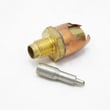
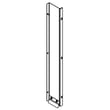
On the KitchenAid KBRO36FTX03 bottom-mount refrigerator, the bottom grille (base grille/toe kick) typically pulls straight out from the lower frame once you get your fingers under the top edge. Pull evenly from both sides to release the clips, then lift it away.
Steps to remove the bottom grille (base grille)
- Open the refrigerator doors for better access.
- Grip the grille near both ends.
- Pull straight forward (not down) to pop it off the retaining clips.
- If it feels stuck, work side-to-side gently while pulling forward.
- Set the grille on a soft surface to avoid scratches.
Reinstalling the grille
Align the grille with the lower frame and press it straight in until it snaps into place.
Base grille fit note (skirt piece)
The installation instructions describe a two-piece base grille system (base grille plus an optional skirt extension). If your grille has a skirt, make sure it is seated correctly and that there is still airflow clearance at the bottom.
| What you see | What it usually means | What to do |
|---|---|---|
| Grille pops off with a firm pull | Normal clip-in grille | Reinstall by snapping back in place |
| Grille won’t release | Clips binding or grille misaligned | Pull evenly from both ends; avoid twisting |
| Grille sits too high above floor | Skirt not installed or not needed | Check skirt fit per install instructions |
Why it matters
Removing the bottom grille gives you access for cleaning and for some service tasks (like checking for dust buildup and ensuring proper airflow), which helps cooling performance and reduces noise.
Reference
For model-specific handling and fit details, follow the KBRO36FTX03 installation guide.
Last updated: January 2026
Are bottom mount fridges better?
Bottom-mount refrigerators like the KitchenAid KBRO36FTX03 are better for many kitchens because the fresh-food section sits at eye and waist level, so the items you use most are easier to reach; the freezer stays in a lower drawer for bulk storage. See the KBRO36FTX03 owner's manual for feature details and control options.
What “better” usually means with a bottom-mount design
A bottom-mount refrigerator tends to prioritize everyday convenience in the refrigerator compartment.
- Easier access to fresh foods (produce, dairy, drinks) without bending as much
- Freezer drawer can hold larger, bulkier items and stacks well
- Often feels more organized because the freezer is separated into baskets/pans
- Works well for households that cook frequently and use fresh ingredients
Trade-offs to consider
Bottom-mount is not automatically best for every home; it depends on how you use the freezer and your space.
| If you want... | Bottom-mount is usually a good fit when... |
|---|---|
| Less bending for daily items | You open the refrigerator section more than the freezer |
| Better fresh-food visibility | You prefer shelves at eye level |
| Freezer bulk storage | You like a pull-out drawer layout |
| Easy installation planning | You confirm door swing and cabinet clearances first |
Built-in installation details that matter for this model
Because the KBRO36FTX03 is a built-in bottom-mount refrigerator, “better” also depends on fit and access. Our installation guidance emphasizes planning for door swing and handle clearance.
- Plan for door swing to at least 90 degrees so drawers and bins are usable
- Confirm cabinet and side-panel needs if the refrigerator sits at the end of a cabinet run
- Use panels that are thick enough to resist warping (common minimum is 1/2 inch)
- Use 2 or more people for installation and positioning
For the exact clearances and door swing dimensions, use the KBRO36FTX03 installation guide.
Why it matters
Choosing the right configuration affects daily ergonomics, food visibility, and how well the refrigerator fits your kitchen layout. With built-in models, correct door swing and panel planning can be the difference between a smooth install and constant frustration.
Last updated: January 2026
What is the bottom part of a refrigerator called?
The bottom area of a KitchenAid KBRO36FTX03 refrigerator is commonly called the machine compartment (or compressor compartment). It houses the compressor and other heat-releasing cooling components, typically behind a lower grille or cover at the base.
Common names you may hear
Different people use different terms for the same lower section. These are the most common:
- Machine compartment
- Compressor compartment
- Lower rear compartment
- Base grille area (front)
- Compressor cover (a protective cover over the machinery)
What’s usually located in the bottom area
On built-in bottom-mount refrigerators like the KBRO36FTX03, the lower section is where many “hot side” cooling parts live.
- Compressor (pumps refrigerant through the sealed system)
- Condenser coil (releases heat)
- Condenser fan (moves air across the condenser area)
- Drain pan (collects defrost water so it can evaporate)
- Wiring and control components (varies by design)
Example parts that relate to the bottom cooling area
These are model-compatible examples from our parts list:
| Component | What it does | Example part for this model |
|---|---|---|
| Condenser fan | Helps remove heat from the condenser area | Refrigerator condenser fan W11578915 |
| Compressor kit | Main sealed-system pumping component | Refrigerator compressor 8201675 |
| Condenser coil | Releases heat from refrigerant | Refrigerator condenser coil 2307998 |
Why it matters
Knowing the correct name helps when you are troubleshooting noises, heat, or airflow issues. For example, a warm base area and airflow from the lower grille are normal, but loud rattling can point to a fan or cover issue.
Installation note for this model
During installation, the KBRO36FTX03 instructions call out protecting the compressor cover and ensuring the refrigerator is stabilized and leveled. For the exact clearances and anti-tip guidance, use the installation guide.
Last updated: January 2026
What is the most common problem with a KitchenAid refrigerator?
The most common KitchenAid refrigerator problems are ice maker and cooling complaints, and they usually trace back to airflow, heat removal, or water supply issues. On the KitchenAid KBRO36FTX03, start by checking condenser coil cleanliness, evaporator fan airflow, and the water filter condition using the KBRO36FTX03 owner's manual.
Most common issues we see (and what they look like)
- Ice maker stops or makes small/slow batches: often tied to restricted water flow or temperature problems.
- Fresh food section warm, freezer OK (or vice versa): points to airflow problems (fan, baffle, frost buildup).
- Water leaks or puddles: commonly from a clogged defrost drain or water line connection issues.
- Noisy operation: fan blade rubbing ice, worn fan motor, or condenser fan noise.
- Temperature swings: sensor (thermistor) issues or control problems.
Quick checks before replacing parts
- Confirm temps: set refrigerator near 37°F and freezer near 0°F (typical targets).
- Clean the condenser area: dust buildup makes the compressor run longer and cooling suffer.
- Listen for fans: you should typically hear airflow when the unit is running.
- Check the water filter: a clogged filter can reduce dispenser flow and affect ice production.
- Look for frost patterns: heavy frost on the freezer back wall often signals a defrost/airflow issue.
Common symptoms and likely causes
| Symptom | Most likely area to check | Example related part for this model |
|---|---|---|
| Ice maker slow or not making ice | Water supply, filter, ice maker | Refrigerator filter EDR3RXD1 |
| Warm refrigerator section | Evaporator airflow, baffle, frost | Evaporator fan area |
| Loud buzzing or rattling | Fan blade, ice contact, debris | Refrigerator evaporator fan blade WP2169142 |
| Temps fluctuate | Sensor feedback, control logic | Refrigerator temperature sensor WP2188820 |
Why it matters
Most “common problems” are really early warning signs. Catching restricted airflow, dirty coils, or a clogged filter early helps prevent food spoilage, reduces compressor run time, and avoids repeat ice maker issues.
Helpful DIY guidance
- How to replace the water filter in a KitchenAid refrigerator
- How to fix your evaporator cooling fan
- Common refrigerator ice maker problems and solutions
Last updated: January 2026