Owner’s manual
 Error Codes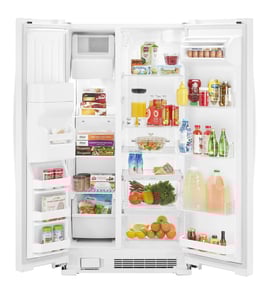

What are the 4 types of ice Samsung?
On the Samsung RS275ACPN side-by-side refrigerator, the dispenser provides two ice selections: cubed or crushed, plus an ice off setting. This model does not offer four ice shapes; “four types of ice” is a feature found on some newer Samsung refrigerator lines, not this unit (see the RS275ACPN owner's manual).
What this model’s ice options mean
- Cubed: the ice maker drops cubes into the bucket; dispensing in “Cubed” sends cubes out.
- Crushed: cubes are made the same way, then crushed at the dispenser when you select “Crushed.”
- Ice off: stops ice production (helpful for vacations or when servicing the ice system).
How to select cubed, crushed, or ice off
Use the Ice Type button on the control panel to cycle through the available modes.
- Press Ice Type until the display shows the option you want
- Dispense ice by pushing the dispenser lever with a cup
- Keep the cup centered to reduce splashing and ice “jumping”
- Never put fingers or objects into the dispenser opening
Quick comparison
| Feature | RS275ACPN (this model) | “Four types of ice” Samsung models |
|---|---|---|
| Ice shapes available | Cubed, crushed | Varies by model; may include specialty shapes |
| How crushed ice is made | Cubes are crushed during dispensing | May include dedicated specialty ice systems |
| Typical location | Door dispenser | Often internal plus door dispenser |
Why it matters
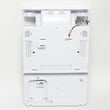
Knowing the correct ice options helps you troubleshoot the right system. If you are not getting cubed or crushed ice on RS275ACPN, the issue is usually water supply, freezing in the ice path, or an ice maker/dispenser component such as the refrigerator ice maker assembly DA97-02203G or refrigerator ice dispenser solenoid DA74-40151G.
Last updated: February 2026
What is the downside to Samsung fridge?
For the Samsung RS275ACPN side-by-side refrigerator, the most common downsides are ice and water dispenser problems, temperature inconsistency that can affect food quality, and higher repair complexity when sealed-system cooling components or airflow parts fail. Use the RS275ACPN owner's manual to confirm operating features and basic checks.
Common downsides owners notice
- Ice maker and dispenser issues (slow production, clumping, jams in the chute)
- Water dispenser problems (no water, weak flow, or intermittent dispensing)
- Cooling complaints (warm refrigerator section, freezer too warm, or uneven temps)
- More involved repairs when the compressor or defrost system is the root cause
- Door sealing quirks that can show up as frost, moisture, or temperature swings
What to check first on RS275ACPN (quick troubleshooting)
We recommend starting with the same basics the manual points to for getting the refrigerator fully operational: verify power, allow time to reach temperature, and confirm the unit is installed with proper clearance and leveling.
- Confirm the temperature settings are not set too warm (or so cold that the water tank freezes)
- Make sure the doors close and seal completely; this model uses a door-closing feature to help seal
- If no water is supplied, verify the water line is connected, the shut-off valve is open, and the supply line is not crushed
- If the dispenser is not working, confirm a water filter is installed; this design blocks water flow without a filter cartridge
- If cooling is noisy or inconsistent, check for airflow restrictions and heavy frost buildup
Parts that often relate to these symptoms
If troubleshooting points to a failed component, these model-matched parts are commonly involved:
| Symptom | Likely system | Example model-matched part |
|---|---|---|
| Warm temps or erratic temps | Temperature sensing / control | Refrigerator temperature sensor DA32-10109W |
| Poor cooling, overheating, loud running | Condenser airflow | Refrigerator condenser fan DA31-00146B |
| No water or weak water at dispenser | Water supply control | Kenmore pro refrigerator water inlet valve DA62-00914B |
| Frost buildup, warming, defrost issues | Defrost system | Refrigerator evaporator defrost heater DA47-00246F |
Why it matters
Ice, water, and temperature problems are not just convenience issues; they directly affect food safety, energy use, and the risk of secondary damage (like frost buildup restricting airflow). Catching a door-seal, airflow, or water-supply issue early prevents bigger repairs.
Last updated: February 2026
How do I find the model number on my RS275ACPN?
Your Samsung RS275ACPN model number and serial number are printed on a label inside the refrigerator cabinet; you will find it on the left-hand side wall. Write both numbers down exactly as shown so you can match parts and diagrams correctly.
Where to look (fastest method)
- Open the fresh food (refrigerator) door.
- Look along the left interior side wall of the cabinet.
- Find the rating label with “Model #” and “Serial #”.
- Copy the model number and serial number exactly (including any slashes or suffixes if shown).
- Use that full model identification when ordering parts like a door gasket, temperature sensor, or ice maker.
What the label typically shows
| Label field | What it’s used for | Why you need it |
|---|---|---|
| Model # | Identifies the exact refrigerator version | Ensures correct fit for parts and diagrams |
| Serial # | Identifies your specific unit | Helps confirm production details when troubleshooting |
Why it matters
Samsung side-by-side refrigerators can look similar across model families (RS275, RS277, and others), but parts such as the ice maker assembly, door gasket, or control components can vary by version. Using the exact model from the cabinet label prevents ordering the wrong part.
Helpful reference
For the exact wording and label location description, use the RS275ACPN owner's manual.
Last updated: March 2026