Installation guide
 Owner’s manual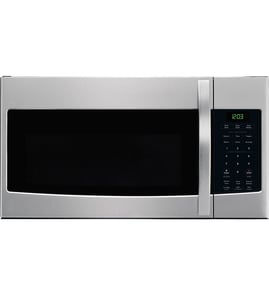



How to change over stove Kenmore microwave light bulb?
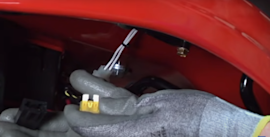
For Kenmore over-the-range microwave model 72185062010, you typically change the cooktop (lower) light by disconnecting power, removing the light cover from underneath the unit, swapping in the correct bulb, then reinstalling the cover and restoring power. For bulb type and cover-screw location, follow the 72185062010 owner's manual.
Safety first (important)
Microwaves contain high-voltage components; a simple bulb swap is usually external, but we still recommend these basics:
- Unplug the microwave or switch off the circuit breaker before starting
- Let the bulb cool completely (halogen bulbs get very hot)
- Wear work gloves to protect your hands from sharp sheet-metal edges
- Do not pull or stretch any wiring you can see near the light housing
- Use the exact bulb type and wattage listed for your model
Quick steps to replace the cooktop light
Most Kenmore microwave/hood combos replace the cooktop light from the bottom of the microwave:
- Turn off power at the outlet or breaker.
- From underneath, locate the cooktop light lens or cover (near the front underside).
- Remove the retaining screw(s) and lower the cover.
- Unscrew the old bulb (or carefully pull straight out if it is a pin-base style).
- Install the new bulb; avoid touching halogen glass with bare fingers.
- Reinstall the cover and restore power.
Which bulb do I need?
The exact bulb base and wattage can vary by production run, so we use the model-specific bulb listing and diagrams to match it correctly.
| What you see | Most common meaning | What to do |
|---|---|---|
| Screw-in bulb | Standard base style | Match wattage and base from the manual/parts list |
| Small capsule bulb | Halogen pin-base style | Match pin spacing and wattage from the manual/parts list |
Why it matters
Using the wrong wattage can overheat the lens, discolor the cover, or shorten bulb life. Using the correct bulb for 72185062010 also helps keep the hood lighting and ventilation area safe and evenly lit.
Last updated: February 2026
What size fuse for Kenmore microwave?
For the Kenmore 72185062010 microwave/hood combo, use a fuse that matches the microwave’s required electrical supply: a dedicated 120V, 60Hz circuit protected by a 15A or 20A fused supply. For fuse access and replacement steps, follow the 72185062010 installation guide.
What to check before you buy a fuse
A microwave fuse must match both amperage and type (physical style and temperature/voltage rating). Before ordering, we recommend confirming these details on the original fuse or in the wiring diagram.
- Unplug the microwave or shut off the breaker before opening any panels.
- Confirm the circuit is dedicated to the microwave (no other appliances on it).
- Read the markings on the existing fuse (amps, volts, and style).
- If the fuse is blown, inspect for the cause (door switch, wiring, or high-voltage components).
- Replace only with the same rating and style; do not “upsize” the fuse.
Common symptoms of a blown microwave fuse
A blown fuse often shows up as a total loss of power, but it can also fail intermittently if there’s an underlying issue.
| Symptom | What it often points to | What to check next |
|---|---|---|
| Dead display, no interior light | Blown line fuse or no power supply | Outlet power, breaker, fuse |
| Runs but won’t heat | High-voltage circuit problem | Diode, capacitor, magnetron circuit |
| Blows fuse when door closes or Start is pressed | Door interlock problem | Door switches and mounts |
If you’re replacing the internal fuse for this model, the part we commonly see used is the us pressed steel microwave fuse 3B74133Q.
Why it matters
Using the correct fuse size protects the Kenmore 72185062010 from wiring damage and helps prevent repeat failures. Just as important, a fuse that keeps blowing is a sign to troubleshoot the door interlock switches or high-voltage components instead of repeatedly replacing the fuse.
Last updated: February 2026
How do I reset a Kenmore microwave?
To reset your Kenmore microwave model 72185062010, unplug it (or switch off the breaker) for about 1 minute, then restore power and reset the clock. This clears most control glitches and returns normal operation.
Quick reset steps (recommended)
- Press Stop/Clear once to end any cooking cycle.
- Unplug the microwave or turn OFF the circuit breaker.
- Wait 60 seconds.
- Restore power.
- Set the clock and test with a 30-second cup-of-water heat.
If the microwave still acts “stuck”
These checks fix the most common reset-related problems after power is restored:
- Confirm the door closes firmly and latches fully (a mis-latched door can prevent operation).
- If the display is dead or the unit goes completely blank, check the house outlet and breaker first.
- If it loses power intermittently, a blown internal fuse is a common cause; use the how to replace a microwave fuse guide for the correct safe process.
- If it runs but does not heat, focus on heating-circuit components and troubleshooting steps in the why is my microwave not heating article.
What “reset” does and does not do
| Reset method | What it fixes | What it will not fix |
|---|---|---|
| Power reset (unplug/breaker) | Frozen keypad, odd display behavior, minor control glitches | No-heat failures, loud mechanical noise, damaged door switches |
| Stop/Clear button | Cancels a cycle, clears many input errors | Power loss issues, internal electrical faults |
Why it matters
A simple power reset is the fastest way to clear a temporary control-board glitch on the 72185062010. If symptoms return right away, that points to an underlying issue (power supply, door interlock, or a heating-circuit fault) that needs troubleshooting rather than repeated resets.
For model-specific operating details (clock setting, control behavior, and normal display messages), follow the 72185062010 owner's manual.
Last updated: February 2026
Where is the fuse in my Kenmore microwave?
In most Kenmore over-the-range units like model 72185062010, the microwave fuse is located inside the outer cabinet, typically near where the power cord enters and close to the line filter/control area. Access requires removing the cover; follow the safety steps in the 72185062010 installation guide.
What to check before you open the cabinet
Microwaves store high voltage even when unplugged, so we treat fuse access as a technician-level task.
- Unplug the microwave or shut off power at the breaker (or remove the house fuse)
- Confirm the outlet is dedicated 120V, 60Hz, 15A or 20A as specified for this unit
- Do not use an extension cord
- Wear protective gloves; sheet metal edges are sharp
- If the unit is mounted, do not strain wiring or mounting hardware while working
Common symptoms of a blown microwave fuse
A blown fuse is a common reason a microwave goes completely dead.
- No display, no interior light, no fan
- Unit goes dead when you press Start
- Unit goes dead when you open or close the door
- Works intermittently after door movement
What usually causes the fuse to blow
Replacing the fuse without fixing the root cause often leads to another blown fuse.
| Likely cause | What it affects | Related part examples for 72185062010 |
|---|---|---|
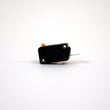
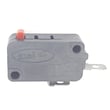
| Door switch problem | Blows fuse when door opens/closes | Microwave door interlock switch 6600W1K001R or microwave door interlock switch 6600W1K001Q |
| Shorted high-voltage component | No heat, loud hum, dead unit | Microwave diode 6851W1A002E |
| Power surge or internal short | Sudden loss of power | Us pressed steel microwave fuse 3B74133Q |
Why it matters
The fuse protects the microwave and your home circuit. If it is blowing repeatedly, the underlying issue is often a door interlock switch, wiring problem, or a high-voltage component that needs proper diagnosis.
Last updated: February 2026
How big is a Kenmore microwave model 72185062010 in inches?
Kenmore microwave/hood combo model 72185062010 is built to fit a standard 30-inch-wide over-the-range space. For planning, use the installation clearances from the 72185062010 installation guide; then confirm the exact overall width, height, and depth on the specification/dimension page in the 72185062010 owner’s manual.
Installation dimensions we use for fit planning
The installation instructions for model 72185062010 call out these key minimums:
- Minimum cabinet opening width: 30 inches
- Minimum mounting height: the top of the mounting plate must be at least 30 inches above the cooking surface
- Upper cabinet drilling: includes a power-cord hole and bolt holes (template-based)
- Stud support: at least one lag screw into a wall stud (plus toggle bolts as needed)
Typical overall size (helpful estimate)
Most Kenmore over-the-range microwave/hood combos that install in a 30-inch opening are close to these exterior ranges:
- Width: 29 7/8 to 30 inches
- Height: 16 to 18 inches
- Depth: 15 to 17 inches
| What you’re measuring | Where to measure | Why it matters |
|---|---|---|
| Cabinet opening width | Inside-to-inside between cabinets | Confirms the unit can physically fit |
| Clearance above cooktop | Cooktop surface to mounting reference | Prevents heat and ventilation issues |
| Depth | Front of cabinet to back wall | Avoids door and backsplash interference |
Why it matters
Getting the size right prevents cabinet interference, misaligned venting, and rework on the mounting plate. The install clearances tell you if the space is compatible; the manual’s dimension/spec information confirms the exact exterior measurements.
Last updated: February 2026
What is the code e12 on a Kenmore microwave?
On the Kenmore 72185062010 microwave/hood combo, code E12 is an electronic fault code. The fastest fix is a hard reset (power off at the breaker for 1 minute, then back on); if E12 returns, the problem is in a sensor or control circuit that needs inspection and repair.
What to do first (safe reset and basic checks)
- Turn the circuit breaker OFF for 1 minute (or unplug if accessible).
- Restore power and wait 60 seconds without starting a cook cycle.
- If the code clears, run a short 30-second heat test with a cup of water.
- If E12 returns, stop using the microwave until it’s checked.
- If the unit was recently installed or moved, confirm the power cord is not pinched and the unit is mounted correctly using the 72185062010 installation guide.
What E12 usually points to
E12 is most often triggered by a problem the control board detects in a feedback circuit. On over-the-range microwaves, common culprits include:
- A failed sensor used for automatic cooking (often called a humidity sensor)
- Loose or damaged wiring/connectors between the sensor and control
- A control board problem
| If you notice this | What it typically suggests | What we recommend |
|---|---|---|
| E12 comes back right after reset | Persistent electrical fault | Schedule service; have wiring and sensor tested |
| E12 shows up when using sensor cook | Sensor feedback issue | Avoid sensor modes; have the sensor circuit checked |
| Unit runs but behaves erratically | Intermittent connection | Inspect harness routing and connectors during service |
Parts that may be involved
If a technician traces E12 to the sensor circuit, a common related part on this model is the microwave humidity sensor 6501W1A013A. (We recommend testing before replacing parts.)
Why it matters
E12 means the microwave’s control is not getting the feedback it needs to run safely and consistently; clearing the code without fixing the cause can lead to repeated shutdowns or unreliable cooking results.
Last updated: February 2026
How many cubic feet is a Kenmore model 72185062010 microwave?
Kenmore model 72185062010 is a 1.7 cu. ft. microwave/hood combo. This capacity is the interior cooking cavity size; it helps you judge how much cookware fits and how roomy the turntable area feels for everyday reheating and cooking.
How to confirm the capacity on your unit
The most reliable place to verify capacity and other specs for 72185062010 is the product documentation.
- Check the specifications section in the 72185062010 owner's manual
- Match the full model number exactly: 72185062010
- Compare capacity with other key specs like electrical rating and dimensions
- Use the installation paperwork for fit and clearance details, not capacity
What “1.7 cu. ft.” means in real use
Capacity is interior volume; usable space also depends on the cavity shape and turntable diameter.
- Fits most dinner plates and medium casserole dishes
- Works well for standard microwave-safe bowls and containers
- Larger square dishes may fit better off-center depending on rotation
- Heating performance depends more on wattage than cubic feet
Capacity vs. installation fit (quick comparison)
| Spec | What it affects | Where to look |
|---|---|---|
| Cubic feet (capacity) | Interior room for dishes | 72185062010 owner's manual |
| Cabinet opening and clearances | Whether it mounts correctly over the range | 72185062010 installation guide |
Why it matters
Knowing the 1.7 cu. ft. capacity helps you compare replacement over-the-range microwaves, choose cookware that rotates freely, and set expectations for interior space in a Kenmore microwave/hood combo.
Last updated: February 2026