 Owner’s manual




Can you still get parts for a Kenmore dishwasher?
Yes. We still carry replacement parts for many Kenmore dishwashers, including Kenmore Elite model 72214307910; the key is matching parts by the full model number so you get the correct fit for items like the drain pump, water inlet valve, door seal, and control components.
Use the model number 72214307910 and confirm the part location and description in the 72214307910 owner's manual. Then match the part name and part ID exactly.
- Find the symptom (won’t drain, won’t fill, leaking, won’t start)
- Identify the related system (drain, fill, wash, door latch)
- Look up the part diagram reference in the manual
- Match the exact part ID and part name (not just a similar-looking part)
- Check whether you need related items (clamps, seals, wiring)
Here are examples of parts available for this model that cover the most common dishwasher repairs:
| Symptom | Likely part | Example part for this model |
|---|---|---|
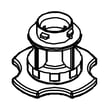
| Dishwasher won’t drain | Drain pump | Dishwasher drain pump ABQ75742501 |
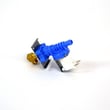
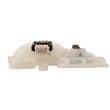
| Dishwasher won’t fill | Water inlet valve | Dishwasher water inlet valve 5221DD1001E |
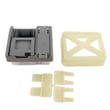
| Leaks at the door | Door seal | Dishwasher door seal 3920DD3002D |
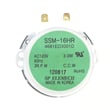
| Poor wash performance | Diverter motor | Dishwasher diverter motor 4681ED3001D |
Kenmore dishwashers are built across multiple manufacturing platforms, and parts can vary by series and production run. Using 72214307910 prevents ordering a pump, seal, or valve that looks right but mounts differently or uses a different connector.
If your dishwasher is showing a code, start with the Kenmore 722 series dishwasher error codes guide; it helps narrow the repair to the correct system before you buy parts.
Last updated: February 2026
How many decibels is a Kenmore Elite dishwasher?
For Kenmore Elite dishwasher model 72214307910, the exact decibel (dBA) rating is listed in the product specifications for your unit; use the 72214307910 use and care guide to find the published noise level. Many Kenmore built-in dishwashers run in the mid-40 dBA range, which sounds very quiet in most kitchens.
Look for a section labeled Specifications, Product data, or Sound rating in the manual.
- Check the first pages and any “features/specifications” pages
- Look for “dBA”, “sound level”, or “noise level”
- If your manual covers multiple sub-models (color codes), match the exact model line shown
- If you do not see dBA, check any spec sheet pages included in the manual PDF
Dishwasher sound is measured in dBA; lower numbers are quieter.
- 40 to 44 dBA: very quiet; mostly water movement
- 45 to 49 dBA: quiet; noticeable but not distracting
- 50+ dBA: clearly audible during wash and drain
| dBA range | What you typically hear | Common description |
|---|---|---|
| 40 to 44 | soft swishing | “nearly silent” |
| 45 to 49 | gentle wash noise | “quiet” |
| 50+ | steady wash and drain | “you will hear it” |
A sudden increase in noise usually points to a maintenance or part issue, not a change in the rated dBA.
- Re-load so utensils do not hit the spray arms
- Clean the filter and sump area
- Check for a restricted drain path
- Listen for loud draining; a worn pump can growl or grind
- Inspect rack rollers and rails for rattles
If the noise is strongest during draining, the dishwasher drain pump ABQ75742501 is a common part involved in drain-noise symptoms on this model.
Knowing the published dBA rating helps you judge whether you are hearing normal wash sounds (water movement) or abnormal sounds (grinding, rattling) that can affect cleaning and cycle completion.
Last updated: February 2026
How to find Kenmore Elite dishwasher model number?
On the Kenmore Elite dishwasher, we find the model number on the rating label located just inside the door opening, typically along the left-hand side of the tub frame. The same label also lists the serial number, which helps match the correct parts for model 72214307910.
- Open the dishwasher door fully.
- Look along the inner edge of the tub opening (not the outer decorative door panel).
- Check the left-hand side first.
- Find the rating label (a sticker or metal tag).
- Read the model number and serial number exactly as printed.
The model number identifies the exact Kenmore Elite series and configuration; the serial number helps confirm production details when ordering parts or troubleshooting.
| Label item | What it tells us | Why you need it |
|---|---|---|
| Model number | Exact dishwasher design and parts fit | Ensures correct replacement parts and diagrams |
| Serial number | Production identifier | Helps confirm compatible revisions and service info |
Kenmore Elite dishwashers can look similar across series, but parts like a drain pump, water inlet valve, or door seal can vary by model. Using the rating label prevents ordering the wrong component and saves time on repairs.
If your label shows a format similar to 722.1430 or 722.1435 with a color code, that still maps back to the 72214307910 family shown in the 72214307910 owner's manual.
Last updated: February 2026
How to remove lower spray arm Kenmore Elite dishwasher?
To remove the lower spray arm on your Kenmore Elite dishwasher model 72214307910, we typically pull out the lower rack, then release the spray arm from its center mount (usually a twist-off retainer or lift-off hub) so you can clean clogs and restore proper wash performance. See the 72214307910 owner's manual for the exact orientation and reassembly details.
- Turn off power at the breaker (recommended any time your hands are inside the tub).
- Pull the lower dishrack fully out and lift it off the rails.
- Locate the spray arm’s center hub/retainer at the bottom of the tub.
- Release the hub (common designs are a quarter-turn counterclockwise lock or a lift-off after loosening the retainer).
- Lift the lower spray arm straight up and out.
- Rinse the spray arm and clear jet holes with warm water; use a soft brush if needed.
Blocked spray arm holes and dirty filters are a top cause of food soil left on dishes. We recommend:
- Rinse debris from the spray arm jets until water flows freely.
- Clean the filters regularly with a soft brush under running water.
- Reinstall parts firmly so they seat and lock; loose parts can reduce spray pressure.
- Confirm the spray arm spins freely after reinstalling.
| What you notice | Likely cause | What to do |
|---|---|---|
| Food soil remains | Spray arm holes blocked | Clean spray arm jet holes |
| Water remains in tub | Drain hose kinked/clogged | Straighten hose, clear blockage |
| Spray arms do not rotate smoothly | Food particles in holes | Clean holes, verify free rotation |
If the spray arm will not stay secured, wobbles, or you see cracking at the hub, inspect the mounting area and related wash components. For drainage issues that can mimic wash problems, check the dishwasher drain pump ABQ75742501.
A properly mounted, freely rotating lower spray arm is critical for water circulation. When jets clog or the arm cannot spin, wash pressure drops and dishes come out dirty even with the right detergent and cycle.
Last updated: February 2026
What is the error code F2E2 on a Kenmore Elite dishwasher?
On Kenmore Elite model 72214307910, error code F2E2 points to a communication problem between the user interface (touchpad/display) and the main electronic control board. This can show up as unresponsive buttons, beeping, or a cycle that will not start.
- Press Cancel/Drain to stop the cycle, then wait about 1 minute.
- Turn power off at the breaker for 5 minutes, then restore power.
- Make sure the door is fully latched; a weak latch can mimic control issues.
- Check for stuck keys (a key that feels jammed or stays “pressed”).
- If the panel is wet, let it dry completely before testing again.
Most F2E2 situations come down to one of these:
- Loose or oxidized wire harness connection between the UI and control
- Failed user interface (console/touchpad) circuitry
- Failed main control board circuitry
- Intermittent connection from vibration or a pinched harness in the door
If basic resets do not help, these parts are typical suspects for a communication fault:
| Symptom | More likely cause | What we usually check |
|---|---|---|
| Some keys work, others do not | User interface issue | Stuck key, moisture, console response |
| Random beeping, dead panel | Control power/logic issue | Connections, board condition |
| Works after reset, then fails again | Intermittent connection | Harness routing and connectors |
For wiring-related issues, inspect the dishwasher wire harness EAD63647006 for pinched sections or loose connectors.
When the user interface and main control cannot “talk,” the dishwasher may not run the wash motor, fill valve, or drain pump reliably. Fixing the communication path restores normal cycle selection and prevents repeated no-start problems.
Use the troubleshooting and error code section in the 72214307910 use and care guide to match the display behavior and follow the model-specific checks.
Last updated: February 2026
Why does my Kenmore dishwasher take so long?
Your Kenmore Elite dishwasher model 72214307910 often takes a long time when it has to heat incoming water or when a selected cycle is designed to run longer for better cleaning and drying. Start by confirming the cycle, options, and the countdown behavior shown in the 72214307910 owner's manual.
- Cold water supply: If the dishwasher is connected to cold water, it will spend extra time heating the water before it can advance.
- Cycle selection: Cycles like SmartWash, Pots & Pans, and “extended” style cycles are built to run longer.
- Options that add time: Drying and sanitizing options can extend total runtime.
- Delay Hours is turned on: Delay can be set from 1 to 12 hours; it can look like the dishwasher is “taking forever” when it is actually waiting to start.
- Door opened mid-cycle: If the door is opened, you typically need to press Start again within a short window or the unit may pause and lose progress.
- Check for Delay Hours on the display and turn it off if you want an immediate start.
- Run hot water at the sink closest to the dishwasher for 30 to 60 seconds before starting.
- Choose a shorter cycle (for example Accela Wash) for lightly soiled loads.
- Confirm the display is counting down after you press Start (estimated time can change as options are selected).
- If performance issues accompany long cycles (standing water, poor wash), inspect the drain path and consider the dishwasher drain pump ABQ75742501 if the unit is not evacuating water properly.
| What you see | Usually means | What to do |
|---|---|---|
| Time increases after start | Sensor-based cycle adjusting | Let it run; this is normal on many cycles |
| Long heat-up early in cycle | Incoming water is cold | Purge hot water at sink; verify water heater setting |
| Hours shown before washing begins | Delay Hours is enabled | Cancel Delay and restart |
Long cycles are often the dishwasher protecting cleaning results by reaching target water temperature and completing drying. Fixing cold-water fill and avoiding unnecessary options can reduce cycle time without sacrificing wash performance.
Last updated: February 2026
Why is my Kenmore Elite dishwasher leaking underneath?
A Kenmore Elite 72214307910 dishwasher typically leaks underneath when water escapes past the door seal, suds overflow from using the wrong detergent, or a pump, hose, or sump seal is dripping during wash or drain. Start by checking for oversudsing, then inspect seals and pumps.
- Confirm you are using dishwasher-only detergent; hand soap or the wrong detergent can create excess suds that push water out and cause leaks.
- Reduce detergent amount if you have soft water; too much detergent can also cause oversudsing.
- Make sure the door closes fully and nothing (like a tall pan) is preventing a tight seal.
- Check that the dishwasher is level; a forward tilt can encourage water to spill at the front.
- Run a short cycle and watch for the first sign of water: front corners, center, or rear.
| Where you see water | Most common cause | What to inspect next |
|---|---|---|
| Front corners | Door sealing issue | Dishwasher door seal 3920DD3002D and door alignment |
| Center bottom | Pump or sump area drip | Drain pump housing, clamps, sump seals |
| Rear/left side | Fill or drain connection | Water inlet valve fittings, drain hose connection |
- Door area: a torn, flattened, or dirty gasket can let water escape during spray action; inspect and clean the sealing surfaces.
- Drain system: a cracked pump housing, loose clamp, or worn seal can drip during drain; inspect the dishwasher drain pump ABQ75742501 area for moisture trails.
- Tub and door sealing surfaces: wipe away grease and detergent buildup that can prevent a tight seal.
Even a small under-dishwasher leak can damage flooring and cabinets, and it often gets worse as seals soften or clamps loosen. Catching the source early usually prevents a larger repair.
This dishwasher is designed for dishwasher detergent; excess suds from incorrect detergent can reduce performance and cause leaking. For detergent and maintenance guidance, follow the 72214307910 use and care guide.
Last updated: February 2026





