 Error Codes



Where is the filter on a Roper dishwasher?
On the Roper RUD4000MQ0 dishwasher, the filter is typically located at the bottom of the tub under the lower dishrack, around the circular sump area. You access it by pulling out the lower rack and lifting the filter assembly up and out for cleaning.
- Turn the dishwasher off.
- Pull the lower rack straight out.
- Look for a circular opening or filter cover in the center-rear area of the tub floor.
- Grasp the filter and lift it slightly, then pull it forward and up to remove.
Quick checks while you are there:
- Remove any labels, glass, bones, or food chunks from the sump area.
- Make sure the spray arm(s) can spin freely.
- Confirm the filter seats flat when reinstalled.
- Rinse the filter under hot running water.
- Use a soft brush (old toothbrush) to remove greasy film.
- Avoid harsh abrasives that can damage fine mesh.
- Reinstall the filter fully before running a cycle.
If the dishwasher is not draining well after cleaning, the drain path is the next place to check; a kinked or restricted hose is a common cause. The model-specific replacement drain hose is the dishwasher drain hose WP3374077.
A clogged filter restricts water flow, which can cause poor cleaning, odors, and sometimes standing water at the end of the cycle. Keeping the filter area clear helps the wash pump circulate properly and reduces strain on the drain system.
| What you notice | Most likely area to check first | What to do |
|---|---|---|
| Grit on dishes | Filter and sump area | Remove and rinse filter, clear debris |
| Odor | Filter and tub floor | Clean filter and run a cleaning cycle |
| Water left in bottom | Filter, drain hose, air gap (if used) | Clear filter, inspect drain path |
For a step-by-step visual walkthrough, we recommend how to clean and maintain your dishwasher.
Last updated: February 2026
What are the commonly replaced parts in a dishwasher?
In a Roper dishwasher model RUD4000MQ0, the most commonly replaced parts are the ones that handle sealing, filling, draining, heating, and rack movement. These parts wear from heat, detergent, vibration, and normal use, and they are also the first to show symptoms like leaks, poor cleaning, or not starting.
- Door sealing parts that stop leaks around the tub opening, such as the dishwasher door seal WPW10509257
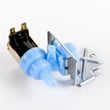
- Water inlet parts that control filling, such as the valve-inlt W10844024
- Drain components that carry water out, such as the dishwasher drain hose WP3374077
- Door closing and safety parts that let the unit run only when latched, such as the dishwasher door latch WP3380854
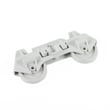
- Rack and track hardware that breaks, binds, or falls off, such as the dishwasher dishrack roller assembly WP8268645 and dishwasher dishrack slide rail WP3385089
- Interior accessories that crack or wear, such as the dishwasher silverware basket WP8268864
| Symptom | Most likely area | Example part for RUD4000MQ0 |
|---|---|---|
| Water on floor at the front/sides | Door sealing | Dishwasher door seal |
| Dishwasher won’t fill or fills slowly | Fill system | Valve-inlt |
| Dishwasher won’t drain or drains poorly | Drain path | Dishwasher drain hose |
| Unit won’t start unless you push the door | Latch/switch area | Dishwasher door latch |
| Rack won’t roll smoothly or falls off track | Rack rollers/rails | Dishrack roller assembly, dishrack slide rail |
- Rubber seals harden, flatten, or tear from heat and detergent
- Valves clog with sediment or fail electrically
- Hoses kink, split, or clog with grease and debris
- Latches wear or go out of alignment from repeated slamming
- Rollers and rails crack from heavy loads and repeated pulling
Replacing the right wear part early prevents secondary damage, like water leaks into the toe-kick area, poor wash performance from low fill, or repeated cycle interruptions from a weak latch. For cleaning and performance issues, we also recommend starting with basic maintenance steps in how to clean and maintain your dishwasher.
Last updated: February 2026
What are the parts of my dishwasher?
Your Roper RUD4000MQ0 dishwasher is built from a few main systems: the wash system (spray and pump), the fill and drain system (valves and hoses), the heating and drying system, and the door and rack hardware. Most repairs start by identifying which system matches your symptom.
- Heating element: heats water and helps drying; seals at the tub with rubber washers
- Detergent dispenser: releases detergent at the right time in the cycle
- Controls/timer and knob: selects cycles and runs the sequence
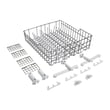
- Racks and rack hardware: holds dishes; rollers and rails let racks slide smoothly
- Spray arms and filters: move and strain wash water so dishes get cleaned
- Door system: latch and door seal keep the door closed and prevent leaks
- Fill and drain system: inlet valve fills; drain hose carries water to the sink drain
| Symptom | Common part to check | Example part for this model |
|---|---|---|
| Leaking at the door | Door seal, latch alignment | Dishwasher door seal WPW10509257 |
| Not filling | Water inlet valve | Valve-inlt W10844024 |
| Not draining | Drain hose, clogs in drain path | Dishwasher drain hose WP3374077 |
| Rack won’t roll or falls off track | Rollers, slide rails, rack stops | Dishwasher dishrack roller assembly WP8268645 |
| Poor drying | Heating circuit, element seals | Dishwasher heating element rubber washer WP717273 |
- Confirm the door fully latches and the tub isn’t overpacked.
- Look for standing water after a cycle (points to drain issues).
- Check for wetness at the bottom of the door (often door seal or alignment).
- Inspect rack wheels and rails for flat spots, cracks, or missing stops.
- Run hot water at the sink first; dishwashers clean better with a hot start.
Knowing the major parts helps you troubleshoot faster and avoid replacing the wrong component. For example, a “won’t start” complaint can be a door latch issue, while a “won’t fill” complaint usually points to the inlet valve or water supply.
For step-by-step troubleshooting, we recommend dishwasher common questions.
Last updated: February 2026






