Owner’s manual
 Error Codes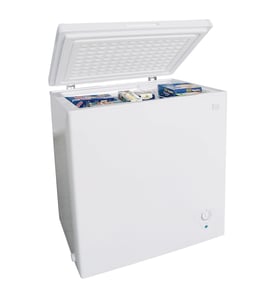


How many cubic feet is a Kenmore freezer model 25312512410?
The Kenmore chest freezer model 25312512410 is in the 12 cubic foot class. We use the capacity rating shown for the 253.12512* model family in the 25312512410 owner's manual, which covers this model series.
How to confirm the exact capacity for your unit
Capacity can vary slightly within a model family. To confirm what your specific freezer is rated at:
- Check the model and serial tag inside the cabinet (usually on an interior wall)
- Look for a “Capacity” or “Cu. Ft.” line on the rating label
- Compare your exact model number to the covered models list in the manual
- If you are measuring for storage planning, use a basket and box layout instead of relying only on cubic feet
Quick reference: what “12 cubic foot class” means
| What you need | Typical value for this model class | Why it helps |
|---|---|---|
| Total capacity | ~12 cu. ft. | Storage planning |
| Fresh-freeze loading rate | 3 lb per cu. ft. at one time | Faster, safer freezing |
| Cool-down time before loading unfrozen food | 4 hours | Protects food quality |
The Use & Care guidance for this series also recommends allowing 4 hours for the freezer to cool down and limiting fresh food loading to 3 pounds per cubic foot at one time.
Why it matters
Knowing the cubic feet helps you plan food storage, estimate how much fresh food you can freeze at once, and avoid overloading the freezer during the initial cool-down period.
Last updated: January 2026
What are the most common issues with 25312512410?
The most common problems we see with the Kenmore 25312512410 chest freezer are warm temperatures, heavy frost buildup, lid seal leaks, and compressor start or run issues. Many of these trace back to airflow around the cabinet, a mis-set temperature control, or a failing start relay or gasket.
Common symptoms and what they usually point to
- Freezer not cold enough: temperature control setting, poor lid seal, dirty/blocked condenser area, or a compressor start problem
- Runs constantly: lid gasket leak, warm room location, overpacked freezer, or thermostat/control issue
- Clicking then no cooling: compressor start relay/overload issue
- Excessive frost: lid left ajar, torn/warped gasket, frequent openings, humid garage/basement air
- Interior light or alarm behavior seems wrong (if equipped): door switch or control-related issue
Quick checks we recommend first
Unplug the freezer before inspecting parts.
- Confirm the control is set for normal operation; allow 24 hours after changes for temperatures to stabilize
- Make sure the lid closes squarely and doesn’t rock; check hinge alignment
- Do the “paper test” around the lid; resistance should feel consistent all the way around
- Reduce warm-air intrusion; limit openings and avoid loading large amounts of unfrozen food at once
- Verify the freezer has clearance for heat to dissipate; blocked airflow can mimic a cooling failure
Parts that commonly solve these issues (when diagnosis matches)
| Symptom | Likely part area | Example part for this model |
|---|---|---|
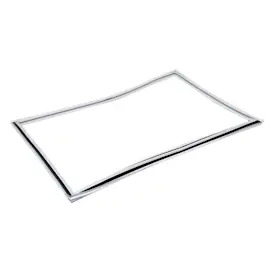
| Frost, moisture, poor seal | Lid gasket | Kelvinator freezer lid gasket 216481301 |
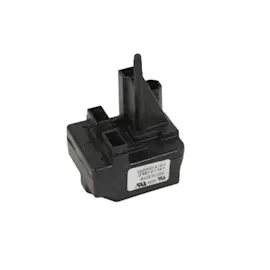
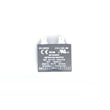
| Clicking, won’t start cooling | Start relay/overload | Freezer compressor overload and relay clamp 216954300 |
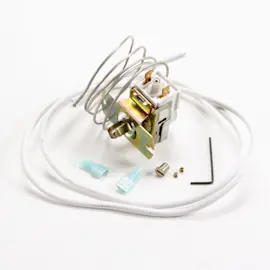
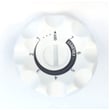
| Temperature won’t regulate | Thermostat/control | Temperature control 297216043 |
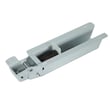
| Lid won’t close/align | Hinge/handle | Freezer door hinge 297321900 |
Why it matters
A chest freezer that runs warm or runs nonstop can spoil food and drive up energy use. Catching a gasket leak or start-relay problem early also helps prevent compressor damage.
Helpful references
- Use the 25312512410 owner’s manual for operating tips, temperature guidance, and care instructions.
- If you’re seeing a code or control-related fault, use Kenmore electronic control module freezer error codes to narrow the cause.
Last updated: March 2026
What is the life expectancy of a chest freezer?
A chest freezer typically lasts 15 to 20 years with normal home use. For your Kenmore 25312512410 chest freezer, keeping the lid gasket sealing well, maintaining steady temperatures, and defrosting when frost builds up are the biggest factors in reaching that lifespan; see the 25312512410 owner's manual.
What affects how long a chest freezer lasts
- Lid seal condition: A leaking gasket makes the compressor run longer and wear faster.
- Frost buildup: Heavy frost reduces efficiency and can lead to warmer temps.
- Room conditions: Hot garages, tight clearances, and poor airflow increase run time.
- Power quality: Frequent outages or voltage issues add stress to the compressor and relay.
- Loading habits: Overloading with too much unfrozen food at once forces long run cycles.
Maintenance that helps you reach 15 to 20 years
Use these habits to reduce compressor run time and temperature swings:
- Defrost and clean when frost buildup is noticeable (some models use a frost indicator).
- Keep the lid closed as much as possible, especially during power interruptions.
- Clean the interior with a baking soda and warm water solution; avoid abrasive cleaners.
- Confirm the temperature control is set for safe food storage and does not get bumped.
- Check the lid gasket for gaps, tears, or stiffness; replace if it will not seal.
Quick guide: symptoms that shorten lifespan
| What you notice | What it usually means | What to do first |
|---|---|---|
| Runs almost constantly | Warm air leak or heavy frost | Inspect gasket, defrost, verify control setting |
| Clicking, then no start | Start relay/overload issue | Test/replace freezer compressor overload and relay clamp 216954300 |
| Warmer temps than normal | Control issue or airflow problem | Check temperature control 297216043 setting and clear airflow |
Why it matters
A chest freezer can keep food frozen for long periods, but only if it holds temperature efficiently. Reducing air leaks and frost buildup lowers compressor wear, cuts energy use, and helps your Kenmore freezer reach its full service life.
Last updated: January 2026