Owner’s manual
 Error Codes


What are the common problems with Kenmore Elite refrigerators?
Common problems on the Kenmore Elite 79578759800 bottom-mount refrigerator include weak or no cooling, frost or ice buildup, doors that will not close fully, water leaks (often from a drain issue), and unusual operating noises. Many fixes start with cleaning, leveling, and checking airflow; use the 79578759800 owner's manual troubleshooting and care sections for model-specific steps.
Most common symptoms and what usually causes them
- Not cooling or warm temperatures: dirty condenser coils, airflow blockage, evaporator fan issue, or sealed system problems.
- Frost or ice crystals on food: door not sealing, door opened frequently, or defrost system trouble.
- Doors will not close completely: refrigerator not level, food packages blocking, bins or shelves out of position, or sticky gaskets.
- Water puddles or leaking: defrost drain restriction, drain tube issue, or water line/valve problems.
- Buzzing, clicking, or loud fan noise: normal operating sounds, fan blade interference, or compressor start components.
Quick checks we recommend first (safe DIY)
- Clean the condenser coils; dirty coils reduce heat transfer and make the compressor work harder.
- Confirm doors seal and close: push doors firmly shut; reposition shelves, bins, and drawers so nothing holds the door open.
- Level the refrigerator to reduce wobble and help doors self-close.
- Inspect and clean door gaskets; clean the gasket and the surface it touches.
- Check for drain-related water: if you see recurring puddles, inspect the drain path and consider replacing the drain component if damaged.
Parts that commonly relate to these problems
| Symptom | Part that often relates | What it affects |
|---|---|---|
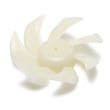
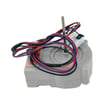
| Warm fridge, poor cooling | Refrigerator evaporator fan motor 4681JB1027C | Circulates cold air through compartments |
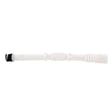
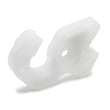
| Water leaking or puddles | Refrigerator drain tube 5251JA3003D | Routes defrost water to the drain pan |
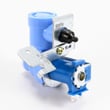
| No water to dispenser/ice maker | Refrigerator water inlet valve MJX41178908 | Controls water flow into the refrigerator |
Why it matters
Catching issues early (like dirty coils, misaligned doors, or a restricted drain) helps prevent temperature swings, food spoilage, and ice buildup that can strain the compressor and fans.
Last updated: January 2026
What size is Kenmore refrigerator model 79578759800?
Kenmore Elite refrigerator model 79578759800 is a bottom-freezer (bottom-mount) refrigerator in the Kenmore 795.7875/795.7876 model family. For exact exterior dimensions (width, depth, height) and capacity for your specific color/version, we use the specs listed in the 79578759800 owner's manual.
What “size” usually means (and what to check)
When customers ask for “size,” it typically refers to one or more of these:
- Overall dimensions: width, depth, height (for fit in a cabinet opening)
- Capacity: total cubic feet (for storage planning)
- Door swing and clearance: space needed to open doors and pull out freezer drawer
- Water line clearance: extra room behind the unit if it has an ice maker/water dispenser
How to measure your refrigerator correctly
We recommend measuring the actual unit and the installation space:
- Measure width at the widest point (often the doors/hinges)
- Measure height from floor to top of hinge cover (if present)
- Measure depth from the back to the front of the doors/handles
- Add clearance for airflow and door swing (especially in tight alcoves)
Quick measurement checklist
| What you’re measuring | Where to measure | Why it matters |
|---|---|---|
| Width | widest point of cabinet/doors | prevents rubbing on cabinets |
| Height | floor to top | avoids overhead cabinet conflicts |
| Depth | back to front of handles | ensures it won’t stick out too far |
Installation details that affect “fit”
This model family uses a standard 1/4-inch water supply line connection for water/ice features, and the manual calls out leaving extra tubing so the refrigerator can be pulled out for service. That extra slack can affect how close the unit sits to the wall.
- Use 1/4-inch OD copper tubing (common refrigerator supply size)
- Plan for service access behind the refrigerator
- Confirm door alignment/leveling after moving it into place
Why it matters
Getting the correct dimensions and clearances prevents door interference, poor airflow (warm temperatures), and pinched water lines that can cause leaks or ice maker issues.
Last updated: January 2026
Why is my refrigerator not getting cold at the bottom?
If your Kenmore Elite 79578759800 is warm at the bottom, the most common causes are restricted airflow (blocked vents, overpacked shelves, doors not sealing) or a cooling system issue that prevents cold air from circulating down. Start by confirming the temperature settings and improving airflow per the 79578759800 owner's manual.
Quick checks that fix most “warm bottom” complaints
- Set temperatures correctly and give them time to stabilize: 37°F for the refrigerator and 0°F for the freezer, then wait 24 hours before judging results.
- Make sure food packages are not blocking interior air vents; blocked vents stop cold air from reaching the lower area.
- Reduce door openings and close doors fully; frequent openings add warm, humid air that the refrigerator must cool.
- Avoid loading a large amount of warm groceries at once; it can take a few hours to pull temperatures back down.
- Confirm the ice bank door (if equipped) closes tightly; a door left ajar can disrupt airflow and temperature balance.
If the bottom is warm but the freezer is cold
This pattern usually points to an airflow problem between compartments.
| What you notice | Most likely cause | What to do first |
|---|---|---|
| Freezer cold, fridge bottom warm | Airflow blocked by food/ice | Clear vents, reorganize, wait 24 hours |
| Fridge temps swing after changes | Controls adjusted too quickly | Change 1 step at a time, wait 24 hours |
| Warm spots near drawers | Poor circulation at lower shelves | Leave space around bins and back wall |
When to suspect a part problem
If airflow and settings are correct and the bottom still will not cool, a failed fan or defrost issue can prevent proper circulation.
- Listen for the evaporator fan running; if it is silent or noisy, the fan system may be failing.
- Check for frost buildup that can block airflow (often tied to defrost problems).
Model-matched parts that commonly relate to poor cooling include the refrigerator evaporator fan motor 4681JB1027C and the lg refrigerator defrost heater 5300JK1005D.
Why it matters
A warm lower refrigerator section can push food above safe storage temperatures and also forces the compressor to run longer, increasing wear and energy use.
For step-by-step temperature setting guidance and stabilization timing, use the 79578759800 owner's manual.
Last updated: January 2026
Why is my Kenmore Elite refrigerator leaking water out of the bottom?
On Kenmore Elite model 79578759800, water leaking from the bottom is usually caused by a defrost drain that is clogged and overflowing into the base, or a leak in the water supply circuit (tubing, fittings, or inlet valve) that drips down and exits underneath. Use the 79578759800 owner's manual to match the checks to your exact configuration.
Most common causes (and what you’ll notice)
- Clogged defrost drain: Water appears after a defrost cycle; you may see ice or water under crisper drawers or in the freezer floor.
- Leaking water line connection: Drips start soon after moving the refrigerator or after a water line hookup.
- Cracked or loose water tubing: Water shows up near the back or under the unit; dispenser or ice maker may act up.
- Water inlet valve seep/leak: Slow, steady dripping even when not dispensing water.
- Door left ajar or poor door seal: Excess frost melts and overwhelms the drain.
Quick checks we recommend (10 to 20 minutes)
- Unplug the refrigerator before inspecting behind panels or near wiring.
- Look for water source clues:
- Water only in fresh food section: likely drain or tubing.
- Water only in freezer: likely drain or ice maker fill area.
- Inspect the water line connections at the back; the manual calls out checking for drips at connections after turning water on.
- Check the tubing for kinks, rub-through, or cracks; replace if damaged.
- Confirm the drain path is clear (common fix): clear ice and debris so defrost water can reach the drain pan.
Parts that commonly solve bottom leaks on this model
| Symptom | Likely area | Part to consider |
|---|---|---|
| Drip from back, near supply hookup | Valve or fitting | Refrigerator water inlet valve MJX41178908 |
| Wet under unit, tubing looks damaged | Water line | Refrigerator water tubing MJU62070602 |
| Puddle after defrost, ice buildup near drain | Drain path | Refrigerator drain tube 5251JA3003D |
Why it matters
A bottom leak can damage flooring and also lead to icing, poor cooling, and fan noise if water refreezes around the evaporator area. Fixing the drain or water supply leak early helps protect the sealed system and keeps temperatures stable.
Last updated: January 2026