Owner’s manual
 Error Codes


How to clean the coils on a Kenmore side by side refrigerator?
For Kenmore side-by-side refrigerator model 10657212600, cleaning the condenser coils means removing dust and pet hair so the refrigerator can transfer heat properly and run efficiently. Dirty coils make the compressor work harder; the manual specifically calls out cleaning the condenser coils when they’re dirty. See the 10657212600 owner's manual.
Before you start (safety and access)
- Unplug the refrigerator (or disconnect power) before cleaning.
- Pull the refrigerator straight out so you can reach the coil area.
- If needed, remove the base grille by pulling up on the bottom outside corners (the manual describes base grille removal during door-related steps).
- Protect the floor with cardboard or a towel.
- Keep water away from electrical components.
How we recommend cleaning the condenser coils
- Unplug the refrigerator.
- Locate the coils (commonly behind the base grille at the front, or on the back depending on the build).
- Dry-clean first:
- Use a coil brush to loosen packed dust.
- Use a vacuum with a crevice tool to pull debris out.
- Clean the surrounding area (floor under the unit and the grille vents).
- Reinstall the base grille and push the refrigerator back into place.
- Restore power and confirm the refrigerator is running.
What to use (and what to avoid)
| Item | Good for | Avoid because |
|---|---|---|
| Coil brush | Loosening heavy lint and pet hair | It can bend fins if forced |
| Vacuum (crevice tool) | Removing loosened debris | Blowing dust deeper into the unit |
| Soft brush attachment | Light dust on accessible coils | Scraping or puncturing tubing |
How often should coils be cleaned?
- Every 6 months in most homes
- Every 3 months if you have pets, heavy dust, or the refrigerator is in a tight enclosure
Why it matters
Clean condenser coils improve airflow and heat transfer, which reduces run time, helps stabilize temperatures, and can prevent symptoms like warm compartments or unusually long compressor run cycles.
Last updated: February 2026
What are the most common problems with Kenmore refrigerators?
The most common issues we see on Kenmore refrigerators like model 10657212600 are cooling problems, water leaks, ice maker or dispenser trouble, and unusual noises. Many of these come down to airflow (blocked vents or dirty coils), door sealing, or a failing defrost, fan, or water-supply component; use the 10657212600 owner's manual troubleshooting section to narrow it down.
Most common symptoms and what usually causes them
- Not cooling or warm temperatures: blocked air vents, doors opened often, controls not set correctly, evaporator fan issues, or defrost system problems (ice buildup).
- Too cold or freezing food: temperature control set too cold, thermostat/control issues.
- Water leaking or puddles: clogged defrost drain, loose water line, cracked reservoir, or a seeping inlet valve.
- Ice maker not making ice: water supply shut off, frozen fill tube, bad inlet valve, or ice maker failure.
- Noisy operation: normal compressor and fan sounds, refrigerant flow noises, or rattling from water lines or items on top.
Quick checks we recommend first (fast, no parts)
- Confirm doors close and seal fully; clean sticky gaskets and remove anything preventing closure.
- Make sure air vents are not blocked by food packages.
- Adjust the refrigerator and freezer controls one setting at a time, then wait several hours for temperatures to stabilize.
- If you have digital controls, turn the unit OFF then ON to reset (when applicable to your control style).
- Listen for the evaporator fan; it often speeds up when doors open or warm food is added.
Common part-related fixes for this model
If the basic checks point to a component failure, these parts are commonly involved on model 10657212600:
| Symptom | Common suspect | Example part on this model |
|---|---|---|
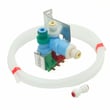
| No ice, no water fill | Water inlet valve not opening | Refrigerator water inlet valve W10408179 |
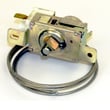
| Temps swing warm or too cold | Temperature control issue | Refrigerator thermostat WP2198202 |
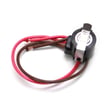
| Frost buildup, warm fridge | Defrost sensing problem | Refrigerator defrost bi-metal WPW10225581 |
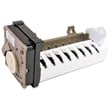
| Ice maker dead or inconsistent | Ice maker assembly failure | Refrigerator ice maker WPW10190965 |
Why it matters
Cooling, leaking, and ice maker problems usually get worse over time. Catching airflow restrictions, control settings, and early water-supply issues helps protect food temperatures, reduce ice buildup, and prevent water damage.
Last updated: February 2026
Where is the model number on a Kenmore side by side refrigerator?
On a Kenmore side-by-side refrigerator like model 10657212600, the model number is printed on the appliance identification label (the same label that also lists the serial number). You will typically find this label inside the fresh food compartment, around the door opening area.
Where to look first (fastest checks)
We recommend checking these common label locations in this order:
- Inside the refrigerator compartment on the left or right wall near the front
- On the ceiling of the fresh food compartment near the temperature control area
- On the frame around the door opening (hinge side is common)
- Behind the crisper drawers on the side wall (look low and toward the front)
- On the back exterior panel (less common, but worth a quick check)
Use the location diagrams and identification section in the 10657212600 owner's manual to match the label placement for your exact configuration.
What the label looks like
The ID label usually includes both a model number and a serial number. The serial number format varies by production run, so focus on the line that explicitly says Model.
Quick ID guide
| What you need | What it’s used for | Example for this unit |
|---|---|---|
| Model number | Ordering correct parts and matching diagrams | 10657212600 |
| Serial number | Dating/production info and service reference | Printed on same label |
Why it matters
Kenmore side-by-side refrigerators often have similar door bins, ice maker parts, and water system components across multiple models. Using the exact model number helps us match the correct parts list for items like the refrigerator water inlet valve W10408179 or the refrigerator ice maker WPW10190965.
Last updated: February 2026
How many cubic feet is my Kenmore refrigerator by model number?
For Kenmore side-by-side refrigerator model 10657212600, the exact cubic-foot capacity is listed on the model’s rating information and in the specifications section of the 10657212600 owner's manual. If you do not have the spec page handy, you can also estimate capacity by measuring the interior compartment size and converting cubic inches to cubic feet.
How to estimate cubic feet (quick method)
Use this formula:
- Measure interior width, height, and depth (in inches) for the fresh food section
- Measure the freezer section the same way
- Multiply each section:
W x H x Dto get cubic inches - Add both sections together
- Divide by 1,728 to convert cubic inches to cubic feet
Conversion table
| What you have | What it means | Convert to cubic feet |
|---|---|---|
| Cubic inches | Interior volume in inches | Divide by 1,728 |
| Cubic feet | Interior volume in feet | No conversion needed |
Measuring tips that keep the estimate accurate
- Measure inside the liner, not the outside cabinet
- Measure to the back wall, not to the front of shelves or bins
- Ignore door bins and protruding features; they do not represent usable box volume
- If shelves are fixed, measure the full interior height anyway
- Write down each section separately so you can double-check the math
Why the “outside dimensions” math is misleading
Using exterior cabinet dimensions (for example, overall depth and height) overstates capacity because it includes insulation thickness, the sealed machinery space, and non-storage areas. Capacity ratings are based on interior storage volume, not the outside footprint.
Related maintenance that affects usable space
If ice buildup or airflow problems are reducing usable room in the freezer, check for cooling and defrost symptoms in the 10657212600 owner's manual. If you’re troubleshooting a no-ice or no-water complaint that often goes with airflow issues, common related parts for this model include the refrigerator ice maker WPW10190965 and the refrigerator defrost bi-metal WPW10225581.
Last updated: February 2026
What causes a side-by-side refrigerator to stop cooling?
A Kenmore side-by-side refrigerator model 10657212600 usually stops cooling because airflow is blocked between compartments, the temperature controls are set incorrectly (including being set to OFF), or a cooling system component such as the evaporator fan or defrost system is failing. Use the checks in the 10657212600 owner's manual first.
Quick checks we recommend first (no tools)
- Confirm the refrigerator control is not set to OFF.
- Make sure food packages are not blocking the air vents (blocked vents prevent proper airflow and the controls will not work correctly).
- Keep door openings to a minimum for a few hours; frequent openings warm the compartments.
- If you recently added a large amount of warm food, allow several hours for temperatures to recover.
- Listen for the evaporator fan; you should typically hear air movement when the unit is running.
Most common causes and what to look for
| What you notice | Likely cause | What to do next |
|---|---|---|
| Freezer cold, fresh food warm | Air vents blocked or airflow issue | Clear vents; reorganize items to restore circulation |
| Both sections warm, lights on | Controls set wrong or unit needs reset | Recheck settings; for digital controls, turn OFF then ON |
| Warm temps plus heavy frost in freezer | Defrost problem | Check for frost buildup; consider a defrost component |
| No ice and no water dispense | Water supply or valve issue (separate from cooling) | Check house water supply; diagnose the inlet valve |
Parts that commonly relate to “not cooling” symptoms
If basic airflow and control settings are correct, these parts are often involved in cooling complaints on side-by-side refrigerators:
- Evaporator fan area (air circulation); a damaged blade can reduce airflow (see refrigerator evaporator fan blade WP2169142).
- Defrost system; a failed defrost thermostat can contribute to frost buildup that blocks airflow (see refrigerator defrost bi-metal WPW10225581).
- Temperature control; if it does not regulate correctly, temperatures can drift (see refrigerator thermostat WP2198202).
Why it matters
This model circulates cold air between the freezer and refrigerator sections. When vents are blocked or frost builds up, cold air cannot move properly, so one or both compartments warm up even though the refrigerator may still be running.
Last updated: February 2026